Anthropic Releases Opus 4.8 with AI Agent Management Tool
Anthropic has released Opus 4.8 with the Dynamic Workflows tool for managing AI agents. The system enables creation of swarms — groups of agents that seamlessly execute complex multi-step tasks without human intervention. This opens new possibilities for automating large-scale projects.
AI-processed from TechCrunch; edited by Hamidun News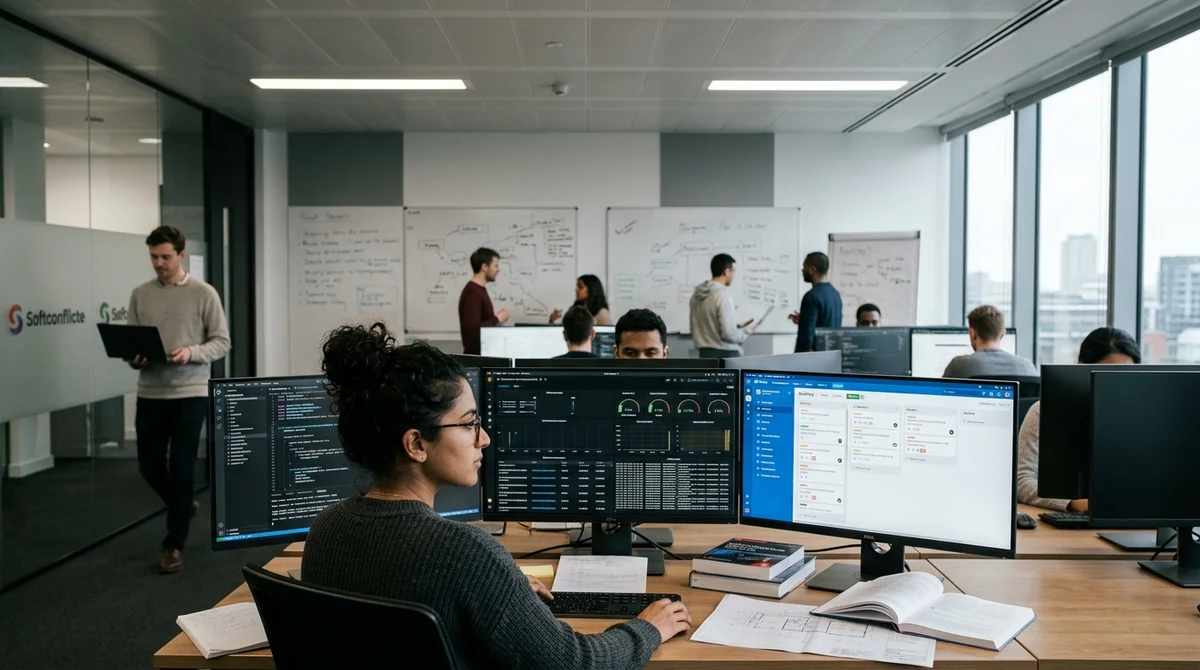
Anthropic has released an update to its flagship Opus 4.8 model with the new Dynamic Workflows tool. This solution enables developers to coordinate the work of multiple AI agents in a single execution stream, simplifying the creation of complex multi-agent systems.
How Dynamic Workflows Works
Dynamic Workflows transforms individual AI agents into a managed swarm, where each participant performs its role in a common pipeline. One agent gathers information from sources, a second analyzes the data, a third formulates conclusions and prepares the response. All of this happens automatically, without human involvement at each step.
The system manages the data flow between agents: tracks context, passes results from one agent to another, controls the quality of intermediate results. If an agent encounters an error or incomplete data, the system can re-delegate the task, request clarification from the user, or try an alternative approach.
The mechanics work like this: the developer describes a task graph (what steps to execute, in what order, who performs each step), and Dynamic Workflows takes on the orchestration. Agents receive instructions, execute their functions, and return results — the system compiles everything into a final answer.
- Coordination of multiple AI models in a single process
- Automatic management of data flow and context
- Built-in error handling and fallback strategies
- Scaling from simple two-step workflows to complex systems
Why Developers Need This
Before Dynamic Workflows, creating multi-agent systems required extensive manual coding. It was necessary to write an integration layer, manage the state of each agent, catch errors, and double-check results. This was slow and error-prone.
Dynamic Workflows takes on this engineering burden. The developer describes in the config what they want: first collect data, then analyze it, then write the report. The system itself orchestrates the agents, passes results, and monitors quality.
This accelerates prototyping. A company can faster build an AI system for customer support (problem analysis → solution search → response formation), or an analytics platform (data collection from various sources → processing → recommendation generation).
Industry Context
Anthropicis not the first on this path. OpenAI is already experimenting with multi-agent systems and orchestration tools in its APIs. But Dynamic Workflows is a built-in, ready-made solution right in the Opus 4.8 model, not a set of separate services.
This is part of industry trends: a shift from single-agent models (which simply generate text) to systems that can reason, make decisions, and manage complex processes.
What This Means
The barrier to entry for creating complex AI systems is lowering. Developers no longer need to write the integration layer manually — they can focus on task logic. For business, this means faster automation of processes that require coordination of multiple stages of analysis and reasoning.
- Oct 29, 2026Anthropic's S-1 Shows 11 900 Customers Paying $100 Thousand or More a Year
- Oct 28, 2026A 2015 CNN Beat GPT-6 Astra and Claude Fable 5.1 at Skin Cancer Diagnosis
- Oct 28, 2026Keystone removes the model name from code: open-source LLM gateway adds 0.64 ms
- Oct 28, 2026Wired Tested 6 AI Agents in a Day: Dots Leads, Gemini Spark Fails at Lunch
Key Questions Answered
How Dynamic Workflows Works?
Dynamic Workflows transforms individual AI agents into a managed swarm, where each participant performs its role in a common pipeline. One agent gathers information from sources, a second analyzes the data, a third formulates conclusions and prepares the response. All of this happens automatically, without human involvement at each step. The system manages the data flow between agents: tracks context, passes results from one agent to another, controls the quality of intermediate results. If an agent encounters an error or incomplete data, the system can re-delegate the task
Why Developers Need This?
Before Dynamic Workflows, creating multi-agent systems required extensive manual coding. It was necessary to write an integration layer, manage the state of each agent, catch errors, and double-check results. This was slow and error-prone. Dynamic Workflows takes on this engineering burden. The developer describes in the config what they want: first collect data, then analyze it, then write the report. The system itself orchestrates the agents, passes results, and monitors quality. This accelerates prototyping. A company can faster build an AI system for customer support (p
What are the key details on Industry Context?
Anthropicis not the first on this path. OpenAI is already experimenting with multi-agent systems and orchestration tools in its APIs. But Dynamic Workflows is a built-in, ready-made solution right in the Opus 4.8 model, not a set of separate services. This is part of industry trends: a shift from single-agent models (which simply generate text) to systems that can reason, make decisions, and manage complex processes.
Delegate Deep Research, Coding & Multi-Step Workflows to Nomad Agent
Deploy autonomous task execution with Nomad Agent (agent.nomadnet.ai) — automated web research, data synthesis, code generation, and MCP tool orchestration.
The AI world, distilled — once a week
Seven stories that actually mattered, hand-picked. No noise, no reposts, no press releases.
Done! Check your inbox for a confirmation.