AI agent permissions should grow with their capabilities, as Anthropic does it
Anthropic has published engineering guidance on managing AI agent permissions. The core idea: access rights should evolve alongside the agent's capabilities. In its products, the company uses sandboxing, a technique that limits the scope of potentially dangerous actions and operations. This gives precise control over what an agent can do, protecting the system from failures, unauthorized access and destructive commands.
AI-processed from @AnthropicAI; edited by Hamidun News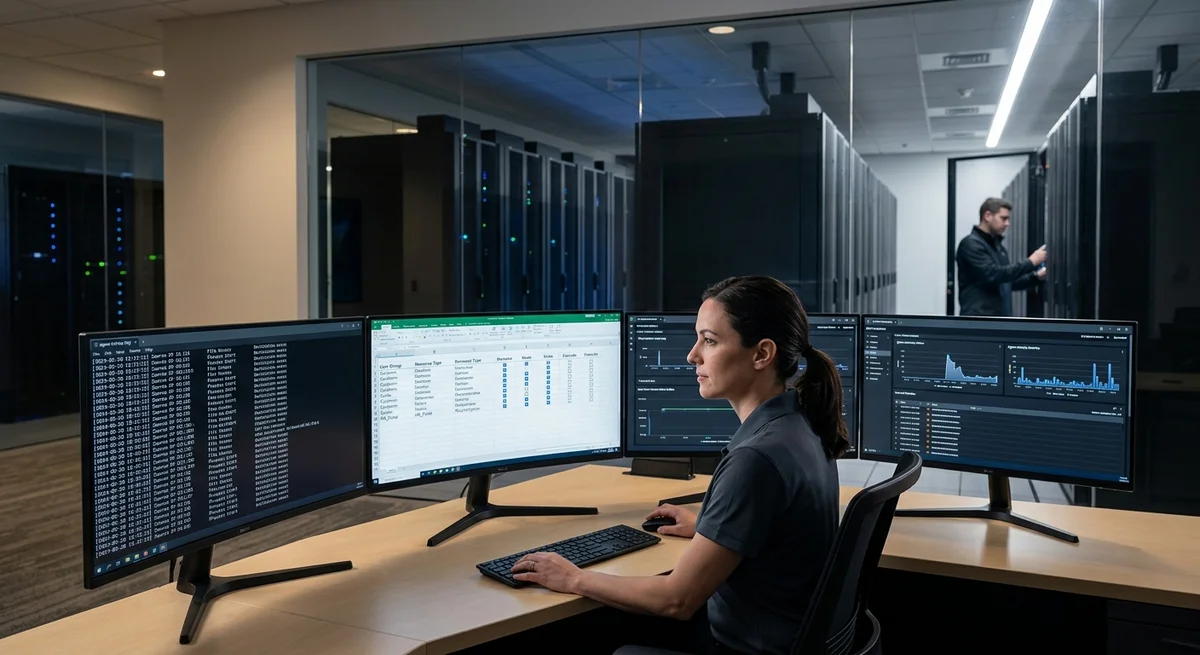
Anthropic has released an engineering guide on managing AI agent permissions. Its main conclusion: as agents grow more powerful and take on more complex tasks, their permissions must evolve. The company uses sandboxing, a technique that restricts potentially destructive actions and protects systems from errors.
Why this is critical
AI agents increasingly get access to external tools: the browser, the file system, APIs, databases. That expands what they can do, but it also raises the risk. If an agent makes a mistake, or is nudged by a poorly worded request, it can delete important data, send a stray email from your account or execute a wrong financial transaction.
Anthropic stresses that permissions are not a static set of allowances. They should grow with the agent's capabilities and reliability. A new agent gets the minimum rights, and its permissions expand gradually as it proves stable and shows it understands context.
How sandboxing works
Sandboxing is isolation. You let the agent act in a restricted environment where it cannot cross the boundaries and damage the rest of the system. Examples:
- The agent can edit only files in the /tmp folder, without touching system directories
- API requests pass through a proxy layer that checks every call
- A browser agent sees only specific sites; all others are blocked
- Financial operations require additional confirmation or have a cap on the amount
- Databases are read-only, or accessible only for specific tables
This approach gives the agent enough freedom to work while keeping it within security limits.
Anthropic's practical approach
In its products, including Claude and new agent frameworks, Anthropic applies these principles in practice. When you deploy an agent, you first define which tools it may use and how they should be restricted. For example, if the agent is meant to answer questions about your documentation, you give it access only to that documentation. If it helps manage a calendar, you allow it to read and write only events, not to manage other aspects of the account.
Building a monitoring system is especially important. The company recommends logging all agent actions: which commands it ran, which tools it used, which errors occurred. Regular audits help catch strange behavior quickly. If an agent starts doing unexpected things or breaks its usual patterns, the system should alert someone or block it.
"Trust is not a binary choice.
It is a spectrum, and you should give an agent exactly as many permissions as it needs to do its work at the moment," says the Anthropic guide.
As the agent proves stable and shows it understands context, its permissions can be expanded gradually. But this should be a deliberate, step-by-step process, not an automatic promotion based on time in service.
What this means
Proper sandboxing and dynamic permissions are not just best practice; they are a necessity when deploying AI agents in production. For organizations deploying AI agents in their systems, this means: think carefully about what your agent should do and what data it needs, define the exact scope of its permissions and restrictions, monitor its behavior in real time, and expand permissions gradually as the agent proves reliable.
This matters most in critical scenarios: if an agent has access to financial data, medical records, personal information or critical infrastructure, the risk of error becomes enormous.
For AI companies like Anthropic, it means building these principles into the product architecture from the start, rather than adding them later as a patch.
- Nov 2, 2026Karpathy builds a YouTube clone with 6454 videos from Hacker News recommendations in two hours
- Nov 2, 2026Karpathy used Claude to build HackerTube from 6,454 videos recommended on Hacker News
- Nov 2, 2026Arca gives AI agents finance tasks lasting up to 10 days, but leaves the trades to humans
- Nov 2, 2026Anthropic needs to grow revenue 32% a year to cover $850 billion in contracts
Key Questions Answered
Why this is critical?
AI agents increasingly get access to external tools: the browser, the file system, APIs, databases. That expands what they can do, but it also raises the risk. If an agent makes a mistake, or is nudged by a poorly worded request, it can delete important data, send a stray email from your account or execute a wrong financial transaction. Anthropic stresses that permissions are not a static set of allowances. They should grow with the agent's capabilities and reliability. A new agent gets the minimum rights, and its permissions expand gradually as it proves stable and shows i
How sandboxing works?
Sandboxing is isolation. You let the agent act in a restricted environment where it cannot cross the boundaries and damage the rest of the system. Examples: The agent can edit only files in the /tmp folder, without touching system directories API requests pass through a proxy layer that checks every call A browser agent sees only specific sites; all others are blocked Financial operations require additional confirmation or have a cap on the amount Databases are read-only, or accessible only for specific tables This approach gives the agent enough freedom to work while keepi
What are the key details on Anthropic's practical approach?
In its products, including Claude and new agent frameworks, Anthropic applies these principles in practice. When you deploy an agent, you first define which tools it may use and how they should be restricted. For example, if the agent is meant to answer questions about your documentation, you give it access only to that documentation. If it helps manage a calendar, you allow it to read and write only events, not to manage other aspects of the account. Building a monitoring system is especially important. The company recommends logging all agent actions: which commands it ra
Test Frontier LLMs & Autonomous Agents in One Workspace
Run Claude Opus 5.5, GPT-6, Gemini 3.1, and DeepSeek side-by-side in Nomad AI (nomadnet.ai) — unified model routing, deep research, and multimodal workflows under one subscription.
The AI world, distilled — once a week
Seven stories that actually mattered, hand-picked. No noise, no reposts, no press releases.
Done! Check your inbox for a confirmation.