Infrastructure Before Model: How Business Rethinks Its Approach to AI
PSM developed its own AI agent and hit a hardware ceiling. Rather than choosing a model, the company prepared the infrastructure first. This sparked the idea of an AI-ready module — a ready-made foundation that enables AI implementation without server rework.
AI-processed from Habr AI; edited by Hamidun News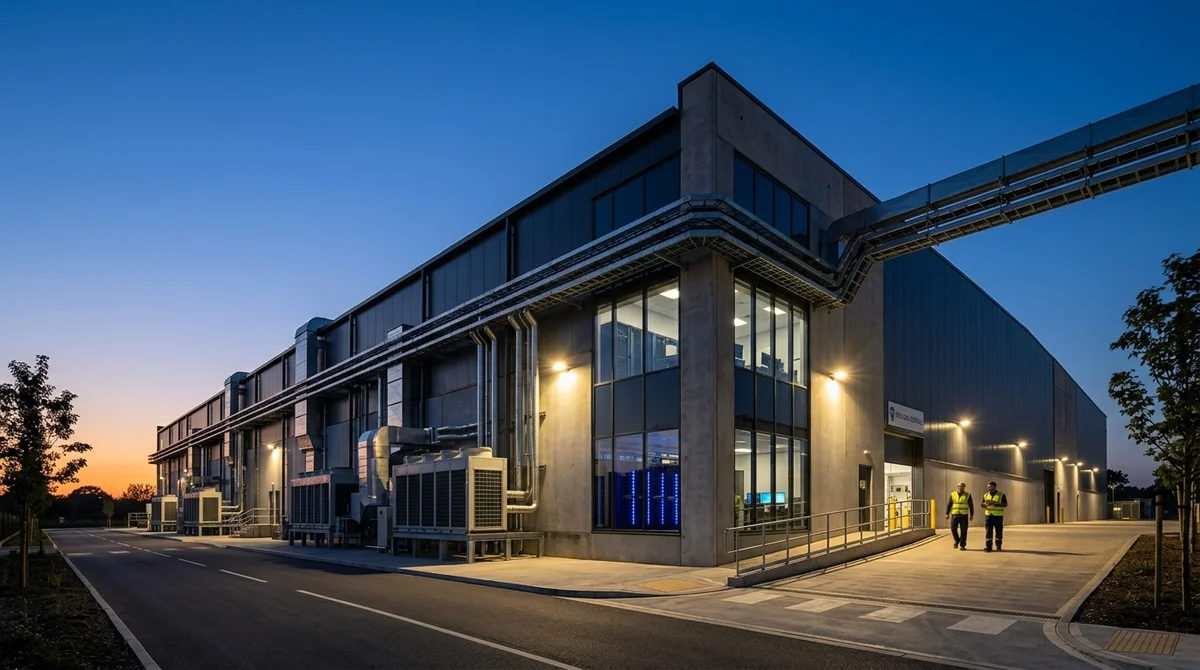
Business wants its own AI. Everyone asks: which model to choose? But nobody thinks about what that model will run on. PSM Unlimited stumbled on this problem. The team built a corporate AI agent, trained people, ready to scale — and hit the wall of hardware constraints. The solution came from a mistake: first comes infrastructure, then comes the model.
Why Model Is Only Half the Battle
When business talks about AI, everyone discusses algorithms, neural networks, model quality. That's natural — the model is visible, there are articles about it, you can demonstrate it. But AI doesn't live in the cloud of abstract parameter weights. It lives on servers. And you need the right servers.
In practice it looks like this: you deployed an agent, it works on test data. Start scaling — and hit a wall. Not enough GPUs. Memory ran out. Network can't handle it. CPUs overheat. You'll have to redo the infrastructure, then retune the model to the new conditions.
What is AI Ready Framework
AI ready is when infrastructure is prepared in advance, before you've chosen which model to run. The foundation is built, you can build on it. This includes:
- Computing — GPU/TPU clusters with sufficient power for parallel processing
- Memory — VRAM on graphics cards and server RAM without bottlenecks
- Storage — fast SSDs for models, logs, cache (not HDD)
- Network — low latency between nodes, high bandwidth
- Cooling and Power — readiness for 24/7 loads
This is not a specific model, not TensorFlow or PyTorch. This is a physical house where any AI can live without modifications.
What This Gives Business
First — speed. You don't spend months rebuilding servers. You don't wait for GPU shipments. You take a ready base and launch the model tomorrow.
Second — scalability. When new requirements came (more users, heavier model), the infrastructure is already ready for it. No architectural overhaul needed, just change the config.
Third — costs. Proper infrastructure saves electricity (efficient cooling, power), expensive resources (no equipment overbuy), engineer time (no fighting bottlenecks).
What This Means
AI is not magic in the cloud. It's silicon, plastic, and electricity. Choosing a model is easier than preparing infrastructure. So business that starts with infrastructure, not model, wins against competitors who learn about hardware problems only after they've written the code.
- Oct 29, 2026Sonnet 4.6 with Sourcegraph MCP Server Beats Fable 5: 0.698 vs 0.568
- Oct 29, 2026Stale Facts in Agent Memory Drop Qwen2.5 Accuracy from 100% to 44.6%
- Oct 29, 2026Skills for AI agents hurt weak models: a meta-skill recovered up to 14 points
- Oct 29, 2026AI agent on GPT-5.5 audits 2600 TravelLine autotests in two weeks
Key Questions Answered
Why Model Is Only Half the Battle?
When business talks about AI, everyone discusses algorithms, neural networks, model quality. That's natural — the model is visible, there are articles about it, you can demonstrate it. But AI doesn't live in the cloud of abstract parameter weights. It lives on servers. And you need the right servers. In practice it looks like this: you deployed an agent, it works on test data. Start scaling — and hit a wall. Not enough GPUs. Memory ran out. Network can't handle it. CPUs overheat. You'll have to redo the infrastructure, then retune the model to the new conditions.
What is AI Ready Framework?
AI ready is when infrastructure is prepared in advance, before you've chosen which model to run. The foundation is built, you can build on it. This includes: Computing — GPU/TPU clusters with sufficient power for parallel processing Memory — VRAM on graphics cards and server RAM without bottlenecks Storage — fast SSDs for models, logs, cache (not HDD) Network — low latency between nodes, high bandwidth Cooling and Power — readiness for 24/7 loads This is not a specific model, not TensorFlow or PyTorch. This is a physical house where any AI can live without modifications.
What This Gives Business?
First — speed. You don't spend months rebuilding servers. You don't wait for GPU shipments. You take a ready base and launch the model tomorrow. Second — scalability. When new requirements came (more users, heavier model), the infrastructure is already ready for it. No architectural overhaul needed, just change the config. Third — costs. Proper infrastructure saves electricity (efficient cooling, power), expensive resources (no equipment overbuy), engineer time (no fighting bottlenecks).
Build & Ship Production AI Agents Without Boilerplate Code
Start your free 72-hour trial at Hamidun Academy (academy.hamidun.com) — interactive lessons on Claude Code & Cursor, live Tech Radar, and production agent templates.
The AI world, distilled — once a week
Seven stories that actually mattered, hand-picked. No noise, no reposts, no press releases.
Done! Check your inbox for a confirmation.