Evantic Capital Founder: UK Needs Affordable Power Plants for AI Growth
Matt Miller, founder of British venture fund Evantic Capital ($400M) and former Sequoia Capital partner, warned: without investments in affordable power plants — including nuclear energy — the UK risks losing the AI race. Expensive energy is already deterring data centers and startups from deploying infrastructure in the country.
AI-processed from Bloomberg Tech; edited by Hamidun News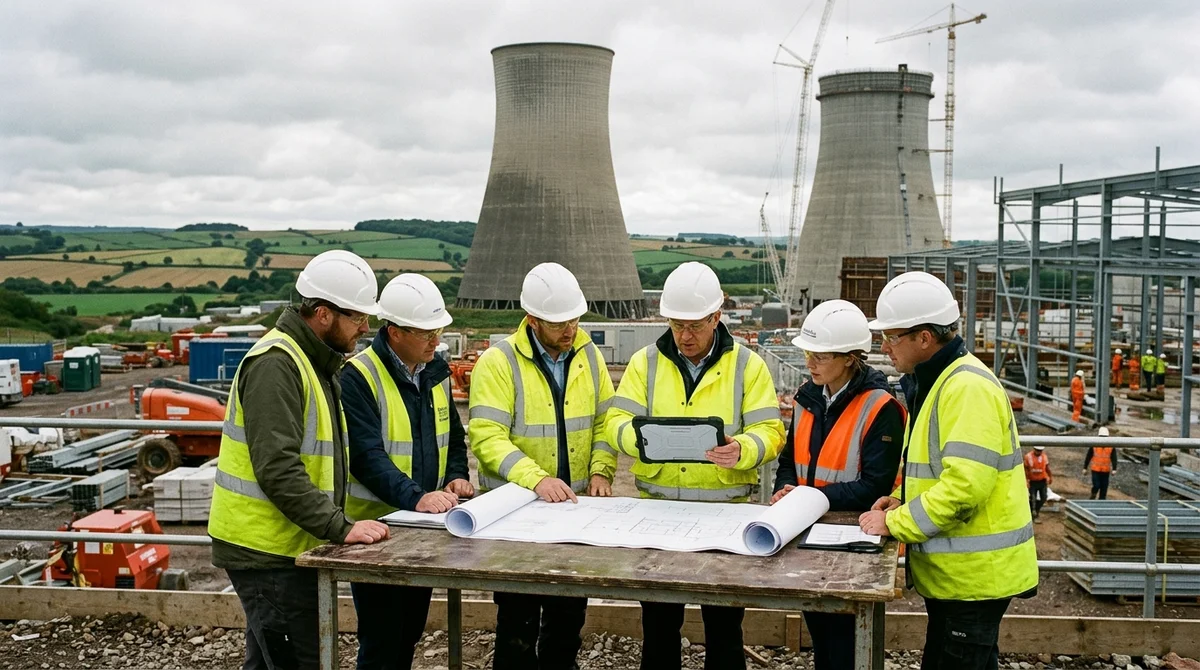
Matt Miller, founder of venture fund Evantic Capital and former Sequoia Capital partner, stated: without large-scale investments in affordable energy infrastructure, the UK risks losing in the global race for artificial intelligence.
Energy as a Bottleneck
Miller manages Evantic Capital — a British fund with $400 million in assets, founded in 2025. In an interview with Bloomberg Tech: Europe, he explained that the rapid growth of AI requires enormous volumes of electricity, and British infrastructure is not yet ready to meet this demand at the necessary scale. The problem is not only the amount of capacity, but also its cost.
Expensive electricity undermines the competitiveness of data centers and AI startups: companies increasingly choose their infrastructure jurisdiction based on, among other things, electricity tariffs. The USA, Sweden, France, and a number of Middle Eastern countries are actively building computational infrastructure, attracting companies precisely through low operating costs. If the UK does not solve the problem of affordable energy in the coming years, it risks becoming a less attractive platform for AI infrastructure.
According to analysts' forecasts, global electricity consumption by data centers will more than double by 2030. For companies training large language models, electricity bills are one of the main expense items alongside engineer salaries.
Why Nuclear
Among the tools to solve this problem, Miller singled out nuclear energy. It is capable of simultaneously providing cheap, reliable, and low-carbon electricity on an industrial scale — three properties critical for the AI industry:
- Baseload power — data centers operate around the clock, and nuclear plants provide stable generation unlike solar and wind energy
- Low carbon footprint — major technology companies are bound by strict ESG obligations to investors and customers
- Scalability — small modular reactors (SMR) are built faster than traditional nuclear plants and fit better into existing power grids
- Price predictability — long-term contracts with nuclear operators protect against gas market volatility
The UK has already announced plans to build new nuclear facilities, but critics point to chronic delays: Hinkley Point C has been under construction with years-long delays against the schedule and significant budget overruns.
A Signal to Policymakers
Miller's position is remarkable because it comes not from an energy industry lobbyist, but from an investor with a portfolio in technology. This is an important signal: the energy supply issue has become part of standard investment analysis when assessing countries' attractiveness for technology business.
"We need affordable power plants, including nuclear energy, for the country to compete in AI," —
Matt Miller, Bloomberg Tech: Europe.
Before founding Evantic Capital, Miller worked as a partner at Sequoia Capital — one of the world's most influential venture funds. His position reflects a global trend: Microsoft, Google, and Amazon in 2024–2025 concluded direct long-term contracts with nuclear plant operators in the USA to provide AI data centers with reliable baseload energy with a low carbon footprint. Whoever first guarantees their data centers with nuclear power gains the opportunity to scale AI workloads without environmental constraints and price risks.
What It Means
The energy deficit is transforming from a technical problem into a strategic one. Countries that have ensured affordable and reliable electricity gain an advantage in attracting AI companies — those who delay risk losing it. For the UK, claiming a role as Europe's AI hub, solving the energy issue becomes as much a priority as visa policy for attracting technical specialists and government funding for fundamental research.
- Oct 28, 2026A 2015 CNN Beat GPT-6 Astra and Claude Fable 5.1 at Skin Cancer Diagnosis
- Oct 28, 2026Google taught an LLM to “sleep”: SLEEP consolidates knowledge into weights, up to 10 million tokens
- Oct 28, 2026Keystone removes the model name from code: open-source LLM gateway adds 0.64 ms
- Oct 28, 2026Wired Tested 6 AI Agents in a Day: Dots Leads, Gemini Spark Fails at Lunch
Key Questions Answered
What are the key details on Energy as a Bottleneck?
Miller manages Evantic Capital — a British fund with $400 million in assets, founded in 2025. In an interview with Bloomberg Tech: Europe, he explained that the rapid growth of AI requires enormous volumes of electricity, and British infrastructure is not yet ready to meet this demand at the necessary scale. The problem is not only the amount of capacity, but also its cost. Expensive electricity undermines the competitiveness of data centers and AI startups: companies increasingly choose their infrastructure jurisdiction based on, among other things, electricity tariffs. Th
Why Nuclear?
Among the tools to solve this problem, Miller singled out nuclear energy. It is capable of simultaneously providing cheap, reliable, and low-carbon electricity on an industrial scale — three properties critical for the AI industry: Baseload power — data centers operate around the clock, and nuclear plants provide stable generation unlike solar and wind energy Low carbon footprint — major technology companies are bound by strict ESG obligations to investors and customers Scalability — small modular reactors (SMR) are built faster than traditional nuclear plants and fit bette
What are the key details on A Signal to Policymakers?
Miller's position is remarkable because it comes not from an energy industry lobbyist, but from an investor with a portfolio in technology. This is an important signal: the energy supply issue has become part of standard investment analysis when assessing countries' attractiveness for technology business. "We need affordable power plants, including nuclear energy, for the country to compete in AI," — Matt Miller, Bloomberg Tech: Europe. Before founding Evantic Capital, Miller worked as a partner at Sequoia Capital — one of the world's most influential venture funds. His pos
Ship AI Faster with Founders, Engineers & Weekly Architecture Reviews
Inside Vibe Club (hamidun.com/club) — weekly live masterminds with Zhemal Khamidun, Tech Radar, full LMS access, and 370+ production Claude Code skills.
The AI world, distilled — once a week
Seven stories that actually mattered, hand-picked. No noise, no reposts, no press releases.
Done! Check your inbox for a confirmation.