US bans foreigners from Anthropic's top models — company disabled them for everyone
The US government demanded that Anthropic shut down foreign users' access to two of its most powerful models — Claude Fable 5 and Mythos 5. Instead of targeted blocking by citizenship, the company simply disabled both models for everyone — including Americans. This happened on June 12 and marked a reversal of the open global access policy.
AI-processed from TNW; edited by Hamidun News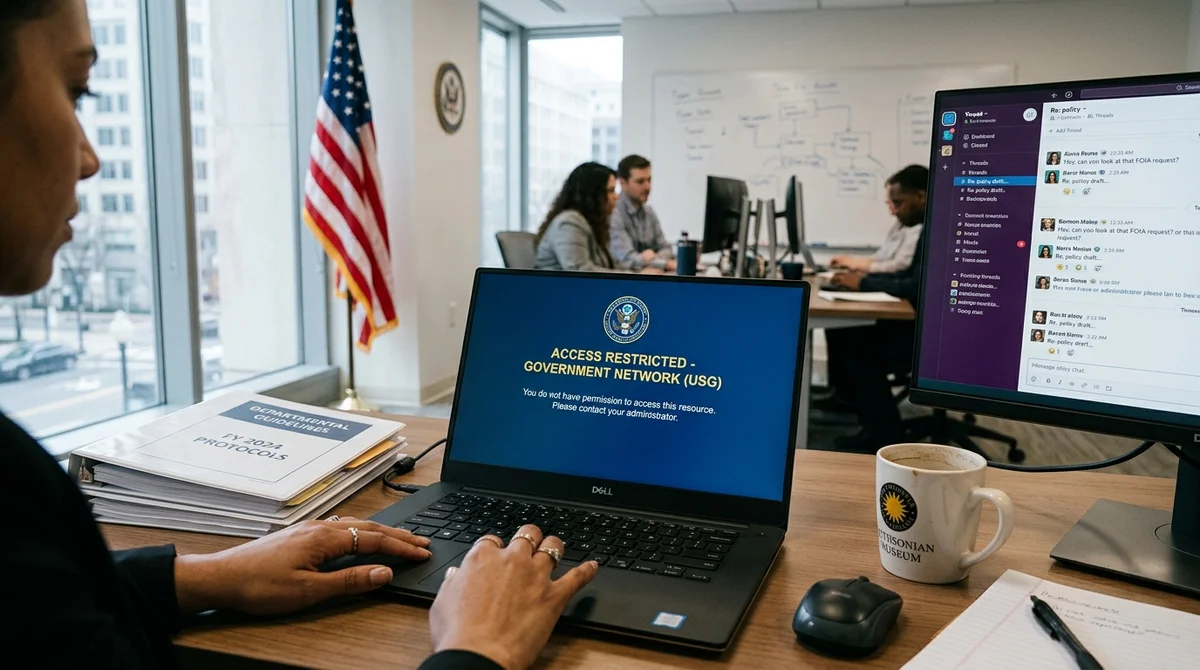
The U.S. government has forced Anthropic to block access to its two most powerful models from foreign users. Instead of implementing selective citizenship-based blocking within a shared cloud service, Anthropic has disabled Claude Fable 5 and Claude Mythos 5 globally for everyone.
What happened
On the evening of June 12, 2026, Anthropic unexpectedly deactivated Claude Fable 5 and Claude Mythos 5 worldwide — including for users in the United States itself. The reason: a directive from the U.S. government requiring that the company's two most powerful flagship models be blocked from foreign citizens.
These are Anthropic's top products — Claude Fable 5 and Claude Mythos 5 were positioned as the company's most advanced systems, designed for complex enterprise tasks. They are the ones covered by the government directive.
Technically, implementing precise citizenship verification within a unified cloud service is a non-trivial task. It requires verifying documents from millions of users, configuring exception systems for dual citizenship, and bearing legal responsibility for identification errors. Anthropic did not develop such a mechanism on a tight timeline and simply disabled both models for everyone without exception — a more radical but technically straightforward solution.
Only three days passed between receiving the directive and the global shutdown. The government set tight deadlines, leaving no time for a smooth transition.
Why this is called a turnaround
In recent years, Anthropic has openly positioned Claude as a global service. The company expanded language support, built partnerships with European and Asian corporate clients, and attracted international developers through its API. The forced shutdown of flagship models starkly contrasts with this open-access strategy.
- Claude Fable 5 and Claude Mythos 5 have been unavailable since the evening of June 12, 2026
- The shutdown affected users in all countries, including U.S. citizens
- The formal reason — an authority requirement to block access for foreign citizens
- This is the first known case of a global shutdown of a commercial AI model by government directive
Previously, Anthropic adhered to the principle of open global access. Now that principle is violated — not by the company's decision, but by direct order from U.S. authorities.
Export controls reach models
The U.S. has long applied export restrictions on hardware: bans on shipping Nvidia H100 and H200 chips to China have become standard tools of technological policy. Now this approach is being applied for the first time directly to software AI systems.
The precedent is significant for several reasons. It demonstrates the government's willingness to regulate AI capabilities as a strategic resource on par with chips — the boundary between a commercial software product and a strategic technology is shifting. This creates legal uncertainty for all American AI companies whose significant revenue comes from international clients.
For Anthropic's corporate clients outside the U.S., the situation is particularly painful: they built products and internal processes around specific models that are now inaccessible without warning. The company has yet to announce when and under what conditions access will be restored.
What this means
The Anthropic case is the first clear signal that the U.S. government is prepared to regulate AI systems as objects of export control, not just chips. For OpenAI, Google DeepMind, and other market players, this is a troubling precedent. For international companies and developers building businesses on American AI services, it is a reminder: technological access can be interrupted at any moment for national security reasons beyond their control.
- Oct 28, 2026Wired Tested 6 AI Agents in a Day: Dots Leads, Gemini Spark Fails at Lunch
- Oct 28, 2026Anthropic files for IPO: $16.3 billion in revenue in six months, ticker ANT
- Oct 28, 2026Anthropic reveals how it builds Claude with Claude: the brain separate from the hands
- Oct 28, 2026Anthropic Turns Claude Code Into a Platform: Claude Mods Flip the Agent Harness
Key Questions Answered
What happened?
On the evening of June 12, 2026, Anthropic unexpectedly deactivated Claude Fable 5 and Claude Mythos 5 worldwide — including for users in the United States itself. The reason: a directive from the U.S. government requiring that the company's two most powerful flagship models be blocked from foreign citizens. These are Anthropic's top products — Claude Fable 5 and Claude Mythos 5 were positioned as the company's most advanced systems, designed for complex enterprise tasks. They are the ones covered by the government directive. Technically, implementing precise citizenship ve
Why this is called a turnaround?
In recent years, Anthropic has openly positioned Claude as a global service. The company expanded language support, built partnerships with European and Asian corporate clients, and attracted international developers through its API. The forced shutdown of flagship models starkly contrasts with this open-access strategy. Claude Fable 5 and Claude Mythos 5 have been unavailable since the evening of June 12, 2026 The shutdown affected users in all countries, including U.S. citizens The formal reason — an authority requirement to block access for foreign citizens This is the f
What are the key details on Export controls reach models?
The U.S. has long applied export restrictions on hardware: bans on shipping Nvidia H100 and H200 chips to China have become standard tools of technological policy. Now this approach is being applied for the first time directly to software AI systems. The precedent is significant for several reasons. It demonstrates the government's willingness to regulate AI capabilities as a strategic resource on par with chips — the boundary between a commercial software product and a strategic technology is shifting. This creates legal uncertainty for all American AI companies whose sign
Test Frontier LLMs & Autonomous Agents in One Workspace
Run Claude Opus 5.5, GPT-6, Gemini 3.1, and DeepSeek side-by-side in Nomad AI (nomadnet.ai) — unified model routing, deep research, and multimodal workflows under one subscription.
The AI world, distilled — once a week
Seven stories that actually mattered, hand-picked. No noise, no reposts, no press releases.
Done! Check your inbox for a confirmation.