Microsoft and Chevron sign 20-year power deal for Texas data center
Microsoft and Chevron have signed a 20-year agreement to supply electricity to a new data center in West Texas. Chevron will power the facility from gas-fired power plants. Given its planned scale, the new complex could become one of the largest in the US. The deal reflects the growing demand among tech giants for long-term, guaranteed energy sources for AI infrastructure.
AI-processed from Bloomberg Tech; edited by Hamidun News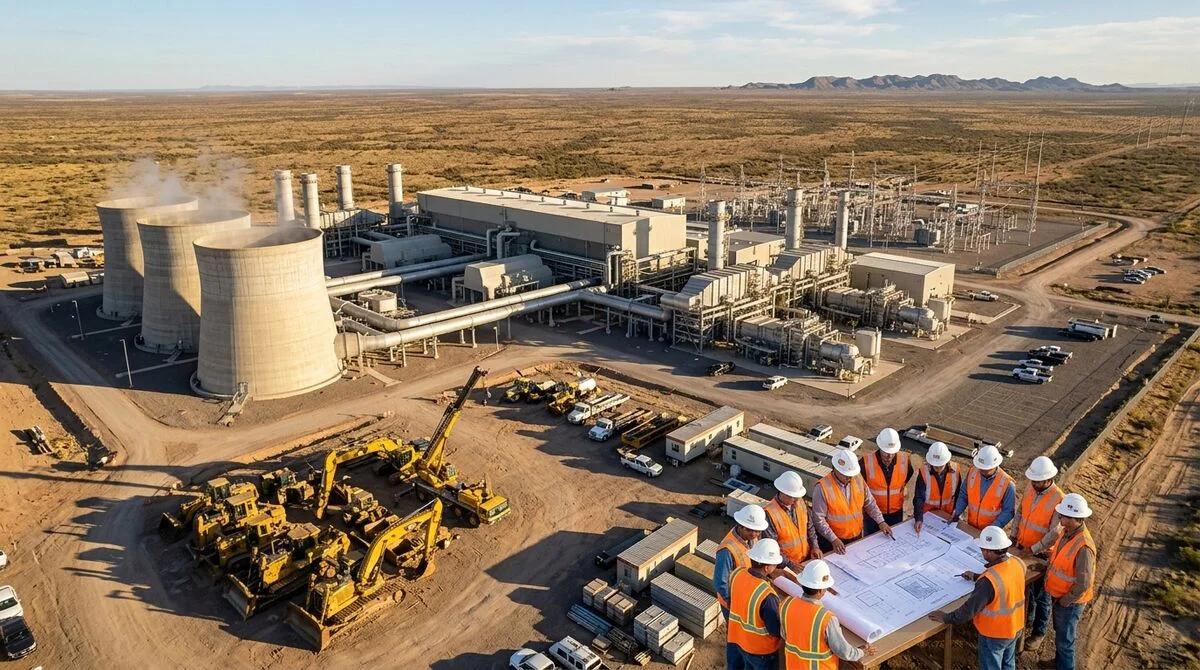
Microsoft and Chevron have signed a 20-year contract to supply electricity to a new data center in West Texas. Given its planned scale, it could rank among the largest computing facilities in the US.
Details of the agreement
Under the deal, Chevron will supply the data center with electricity generated at gas-fired power plants. The contract runs for 20 years, which is unusual even for the energy industry. Such long-term commitments allow Microsoft to raise financing for building the infrastructure, and let Chevron plan production and generation volumes decades ahead.
The facility is still in the design stage. If the plans are carried out at the stated scale, it could become one of the largest computing complexes in the country, comparable to Google's and Amazon's flagship clusters in Virginia and Ohio.
West Texas was not chosen by chance: the region has large natural gas reserves and well-developed pipeline infrastructure, and land plots and building permits are easier and cheaper to obtain here than on the congested coast.
Why gas rather than green energy
Large AI data centers place strict demands on power supply: stable baseload, minimal interruptions, and the ability to scale up capacity quickly. Renewable sources such as solar panels and wind turbines cannot deliver that reliability without large-scale storage systems. Natural gas remains the best choice for baseload: fast startup, controllable output, and proven infrastructure.
Although Microsoft, as part of its climate strategy, has declared a transition to carbon-free energy by 2030, the scale of AI computing demand forces the company to take a pragmatic view of the sources available right now.
For Chevron, the contract means business diversification. Instead of selling gas on the spot market at volatile prices, it gets a guaranteed long-term buyer with fixed volumes. This lowers risk and creates a predictable cash flow for a decade ahead.
AI's energy hunger
Over the past two years, data center electricity consumption in the US has risen to record levels. The biggest players (Microsoft, Google, Amazon, Meta*) have found that traditional power grids cannot keep up with the growth in AI workloads. According to Goldman Sachs estimates, US data center electricity consumption will double by 2030.
In response, tech giants have begun striking deals that are unusual for the industry:
- Microsoft restarted a reactor unit at the Three Mile Island nuclear plant to power its data centers
- Amazon is building a computing cluster next to an operating nuclear plant in Pennsylvania
- Google is investing in small modular reactors (SMRs)
- ExxonMobil and Occidental Petroleum are holding similar talks with tech companies
Microsoft's deal with Chevron follows the same logic: lock in a stable energy source for years ahead and avoid depending on overloaded public grids.
What this means
The deal reflects a long-term structural shift: AI infrastructure is becoming increasingly vertically integrated. Large tech companies are ceasing to buy electricity on the exchange and are starting to build their own supply chains, from gas wells to server racks.
For the oil and gas sector, this is an unexpected but very capacious new market. For the climate agenda, it is one more signal that decarbonizing critical infrastructure will take far longer than planned.
*Meta has been designated an extremist organization and is banned in Russia.
- Nov 1, 2026Google's StreamVibe video agent beats other models by 10.7% on response timing and quality
- Oct 30, 2026Mistral opens Large 4 weights: strong at code, but Chinese models score 32 to its 26
- Oct 30, 2026128 AI Agents With No Boss Passed 49% More Tests Than One
- Oct 29, 2026Stanford AI tool verifies part of Signal's code in half a day for under $500, versus five months of expert work
Key Questions Answered
What are the key details on Details of the agreement?
Under the deal, Chevron will supply the data center with electricity generated at gas-fired power plants. The contract runs for 20 years, which is unusual even for the energy industry. Such long-term commitments allow Microsoft to raise financing for building the infrastructure, and let Chevron plan production and generation volumes decades ahead. The facility is still in the design stage. If the plans are carried out at the stated scale, it could become one of the largest computing complexes in the country, comparable to Google's and Amazon's flagship clusters in Virginia
Why gas rather than green energy?
Large AI data centers place strict demands on power supply: stable baseload, minimal interruptions, and the ability to scale up capacity quickly. Renewable sources such as solar panels and wind turbines cannot deliver that reliability without large-scale storage systems. Natural gas remains the best choice for baseload: fast startup, controllable output, and proven infrastructure. Although Microsoft, as part of its climate strategy, has declared a transition to carbon-free energy by 2030, the scale of AI computing demand forces the company to take a pragmatic view of the so
What are the key details on AI's energy hunger?
Over the past two years, data center electricity consumption in the US has risen to record levels. The biggest players (Microsoft, Google, Amazon, Meta) have found that traditional power grids cannot keep up with the growth in AI workloads. According to Goldman Sachs estimates, US data center electricity consumption will double by 2030. In response, tech giants have begun striking deals that are unusual for the industry: Microsoft restarted a reactor unit at the Three Mile Island nuclear plant to power its data centers Amazon is building a computing cluster next to an opera
Test Frontier LLMs & Autonomous Agents in One Workspace
Run Claude Opus 5.5, GPT-6, Gemini 3.1, and DeepSeek side-by-side in Nomad AI (nomadnet.ai) — unified model routing, deep research, and multimodal workflows under one subscription.
The AI world, distilled — once a week
Seven stories that actually mattered, hand-picked. No noise, no reposts, no press releases.
Done! Check your inbox for a confirmation.