Senator Pocock demands ban on BigTech training AI on Australian content
Australian Senator David Pocock has demanded a clear public answer from the Albanese government: will it allow tech giants to train AI models on local authors’ content without consent or compensation? Amid active lobbying by AI companies, the cabinet is considering two options — special exemptions to copyright law or expanded licensing agreements. Albanese plans to announce the new AI policy in July.
AI-processed from Guardian; edited by Hamidun News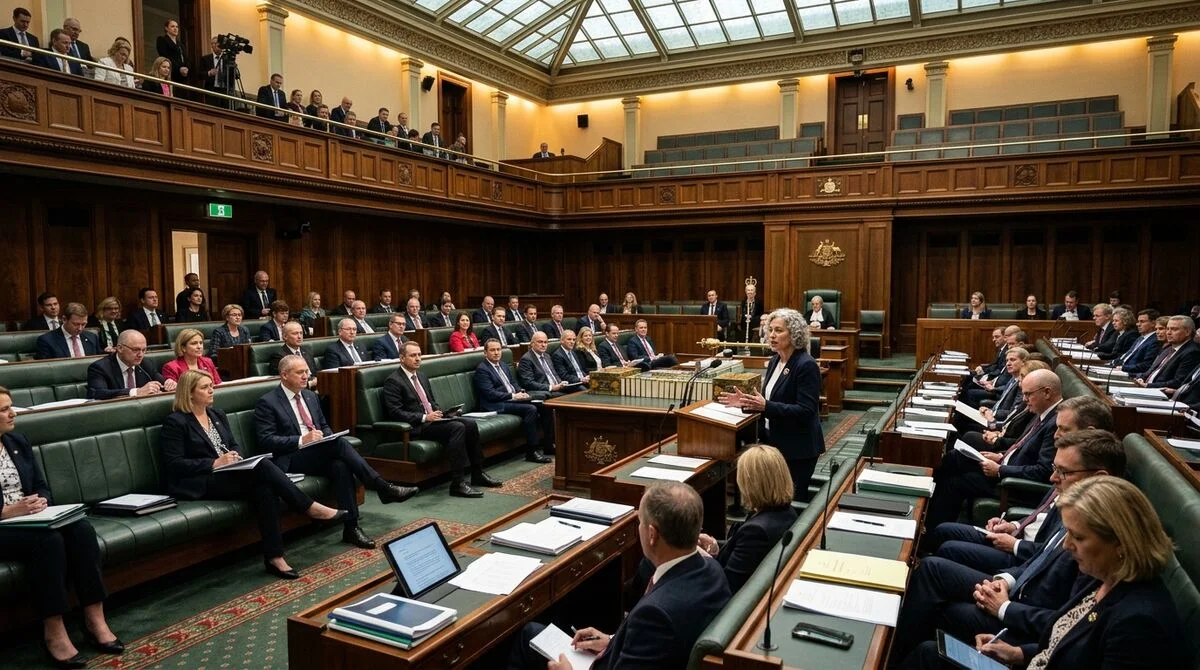
Independent Australian Senator David Pocock has demanded that the Albanese government publicly answer the question: will technology giants be allowed to train AI models on Australian content without author consent and compensation.
Sharp Question in Senate
At a Senate meeting on Tuesday, Pocock used the government questions procedure to raise the issue of intense lobbying by AI companies. According to the senator, industry representatives are pushing Canberra for one of two options: either a special "exemption" from copyright law for AI training purposes, or an expansion of existing licensing agreements. The Labor government is considering both scenarios as part of an upcoming copyright reform. The cabinet is examining competing proposals, and Prime Minister Anthony Albanese, according to available information, intends to present new AI policy as early as July 2026. Pocock insists: parliament and society must know about the government's intentions before the decision is made behind closed doors under lobbying pressure.
The Crux of the Conflict
At the heart of the dispute lies a question of ownership rights over content created by Australians. Large language models are trained on vast arrays of texts from open sources, and a significant portion of this content was created by local authors without their consent:
- articles and reports from Australian media
- books, novels, fiction and non-fiction works
- academic papers, research, scientific publications
- materials from professional and industry publications
- archives of public organizations, libraries, and cultural institutions
Advocates for copyright protection point out: AI companies are monetizing the work of journalists, writers, and scientists who never agreed to such use of their works. Without compensation, this is effectively unpaid seizure of professional content for the benefit of commercial corporations.
What the Industry Proposes
Major AI players — OpenAI, Google, Anthropic, and others — insist that training on publicly available data falls under the principle of fair use and requires neither rightsholder consent nor payment. They warn: strict licensing requirements will impede AI technology development and put Australian companies at a disadvantage compared to competitors from jurisdictions with more liberal regulation. Lobbyists are pushing for a 'carve-out' model — special copyright exemptions following the example of Japan, where such provisions are already enshrined in law. This approach would allow companies to freely use Australian content for model training without negotiating with each rightsholder. Critics of this option call it outright capitulation to pressure from multinational technology corporations.
What This Means
Australia has found itself at the forefront of a global dispute over content rights in the age of generative AI. Canberra's decision — whether to grant special industry exemptions or establish new licensing and compensation mechanisms — will set a precedent that other countries will follow. For media and the creative industry, the stakes are particularly high: their professional content most often serves as 'fuel' for training language models. Pocock has posed a direct question to the government: whom will it protect — Australian authors or technology corporations?
- Oct 28, 2026Keystone removes the model name from code: open-source LLM gateway adds 0.64 ms
- Oct 28, 2026Wired Tested 6 AI Agents in a Day: Dots Leads, Gemini Spark Fails at Lunch
- Oct 28, 2026Anthropic Turns Claude Code Into a Platform: Claude Mods Flip the Agent Harness
- Oct 28, 2026Liquid AI releases LFM2.5-24B-A2B: an agent model with 2B active parameters
Key Questions Answered
What are the key details on Sharp Question in Senate?
At a Senate meeting on Tuesday, Pocock used the government questions procedure to raise the issue of intense lobbying by AI companies. According to the senator, industry representatives are pushing Canberra for one of two options: either a special "exemption" from copyright law for AI training purposes, or an expansion of existing licensing agreements. The Labor government is considering both scenarios as part of an upcoming copyright reform. The cabinet is examining competing proposals, and Prime Minister Anthony Albanese, according to available information, intends to pre
What are the key details on The Crux of the Conflict?
At the heart of the dispute lies a question of ownership rights over content created by Australians. Large language models are trained on vast arrays of texts from open sources, and a significant portion of this content was created by local authors without their consent: articles and reports from Australian media books, novels, fiction and non-fiction works academic papers, research, scientific publications materials from professional and industry publications archives of public organizations, libraries, and cultural institutions Advocates for copyright protection point out
What the Industry Proposes?
Major AI players — OpenAI, Google, Anthropic, and others — insist that training on publicly available data falls under the principle of fair use and requires neither rightsholder consent nor payment. They warn: strict licensing requirements will impede AI technology development and put Australian companies at a disadvantage compared to competitors from jurisdictions with more liberal regulation. Lobbyists are pushing for a 'carve-out' model — special copyright exemptions following the example of Japan, where such provisions are already enshrined in law. This approach would
Test Frontier LLMs & Autonomous Agents in One Workspace
Run Claude Opus 5.5, GPT-6, Gemini 3.1, and DeepSeek side-by-side in Nomad AI (nomadnet.ai) — unified model routing, deep research, and multimodal workflows under one subscription.
The AI world, distilled — once a week
Seven stories that actually mattered, hand-picked. No noise, no reposts, no press releases.
Done! Check your inbox for a confirmation.