DeepMind predicts a breakthrough in physical intelligence for robots
Google DeepMind CEO Demis Hassabis says robotics is about to have its breakthrough, calling it the moment robots gain "physical intelligence." This could radically expand what robots can do in the real world and open new possibilities for automation and for how machines interact with their surroundings.
AI-processed from Bloomberg Tech; edited by Hamidun News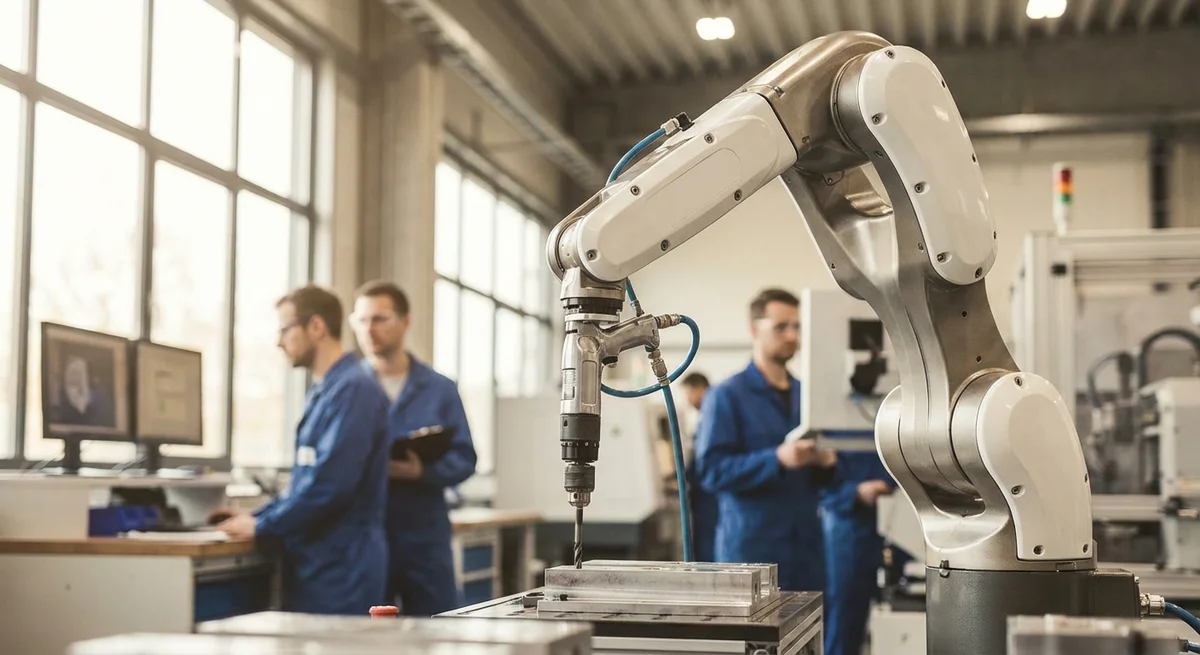
Google DeepMind CEO Demis Hassabis says robotics is on the verge of a breakthrough moment in the development of "physical intelligence." His remarks at Bloomberg House in Davos drew strong interest across the industry because they point to a potential shift: robots moving beyond preprogrammed tasks toward more adaptive, independent behavior in the physical world.
"Physical intelligence" refers to a robot's ability to understand, interact with, and adapt to its environment using sensors, data processing, and machine learning algorithms. Traditional robots carry out predefined actions. Robots with physical intelligence would be able to make decisions in real time, learn from experience, and handle complex tasks in dynamic, unpredictable conditions.
Robotics currently faces several limitations. Robots often can't work effectively in complex or changing environments, they require precise programming, and they lack flexibility. Advances in physical intelligence would let robots overcome these limits, making them more versatile and useful across many fields.
The implications for a range of industries are enormous. In manufacturing, it could lead to more flexible, autonomous production lines that adapt to shifting market demands. In logistics and warehousing, robots would be able to navigate complex spaces on their own, optimize routes, and handle different types of cargo. In the service sector, robots would be able to interact with people more naturally and efficiently, delivering personalized services.
But physical intelligence also raises important questions about ethics and safety. Strict standards and rules need to be developed to ensure robots don't pose a threat to people or the environment. It's also important to account for the social consequences of automation and to retrain workers for new jobs.
Ultimately, Demis Hassabis's statement signals that robotics is on the threshold of significant change. Physical intelligence could produce robots capable of solving complex real-world tasks, opening new opportunities for automation and efficiency gains across industries. Still, the ethical and social consequences of this technology must not be overlooked, and strategies to mitigate them need to be developed. The shift goes beyond a technological leap: it fundamentally changes how we interact with machines and the world around us.
- Nov 2, 2026Karpathy builds a YouTube clone with 6454 videos from Hacker News recommendations in two hours
- Nov 2, 2026Karpathy used Claude to build HackerTube from 6,454 videos recommended on Hacker News
- Nov 2, 2026Anthropic needs to grow revenue 32% a year to cover $850 billion in contracts
- Nov 2, 2026Bun creator uses Claude Code to port 750K lines from Zig to Rust in 11 days
Test Frontier LLMs & Autonomous Agents in One Workspace
Run Claude Opus 5.5, GPT-6, Gemini 3.1, and DeepSeek side-by-side in Nomad AI (nomadnet.ai) — unified model routing, deep research, and multimodal workflows under one subscription.
The AI world, distilled — once a week
Seven stories that actually mattered, hand-picked. No noise, no reposts, no press releases.
Done! Check your inbox for a confirmation.