Anthropic wins US approval for expanded access to Mythos 5
Anthropic has received US government approval for expanded access to its powerful Mythos 5 model. The Trump administration had earlier blocked it over national security concerns. With the dispute settled, the company may now deploy the model in critical sectors: energy, defense and healthcare. Analysts see the move as an attempt by the US to balance control over AI with keeping its technological lead.
AI-processed from Bloomberg Tech; edited by Hamidun News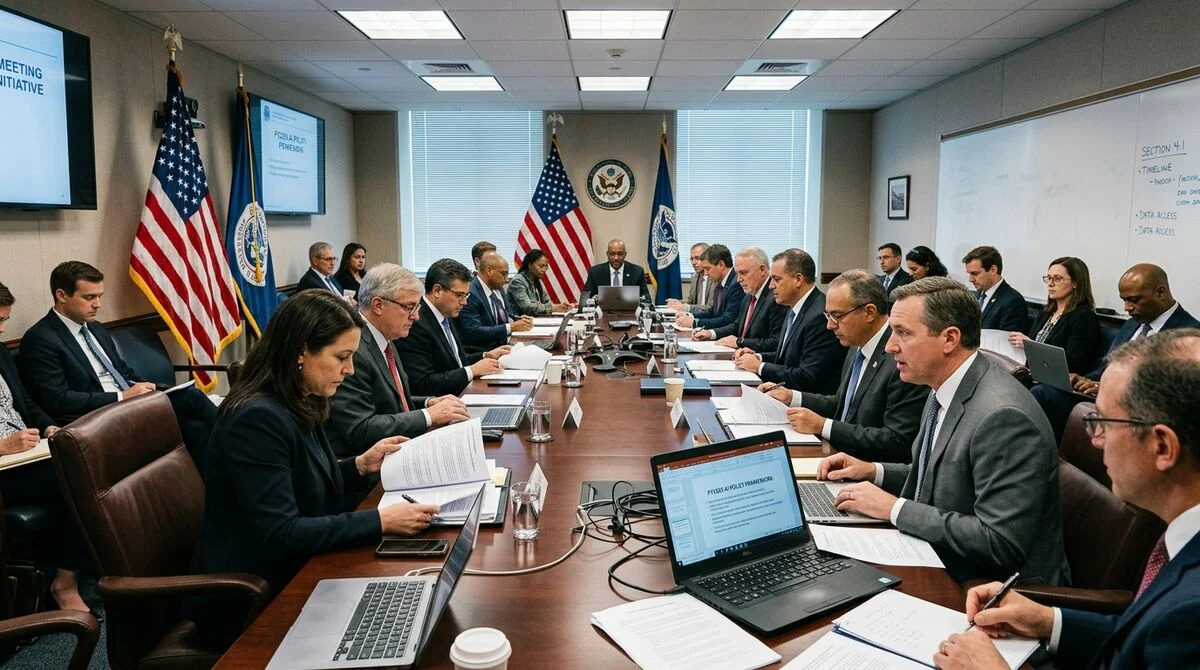
Anthropic has received US government approval to partially restore access to its powerful AI model Mythos 5. The restrictions were imposed over the Trump administration's national security concerns. Now that the dispute has been settled, the company can again offer expanded access to the technology in a number of strategically important sectors.
What happened with Mythos 5
Mythos 5 is one of the most powerful language models in Anthropic's portfolio. It was previously restricted because US authorities were concerned about the potential threats its capabilities could pose to national security.
This is a rare public case of direct regulatory intervention in access to a commercial AI model. Most disagreements between AI companies and the government are settled privately or through industry compliance mechanisms. The fact that this one became public, and ended in approval rather than a final ban, makes it a significant precedent for the whole industry.
National security versus AI competitiveness
Theresa Payton, CEO of Fortalice Solutions and a former White House chief information officer, sees the case as a balancing act typical of the current administration: the US does not intend to cede the AI leadership race to China, but is not prepared to put national interests at risk for the sake of faster adoption.
"This shows that the US is prioritizing national security while at the same time supporting the adoption of domestic AI in critical sectors," —
Theresa Payton.
Critical sectors traditionally mean energy, the defense industry, healthcare and financial infrastructure. These are the areas where powerful AI models can deliver a strategic advantage, and where their uncontrolled use worries regulators and intelligence agencies most.
How this changes the rules of the game
The Mythos 5 precedent captures trends that will shape the regulatory environment for the AI market in the coming years:
- Powerful models increasingly go through direct approval by federal authorities before broader deployment
- The US is showing it is willing to restrict even its own leading AI companies when risks are justified
- Successfully settling a dispute creates a working model for dialogue between AI business and the government
- Companies targeting the government and defense market should be ready for in-depth technical reviews
- Quickly addressing objections is becoming a competitive advantage in winning government contracts
This matters all the more given the pressure on American AI companies not to lose ground to international competitors. Regulators face a difficult task: encouraging domestic innovation while keeping control over which capabilities end up in whose hands.
What this means
Anthropic's approval is not an isolated episode but part of an emerging practice of government oversight of powerful AI systems in the US. Companies that work with advanced models and want a share of the government or defense market can expect more structured interaction with authorities. The Mythos 5 case shows that such interaction can be resolved, provided the company is willing to disclose details and quickly address objections.
- Nov 1, 2026Local models lose to Opus and Codex: 0.21 on a MacBook versus 1.00 for Codex
- Nov 1, 2026Kimi scores 96.2% on a 1C database analytics test and emerges as a fallback if Claude access is blocked
- Nov 1, 2026OpenAI Rewrites GPT Behavior Rules: Five Values and a Chain of Command
- Nov 1, 2026Google admits AI Mode cuts search revenue, shares fall 15%
Key Questions Answered
What happened with Mythos 5?
Mythos 5 is one of the most powerful language models in Anthropic's portfolio. It was previously restricted because US authorities were concerned about the potential threats its capabilities could pose to national security. This is a rare public case of direct regulatory intervention in access to a commercial AI model. Most disagreements between AI companies and the government are settled privately or through industry compliance mechanisms. The fact that this one became public, and ended in approval rather than a final ban, makes it a significant precedent for the whole ind
What are the key details on National security versus AI competitiveness?
Theresa Payton, CEO of Fortalice Solutions and a former White House chief information officer, sees the case as a balancing act typical of the current administration: the US does not intend to cede the AI leadership race to China, but is not prepared to put national interests at risk for the sake of faster adoption. "This shows that the US is prioritizing national security while at the same time supporting the adoption of domestic AI in critical sectors," — Theresa Payton. Critical sectors traditionally mean energy, the defense industry, healthcare and financial infrastruct
How this changes the rules of the game?
The Mythos 5 precedent captures trends that will shape the regulatory environment for the AI market in the coming years: Powerful models increasingly go through direct approval by federal authorities before broader deployment The US is showing it is willing to restrict even its own leading AI companies when risks are justified Successfully settling a dispute creates a working model for dialogue between AI business and the government Companies targeting the government and defense market should be ready for in-depth technical reviews Quickly addressing objections is becoming
Test Frontier LLMs & Autonomous Agents in One Workspace
Run Claude Opus 5.5, GPT-6, Gemini 3.1, and DeepSeek side-by-side in Nomad AI (nomadnet.ai) — unified model routing, deep research, and multimodal workflows under one subscription.
The AI world, distilled — once a week
Seven stories that actually mattered, hand-picked. No noise, no reposts, no press releases.
Done! Check your inbox for a confirmation.