NVIDIA Confidential Computing: protecting data during AI inference without sacrificing speed
NVIDIA presented Confidential Computing, a hardware-based technology that protects data directly during AI computation. Unlike standard encryption, data remains encrypted even inside the GPU during inference. The solution is aimed at agentic AI systems, where sensitive data passes through multi-step pipelines. NVIDIA says the protection does not reduce performance.
AI-processed from NVIDIA Developer Blog; edited by Hamidun News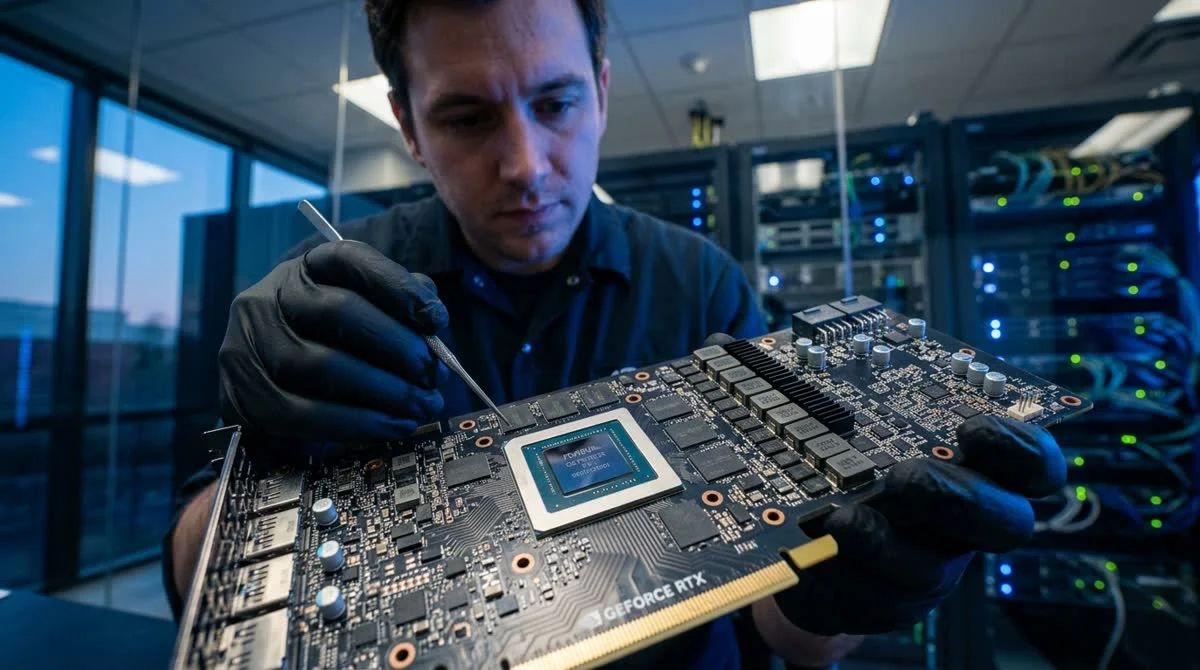
NVIDIA published in February 2025 a technical overview of Confidential Computing (CC) — a hardware solution for protecting corporate data directly in the process of AI computations, developed with an eye toward the era of agent systems.
Why security became the main barrier for AI
Wide adoption of AI in organizations is hindered by three interconnected problems: data confidentiality, sovereignty — that is, control over where and how data is processed — and security at the moment of direct computations, data-in-use. Traditional encryption mechanisms cover data at rest and in transit, but at the moment of inference — when the GPU actually processes the request — data becomes available inside memory. This is precisely the "open" moment that is the key vulnerability in corporate AI deployments. For industries with strict regulatory requirements — finance, medicine, jurisprudence, public sector — this gap historically has blocked or significantly limited the deployment of AI models from third-party providers.
What is NVIDIA Confidential Computing
The solution implements data protection at the hardware level: even during GPU computations, data remains encrypted and isolated inside a trusted execution environment (Trusted Execution Environment, TEE). Neither the operating system, nor the hypervisor, nor other processes gain access to the information being processed. Key characteristics of the technology:
- Hardware data isolation throughout the entire lifecycle: storage, transmission, and direct computations
- Protection is implemented at the GPU architecture level, not in the software layer on top of it
- Addresses confidentiality, data sovereignty, and security during inference simultaneously
- NVIDIA claims an absence of significant performance losses compared to unprotected computations
The last claim is a principle point of differentiation: traditional hardware security mechanisms created substantial overhead, forcing teams to sacrifice either speed or protection.
Why this is needed for agent systems
The architecture of agent AI fundamentally changes the threat model. An agent that independently formulates chains of actions — calls tools, works with databases, accesses corporate documents — processes sensitive data not once, but throughout the entire multi-step pipeline. In such architecture, protection only at "input" and "output" is insufficient: data must be guarded at every step of the chain. It is precisely for this scenario that NVIDIA positions Confidential Computing as a foundational infrastructure component. For organizations that feared transferring corporate data to AI models from third-party providers, hardware isolation guarantees potentially remove the key objection — without the need to build isolated on-premise infrastructure.
What does this mean
As agent AI systems transition from laboratories to production, hardware security during inference turns from an option into a basic requirement. NVIDIA's approach — protection without performance compromises — may become the standard for corporate AI deployment in regulated industries.
- Oct 28, 2026AdaPRA lifts Qwen 80B by 24.5 points on data science leaderboards
- Oct 28, 2026AOS-Bench: Agents Separated by 0.6 Points in Isolation Deliver 54% and 68% of the Same Tasks
- Oct 28, 2026CuraLoc finds bugs in repositories with a single plan and uses 90% fewer tokens
- Oct 28, 2026Wired Tested 6 AI Agents in a Day: Dots Leads, Gemini Spark Fails at Lunch
Key Questions Answered
Why security became the main barrier for AI?
Wide adoption of AI in organizations is hindered by three interconnected problems: data confidentiality, sovereignty — that is, control over where and how data is processed — and security at the moment of direct computations, data-in-use. Traditional encryption mechanisms cover data at rest and in transit, but at the moment of inference — when the GPU actually processes the request — data becomes available inside memory. This is precisely the "open" moment that is the key vulnerability in corporate AI deployments. For industries with strict regulatory requirements — finance
What is NVIDIA Confidential Computing?
The solution implements data protection at the hardware level: even during GPU computations, data remains encrypted and isolated inside a trusted execution environment (Trusted Execution Environment, TEE). Neither the operating system, nor the hypervisor, nor other processes gain access to the information being processed. Key characteristics of the technology: Hardware data isolation throughout the entire lifecycle: storage, transmission, and direct computations Protection is implemented at the GPU architecture level, not in the software layer on top of it Addresses confide
Why this is needed for agent systems?
The architecture of agent AI fundamentally changes the threat model. An agent that independently formulates chains of actions — calls tools, works with databases, accesses corporate documents — processes sensitive data not once, but throughout the entire multi-step pipeline. In such architecture, protection only at "input" and "output" is insufficient: data must be guarded at every step of the chain. It is precisely for this scenario that NVIDIA positions Confidential Computing as a foundational infrastructure component. For organizations that feared transferring corporate
Delegate Deep Research, Coding & Multi-Step Workflows to Nomad Agent
Deploy autonomous task execution with Nomad Agent (agent.nomadnet.ai) — automated web research, data synthesis, code generation, and MCP tool orchestration.
The AI world, distilled — once a week
Seven stories that actually mattered, hand-picked. No noise, no reposts, no press releases.
Done! Check your inbox for a confirmation.