South Korea to Direct AI Boom Taxes from Samsung and SK Hynix to Youth Fund
South Korea's government has decided to direct excess tax revenues from the AI boom into a special fund for youth and inequality reduction. Samsung Electronics and SK Hynix — the world's largest chipmakers with 65–80% memory market share — are the country's main tax revenue source. As AI demand for servers and accelerators grows, the companies' profits and budget contributions grow proportionally.
AI-processed from 3DNews AI; edited by Hamidun News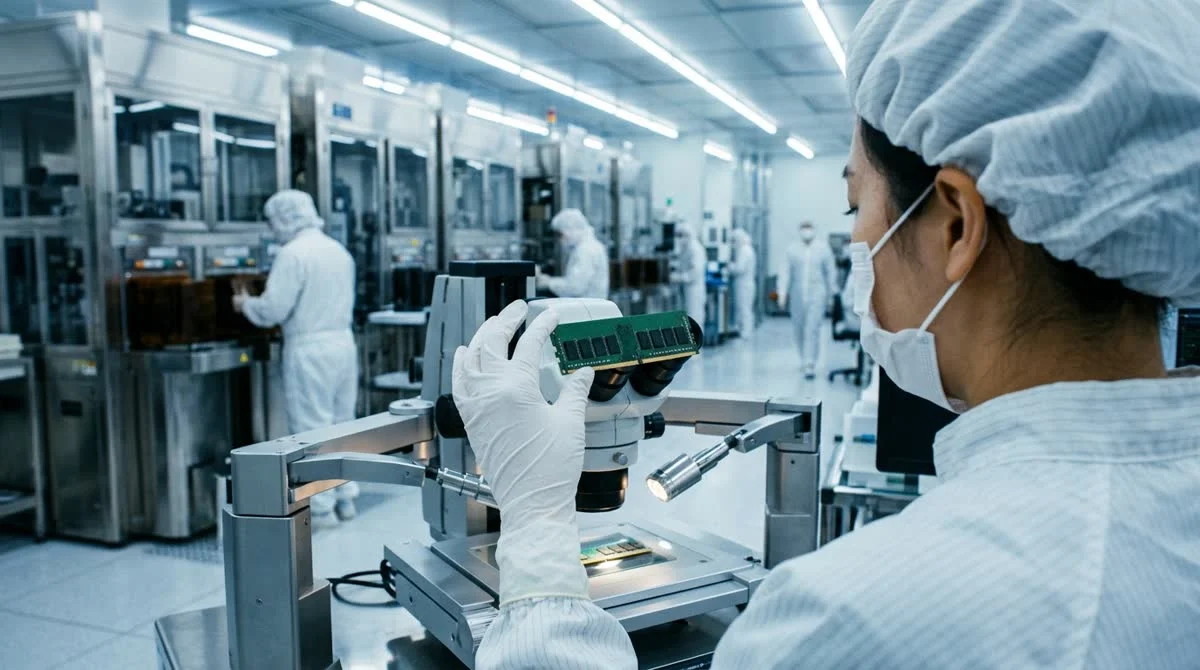
South Korea's government in July 2026 announced its intention to direct additional tax revenue generated during the global AI boom into a special "future generations fund." The funds are planned to support youth and reduce property inequality — two key pain points in the country's social agenda.
Where the Above-Plan Taxes Come From
South Korea occupies a unique place in the global AI economy: two of its companies — Samsung Electronics and SK hynix — collectively control 65 to 80% of the global DRAM and NAND memory chip market. This makes them the country's largest corporate taxpayers and the main source of state budget revenues.
The explosive growth in AI infrastructure demand — servers for data centers, graphics accelerators for neural network training, high-bandwidth HBM memory — sharply increased both chipmakers' revenues above forecast levels. Revenue growth automatically translates into increased corporate tax contributions, creating a budget surplus not provided for in the original state plan.
- Samsung Electronics and SK hynix — combined global memory market share 65–80%
- Key growth driver — HBM memory and server DRAM for AI data centers
- Company revenues exceeded budget forecasts, creating above-plan tax income
- Fund priorities — youth support and reducing social inequality
Why Money Goes to a Separate Fund, Not the General Budget
Creating a separate "future generations fund" is a political signal, not just a financial decision. The government openly declares: technological rents arising from the global AI boom should deliberately serve the long-term interests of young citizens, rather than dissolving in current expenditures.
For South Korea, this gains special significance. The country is experiencing one of the world's most acute demographic crises: the birth rate in recent years has fallen to minimum values among developed economies. Youth unemployment, the gap in access to housing in Seoul and other major cities, intergenerational property inequality — all of this has become permanent themes in political discourse. The fund allows fixing a commitment: AI boom revenues will return to those just entering the labor market.
Norway has long used a similar structure, replenishing its state pension fund from oil rents. The Korean initiative follows the same logic — only the source of rent is technological monopoly on the memory semiconductor market, not oil.
What This Means
The AI boom for the first time explicitly transforms into a mechanism for intergenerational redistribution. Superprofits from memory producers, grown due to demand from world AI labs and hyperscalers, are beginning to convert into social investments in the producer country. If the program is fully implemented, it could become a model for other economies whose prosperity depends on technological rents in the AI era.
Key Questions Answered
Where the Above-Plan Taxes Come From?
South Korea occupies a unique place in the global AI economy: two of its companies — Samsung Electronics and SK hynix — collectively control 65 to 80% of the global DRAM and NAND memory chip market. This makes them the country's largest corporate taxpayers and the main source of state budget revenues. The explosive growth in AI infrastructure demand — servers for data centers, graphics accelerators for neural network training, high-bandwidth HBM memory — sharply increased both chipmakers' revenues above forecast levels. Revenue growth automatically translates into increased
Why Money Goes to a Separate Fund, Not the General Budget?
Creating a separate "future generations fund" is a political signal, not just a financial decision. The government openly declares: technological rents arising from the global AI boom should deliberately serve the long-term interests of young citizens, rather than dissolving in current expenditures. For South Korea, this gains special significance. The country is experiencing one of the world's most acute demographic crises: the birth rate in recent years has fallen to minimum values among developed economies. Youth unemployment, the gap in access to housing in Seoul and ot
What This Means?
The AI boom for the first time explicitly transforms into a mechanism for intergenerational redistribution. Superprofits from memory producers, grown due to demand from world AI labs and hyperscalers, are beginning to convert into social investments in the producer country. If the program is fully implemented, it could become a model for other economies whose prosperity depends on technological rents in the AI era.
Test Frontier LLMs & Autonomous Agents in One Workspace
Run Claude Opus 5.5, GPT-6, Gemini 3.1, and DeepSeek side-by-side in Nomad AI (nomadnet.ai) — unified model routing, deep research, and multimodal workflows under one subscription.
The AI world, distilled — once a week
Seven stories that actually mattered, hand-picked. No noise, no reposts, no press releases.
Done! Check your inbox for a confirmation.