The Greenland Deal: Trump Takes Resources for the AI Industry in Exchange for Tariff Relief
Donald Trump has carried out his long-standing plan to gain control over Greenland. The scheme fits his style: the threat of harsh tariffs in exchange for mining rights and expanded military bases. While NATO held symbolic exercises, Washington tackled the shortage of rare earth metals needed to make chips and AI systems. It is a checkmate in the fight for resources: the US reduces its dependence on China and turns the Arctic island into its raw-materials outpost. Denmark can only watch as the rules of world politics change at speed.
AI-processed from HuXiu (虎嗅); edited by Hamidun News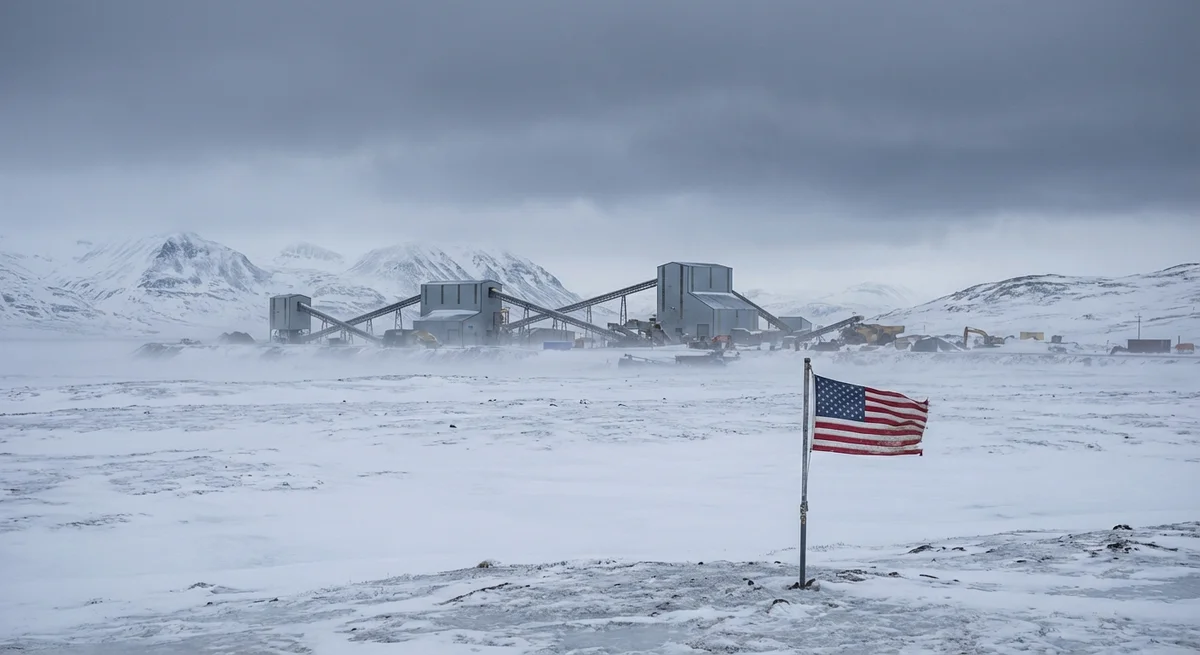
Remember 2019, when media around the world laughed at Donald Trump's idea of buying Greenland? It looked like an absurd joke from a businessman who had confused governing with a game of Monopoly. Today even the most hardened skeptics have stopped laughing. The situation has turned 180 degrees with astonishing speed: the US has effectively got what it sought for years, strategic control over the island's mineral resources and military facilities. Denmark, the formal sovereign of the territory, is in deep shock at how quickly NATO stepped aside and made room for Washington's direct bilateral interests.
The mechanics of the deal are painfully pragmatic. The White House used its favorite tactic, the "tariff club," threatening Danish exports with prohibitive duties. Once Copenhagen and the Greenlandic authorities grasped the severity of the economic consequences, a counteroffer appeared on the table. The terms were simple: transfer of rights to develop deposits and an expanded American military presence in exchange for withdrawing trade restrictions. It is a classic example of realpolitik, where economic pressure is converted into geopolitical influence and access to critically important assets.
Why does this matter to the high-tech and AI industry right now? The answer lies beneath the island. Greenland is not just ice and rock but a vast treasure house of rare earth elements. Without these minerals, it is impossible to make modern semiconductors, powerful magnets for electric vehicles, and components for the server racks on which neural networks are trained. As technological rivalry with China intensifies, and China long held a monopoly on the rare earths market, Greenland becomes a matter of national security and technological survival for the US. Control of this raw material means control of the entire AI value chain.
Gaining influence over Arctic resources is a direct response to the "iron hunger" of recent years. We used to discuss only GPU architecture and the number of parameters in models; now we have to admit that the physical world is asserting itself. Trump is playing the long game.
While the market watches Nvidia's quarterly reports, he is laying the foundation for physical control over the production base of the future. That turns Greenland from a cold island on the periphery into a central node of a new technological geography. The speed of this mid-air "change of clothes" is striking: only yesterday, environmental standards and the rights of indigenous peoples were under discussion, and today contracts for industrial development of the subsoil are being signed.
For European allies, the episode was a cold shower. It turns out the NATO security umbrella is a fairly flexible structure, especially when the interests of the American military-industrial complex and tech giants are at stake. Denmark has effectively lost its decisive say over the future of its Arctic territories. Greenland will now develop according to a script written in Washington, where the priority is not preserving the Arctic ecosystem but guaranteeing uninterrupted raw-material supplies for chip factories. This is a new reality in which access to the mine matters more than access to a cloud API.
Bottom line: Geopolitics has finally become part of the tech stack. Control over Greenland gives the US leverage over the production of AI hardware, which may prove more powerful than any sanctions. Who will be the next object of a "profitable exchange" in this new resource race?
- Nov 2, 2026Anthropic needs to grow revenue 32% a year to cover $850 billion in contracts
- Nov 2, 2026TensorFold 1.2.0 boosts Qwen3.8-27B throughput on M3 Ultra by 44.2% at 16 streams
- Nov 1, 2026Local models lose to Opus and Codex: 0.21 on a MacBook versus 1.00 for Codex
- Nov 1, 2026Habr author fine-tunes YOLOv8l on dental X-rays and pushes mAP50 to 0.642
Test Frontier LLMs & Autonomous Agents in One Workspace
Run Claude Opus 5.5, GPT-6, Gemini 3.1, and DeepSeek side-by-side in Nomad AI (nomadnet.ai) — unified model routing, deep research, and multimodal workflows under one subscription.
The AI world, distilled — once a week
Seven stories that actually mattered, hand-picked. No noise, no reposts, no press releases.
Done! Check your inbox for a confirmation.