Sunrise S3: China's Answer to the Memory Crunch and Costly Inference
Sunrise has unveiled the S3, an inference-focused chip aimed squarely at one of the industry's sore spots: the shortage of video memory. The move to LPDDR6 and support for FP4 precision let the company quadruple memory capacity compared with the previous generation. For developers, that means running heavy models such as DeepSeek should become 10 times cheaper. While global giants compete on raw compute, the Chinese company is betting on efficiency and affordability. It is an important step toward localizing AI infrastructure under sanctions, where every watt and every yuan saved counts.
AI-processed from 36Kr (36氪); edited by Hamidun News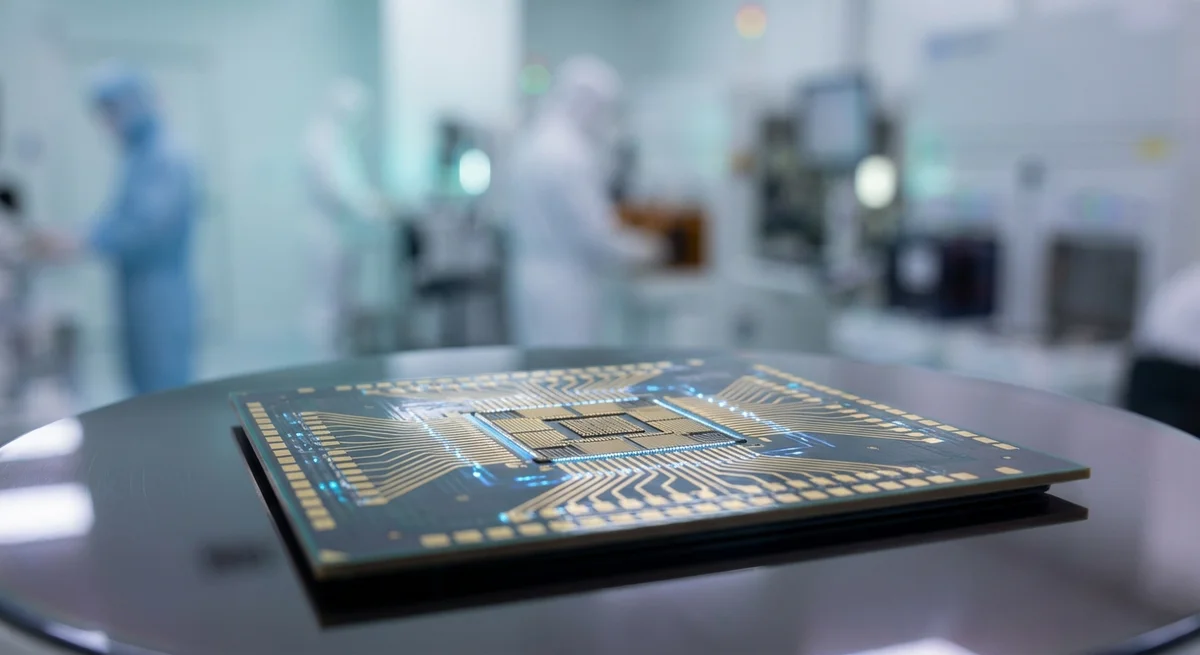
While the industry chokes on video memory shortages and H100 price tags, China's Sunrise has decided to play the cards that actually matter to developers. Its new S3 chip is not just another attempt to catch the leaders on teraflops, but a pragmatic tool for tackling the "memory bottleneck." Anyone who has tried to run a large language model locally knows the problem: compute often sits idle because data cannot be loaded from memory fast enough.
Sunrise built LPDDR6 support into the S3. It is the first time a Chinese GPGPU product has done this, and the move looks bold, to say the least. As a result, available memory grew fourfold compared with the company's previous generation of chips. In a world where model parameters grow faster than hardware budgets, such a jump makes it possible to keep far larger contexts and model weights in memory without resorting to slow external storage.
Another engineering trick lies in the flexibility of the compute. The S3 can switch between FP16 and FP4 precision on the fly. For those who don't follow the nuances of quantization: moving to FP4 compresses model data without a critical loss in answer quality. This directly affects generation speed and, more importantly, the economics. When a model takes up less space and needs fewer resources to process each word, running costs fall exponentially.
The figures Sunrise cites look almost defiant. On popular DeepSeek-family models, the cost of generating one token fell by 90% compared with the company's previous solutions. If these numbers hold up in real server racks, we could see a new wave of affordable AI services that don't require billions in infrastructure investment. This matters especially for the Chinese market, where access to advanced Nvidia accelerators is restricted by sanctions while demand for compute for national LLMs keeps growing.
It is important to understand the context: Sunrise is not trying to build a universal machine for training models from scratch. The S3 is a narrowly specialized "machine tool" for inference, that is, for running already trained neural networks. This is the stage where most of the money in the AI business is burned today. If you can serve answers to users 10 times cheaper than competitors, your business model suddenly starts to look viable.
Ultimately, the S3's success will depend not only on hardware but also on the software layer. Chinese manufacturers often stumble on drivers and compatibility with popular libraries such as PyTorch. Still, the focus on DeepSeek, the most popular open model in the region, gives them an excellent launchpad. It seems the era when we measured only GPU power is fading, giving way to an era of memory efficiency.
Bottom line: Sunrise S3 shows that optimizing for specific architectures such as DeepSeek and working with LPDDR6 memory can deliver bigger efficiency gains than a simple race for nanometers. Could this approach become the standard for budget inference worldwide?
- Nov 2, 2026Anthropic needs to grow revenue 32% a year to cover $850 billion in contracts
- Nov 2, 2026TensorFold 1.2.0 boosts Qwen3.8-27B throughput on M3 Ultra by 44.2% at 16 streams
- Nov 1, 2026Local models lose to Opus and Codex: 0.21 on a MacBook versus 1.00 for Codex
- Nov 1, 2026Habr author fine-tunes YOLOv8l on dental X-rays and pushes mAP50 to 0.642
Test Frontier LLMs & Autonomous Agents in One Workspace
Run Claude Opus 5.5, GPT-6, Gemini 3.1, and DeepSeek side-by-side in Nomad AI (nomadnet.ai) — unified model routing, deep research, and multimodal workflows under one subscription.
The AI world, distilled — once a week
Seven stories that actually mattered, hand-picked. No noise, no reposts, no press releases.
Done! Check your inbox for a confirmation.