Alibaba's Golden Triangle: How In-House Chips Prop Up a Cloud Empire
Alibaba has formally presented the architecture of its "golden triangle," in which its in-house Pingtouge chips meet its cloud and the Tongyi Qianwen models. Under tight sanctions and a shortage of NVIDIA accelerators, having its own Hanguang chips is a matter of survival for the company. This is not just import substitution but deep optimization: when software "knows" the quirks of the hardware, the cost of inference can fall several-fold. Alibaba is betting that owning the whole chain, from transistor to chatbot, will let it beat competitors on price and speed.
AI-processed from Jiqizhixin (机器之心); edited by Hamidun News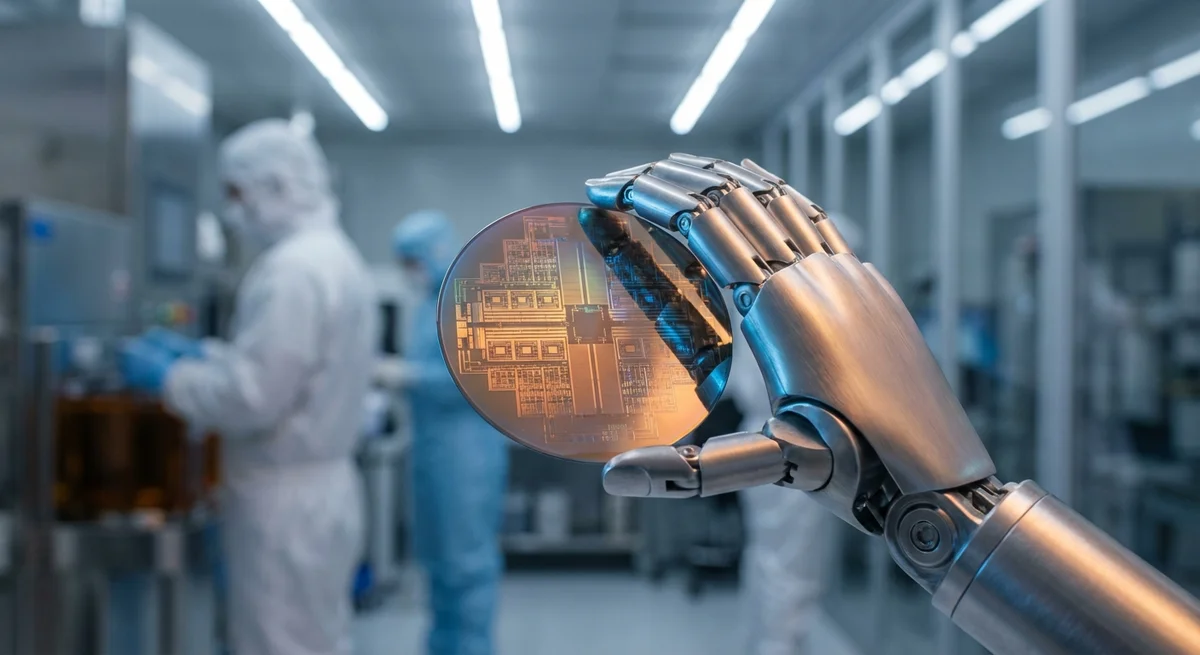
While the Western world holds its breath waiting for the next NVIDIA shipment, a very different game is being played in the East. Alibaba has decided to show what is under the hood of its AI machine, and the sight prompts some thought about the real state of the industry. The subject is the so-called "golden triangle," which fuses in-house chips, cloud infrastructure and large language models. This is not just a corporate slide for investors but a bid for full technological autonomy in a world where access to powerful hardware has become a geopolitical tool.
The foundation of the structure is Pingtouge, Alibaba's semiconductor arm, which long stayed in the shadows. The name refers to the honey badger, a fearless animal that does not shy from fighting a stronger opponent. The irony is apt: Pingtouge really is challenging the established order by building Hanguang, specialized AI accelerators. Unlike general-purpose GPUs, these chips are tuned to the specific workloads of Alibaba's cloud, which lets them squeeze out maximum efficiency where ordinary solutions start to "choke" on overheating or a lack of memory.
The second corner of the triangle is Alibaba Cloud. In modern conditions, a chip by itself is just a piece of silicon. The real magic starts when it integrates seamlessly into a cloud environment. Alibaba has built the system so that its cloud platform "understands" the architecture of its own chips at the lowest level. That allows it to distribute load dynamically across thousands of nodes with minimal latency. Where companies once had to adapt their algorithms to third-party vendors' architectures, they now set the rules themselves, designing hardware for the needs of their own services.
The Tongyi Qianwen family of models completes the picture. Here lies the main economic logic of the whole venture. Training and, more importantly, inference (running) huge models costs a fortune. With the "own chip + own cloud + own model" combination, Alibaba can radically cut the cost of a single token for the end user. While competitors must build the rental of someone else's capacity and the chipmakers' margins into their prices, Alibaba controls the entire value chain. That gives it room to maneuver in the price wars already raging in China's AI market.
Of course, a fair question arises: can these chips really compete with the top products from the "green giant"? A head-on comparison may not favor the Chinese engineers if you look only at teraflops. In real business workloads, however, what matters is not peak power but performance per watt and, more importantly, per dollar. Vertical integration lets Alibaba make up for its deficit in raw power by fitting software perfectly to hardware. It is the classic Apple path, transplanted to the scale of data centers and neural networks.
What does this mean for the rest of the world? We are watching the birth of two parallel AI universes. One is built on versatility and the dominance of a few global hardware suppliers, the other on deep specialization and closed ecosystems. Alibaba's experience shows that surviving under restrictions forces companies to become smarter and more inventive. If the "golden triangle" works as intended, we will see a cloud provider that is practically impossible to push out of the market through price dumping, because its infrastructure costs will be an order of magnitude lower than those of anyone buying off-the-shelf solutions.
Bottom line: Vertical integration is becoming the only way to survive the AI race amid a hardware shortage. Can anyone in the West other than Google, with its TPUs, follow this path at such scale?
- Nov 2, 2026Karpathy builds a YouTube clone with 6454 videos from Hacker News recommendations in two hours
- Nov 2, 2026Karpathy used Claude to build HackerTube from 6,454 videos recommended on Hacker News
- Nov 2, 2026Anthropic needs to grow revenue 32% a year to cover $850 billion in contracts
- Nov 2, 2026Bun creator uses Claude Code to port 750K lines from Zig to Rust in 11 days
Test Frontier LLMs & Autonomous Agents in One Workspace
Run Claude Opus 5.5, GPT-6, Gemini 3.1, and DeepSeek side-by-side in Nomad AI (nomadnet.ai) — unified model routing, deep research, and multimodal workflows under one subscription.
The AI world, distilled — once a week
Seven stories that actually mattered, hand-picked. No noise, no reposts, no press releases.
Done! Check your inbox for a confirmation.