ST Dongyi: How to Build an AI Empire With No Money and No Working Servers
*ST Dongyi, a company on the brink of delisting, has decided to play the artificial intelligence card. The plan sounds ambitious: inject computing-power assets and launch its own data center in Helingeer. The reality is far more prosaic. The facility is unfinished, there is no money to complete the project, and competition in China's cloud computing market makes its chances of survival slim. It is a textbook attempt to "green up" a reputation through the AI agenda, when the business has no other levers left to pull on investors and regulators.
AI-processed from 36Kr (36氪); edited by Hamidun News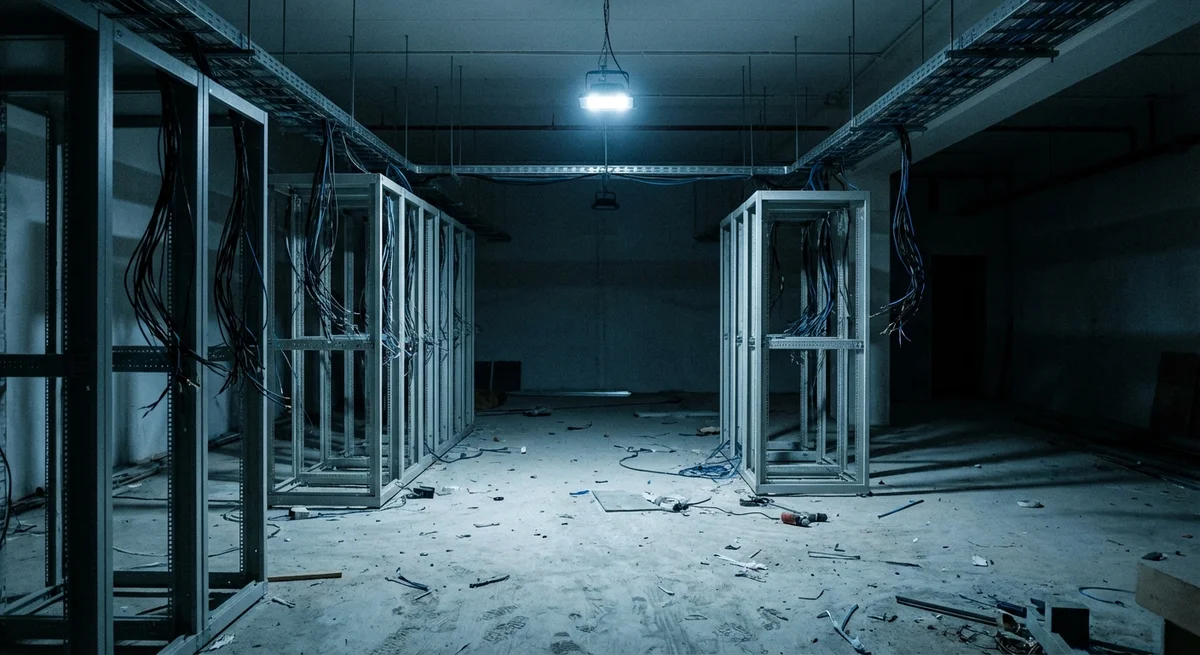
When a company is doing really badly, it reaches for the heavy artillery of hyped technology. China's market is no exception here; it is more of a trendsetter. *ST Dongyi, a firm that once did interior design and is now fighting for survival in bankruptcy proceedings, has suddenly decided that its salvation will be the market for AI computing. In a recent statement, management admitted that its plans to become an IT giant hang by a thread and that investors should temper their expectations.
The gist is that the company is trying to carry out a so-called injection of assets tied to computing power. It is a standard move for Chinese companies carrying the *ST prefix, which signals a risk of removal from the exchange listings. If your core business is buried in debt, you urgently need to find a "new oil." In 2024, that oil was teraflops and graphics processors. However, Dongyi candidly (or under pressure from regulators) admits that the success of this gamble depends on whether it can complete the reorganization at all and whether the supervisory authorities will approve it. For now, it all looks like an attempt to build a skyscraper on a swamp with no foundation.
The main asset it is betting on is an intelligent computing center in Helingeer. It sounds solid, as long as you don't read the details. It turns out the center is a "gift" from the majority shareholder, and it has not even been finished. The facility exists in a half-built state, and bringing it online requires huge injections of capital that the sinking company simply does not have. In an industry where Nvidia H100s cost as much as small islands and delivery times stretch to months, promises to finish a data center "sometime later" look ironic, to say the least.
Even if we assume a miracle happens and the server racks in Helingeer fill up with hardware, a question remains: who will do the computing there? China's cloud computing market is oversaturated. Giants like Alibaba, Tencent and Huawei are fighting price wars, driving the cost of renting capacity to a minimum. It will be extremely hard for a small player with huge debts and a dubious reputation to convince serious model developers to trust it with their data. The risk that the cabinets in the data center will sit empty is enormous, and that is a direct path to even bigger losses.
The situation highlights a broader problem in the industry: "AI-washing," or passing off wishful thinking as reality. We have seen this before with blockchain and the metaverse, when any company that added a fashionable word to its name got a short-term bump in its shares. But AI requires real infrastructure, extremely complex logistics and an insane amount of electricity. Simply declaring yourself a "computing power provider" is not enough, especially when a bankruptcy procedure looms behind you, along with an unfinished concrete shell on the steppe.
The key question: will the Dongyi case become a lesson for the market, or will we see dozens more such "transformations" from builders into GPU suppliers? For now, it looks like a last attempt to save face before the final collapse.
- Nov 2, 2026Anthropic needs to grow revenue 32% a year to cover $850 billion in contracts
- Nov 2, 2026TensorFold 1.2.0 boosts Qwen3.8-27B throughput on M3 Ultra by 44.2% at 16 streams
- Nov 1, 2026Local models lose to Opus and Codex: 0.21 on a MacBook versus 1.00 for Codex
- Nov 1, 2026Habr author fine-tunes YOLOv8l on dental X-rays and pushes mAP50 to 0.642
Test Frontier LLMs & Autonomous Agents in One Workspace
Run Claude Opus 5.5, GPT-6, Gemini 3.1, and DeepSeek side-by-side in Nomad AI (nomadnet.ai) — unified model routing, deep research, and multimodal workflows under one subscription.
The AI world, distilled — once a week
Seven stories that actually mattered, hand-picked. No noise, no reposts, no press releases.
Done! Check your inbox for a confirmation.