Samsung and glass substrates: Korea's answer to AI chip heat, due by 2027
While the industry argues about software, Samsung is reworking the hardware. The company has moved its glass substrate project from R&D into a full business department, a clear signal that the technology is ready for market. Glass substrates tackle the main problem of modern AI accelerators: overheating and micro-warping under enormous loads. Samsung promises to flood the market with the product by 2027 and is already sending samples to key partners. This is more than an upgrade. It is an attempt to wrest leadership from Intel and TSMC in the race to keep next-generation chips alive.
AI-processed from 36Kr (36氪); edited by Hamidun News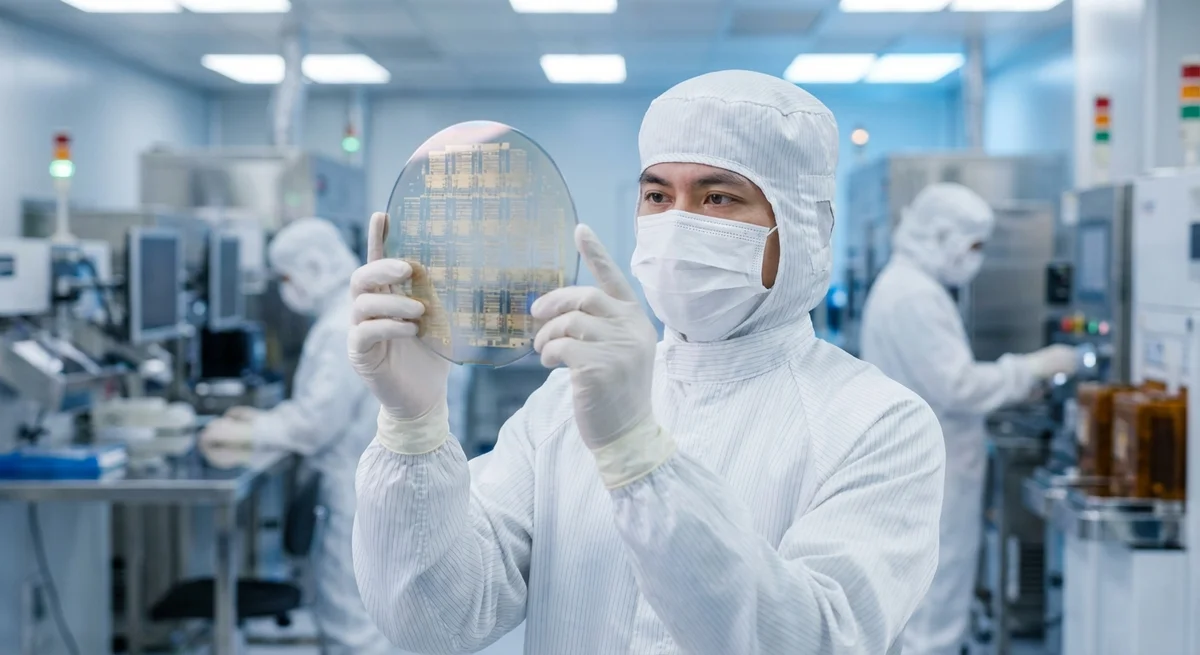
The semiconductor industry has hit a physical ceiling, and that is no exaggeration. While we marvel at the new abilities of large language models, engineers at plants in South Korea and Taiwan are racing to keep those models from literally burning down data centers. Traditional organic substrates, the boards that chip dies are mounted on, are starting to fail. They warp under heat, limit interconnect density and simply cannot keep up with the appetite of modern GPUs. In this situation, a switch to glass looks not just logical but like the only salvation for future AI hardware.
Samsung Electro-Mechanics has decided the time for lab experiments is over. The company has officially moved its glass substrate project out of its Frontier Technology Research division and into an active business department. In corporate language, that means shifting from the question "how do we make this" to "who do we sell it to, and how fast". Insiders confirm that the Koreans have already begun preparing for mass production, planned for 2027. This is not office furniture being rearranged but a strategic maneuver in the fight for the advanced chip packaging market.
Why is everyone so fixated on glass? It comes down to physical properties. Glass is far stiffer than plastic and organic polymers, and it does not deform at the extreme temperatures that have become normal for chips like Nvidia's H100 or the upcoming Blackwell. That allows more chiplets on a substrate, connected at remarkable density. Essentially, glass lets several separate dies act as one giant superchip that runs faster and uses less power. Samsung understands that if it perfects this technology first, it could dictate terms to the entire industry, including Intel, which is also digging hard in this direction.
Moving the project into a business unit also means Samsung is already working with "global customers" on prototypes. In plain language: Nvidia, AMD and possibly Apple have received, or soon will receive, test samples to work out how to fit their future architectures to a glass format. The race to 2027 has begun, and Samsung clearly has no intention of ceding the lead to TSMC, which currently leads in traditional packaging but may sleep through the glass revolution.
Of course, 2027 is still a way off, and making glass for chips is a fiendishly complex process. Glass is brittle, and it requires entirely different methods for drilling microscopic holes and laying conductive traces. Still, the fact that Samsung has already committed business resources suggests high confidence in success. We are approaching a moment when computer architecture changes at a fundamental level. The irony is that the salvation of the most advanced digital technology will be a material humanity has used for thousands of years.
The bottom line: Samsung is betting on physics, not just on transistors. If glass substrates take off in 2027, we will see a new leap in AI performance that today's silicon can only dream of. Can Intel respond faster?
- Nov 2, 2026Anthropic needs to grow revenue 32% a year to cover $850 billion in contracts
- Nov 2, 2026TensorFold 1.2.0 boosts Qwen3.8-27B throughput on M3 Ultra by 44.2% at 16 streams
- Nov 1, 2026Local models lose to Opus and Codex: 0.21 on a MacBook versus 1.00 for Codex
- Nov 1, 2026Habr author fine-tunes YOLOv8l on dental X-rays and pushes mAP50 to 0.642
Test Frontier LLMs & Autonomous Agents in One Workspace
Run Claude Opus 5.5, GPT-6, Gemini 3.1, and DeepSeek side-by-side in Nomad AI (nomadnet.ai) — unified model routing, deep research, and multimodal workflows under one subscription.
The AI world, distilled — once a week
Seven stories that actually mattered, hand-picked. No noise, no reposts, no press releases.
Done! Check your inbox for a confirmation.