Offline Training Without Casualties: How Conservative Q-Learning Saves Budgets and Lives
Reinforcement learning (RL) has long been considered a dangerous toy for the real economy. The traditional approach forces an agent to probe its environment, which with self-driving cars or industrial robots inevitably means breakdowns. The answer comes from Offline RL. With the d3rlpy library and the Conservative Q-Learning (CQL) algorithm, developers have learned to train models solely on historical data. That lets AI learn from other people's mistakes without making its own, which is critical for safety and for saving resources in industry.
AI-processed from MarkTechPost; edited by Hamidun News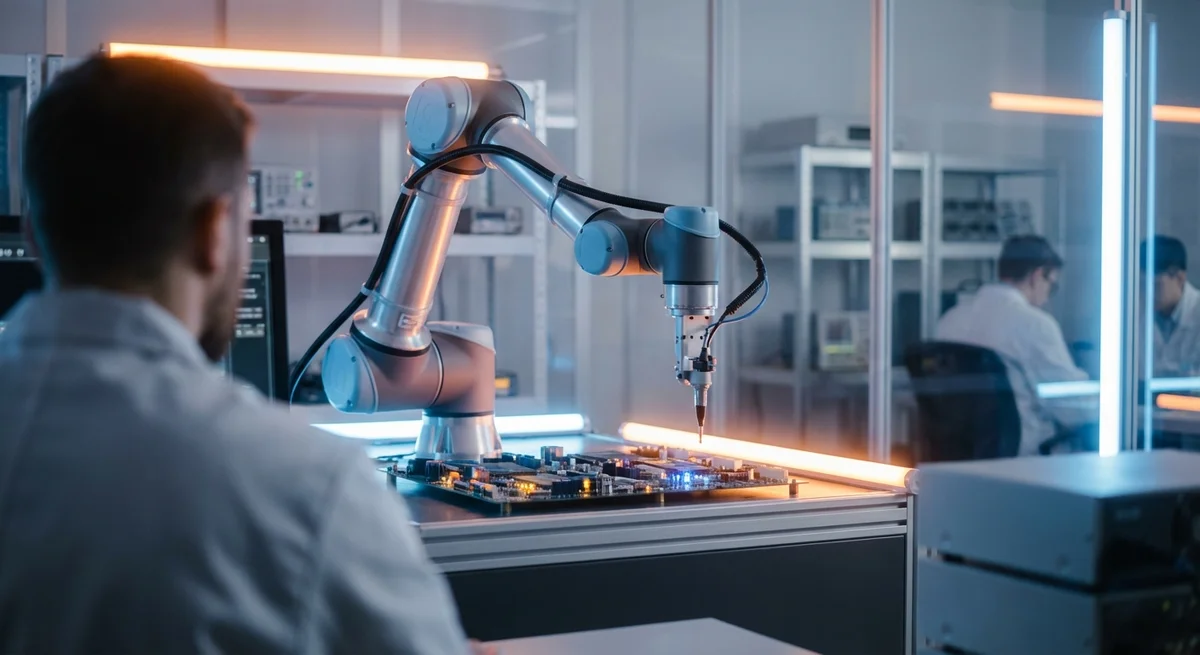
Imagine teaching a surgical robot to operate, or a self-driving car to maneuver in dense traffic. In classic reinforcement learning (RL), an agent learns by trial and error. It has to literally "hit the wall" thousands of times to grasp that this is not the thing to do. In a virtual simulation that is fun, but in the real world this strategy costs too much, and sometimes is outright unacceptable. That is why the industry increasingly looks to Offline RL, a method in which AI learns from experience already accumulated, never stepping outside the bounds of a safe dataset.
For a long time the problem was that ordinary algorithms behave overconfidently when working with offline data. Once a model sees a situation absent from the training set, it starts assigning anomalously high value to random actions. This phenomenon is called overestimation of out-of-distribution actions. The result: instead of a careful driver, we get a digital kamikaze convinced that jumping off a cliff is the shortest path to the goal. To rein in this chaos, researchers proposed Conservative Q-Learning, or CQL for short.
The essence of CQL is healthy pessimism. The algorithm deliberately lowers the expected reward for actions that are absent from the historical dataset. It effectively tells the system: "If you haven't seen it before, don't hope for a miracle." Implementing this approach through the d3rlpy library opens the door to truly reliable systems. Developers can now take logs from old equipment or recordings of professional pilots' driving and turn them into a textbook for a new neural network, without risking a single bolt during training.
A recent technical walkthrough based on d3rlpy clearly demonstrated the advantage of CQL over classic Behavior Cloning. If you simply copy a human's actions, the model inherits all of their mistakes as well. CQL goes further: it analyzes the consequences of those actions and picks an optimal strategy while staying within a safe corridor. This turns terabytes of "dead" logs into a priceless training asset.
Why does this matter right now? We are on the threshold of mass deployment of AI in the physical world. Companies no longer want to spend millions of dollars building perfect simulators that still fail to capture every nuance of reality. Offline training lets them use real experience accumulated over years and turn it into intelligence without risking an industrial disaster. It is a bridge between theoretical AI and the harsh practice of factory floors.
The big question: Will Offline RL become the standard for Industry 4.0, or will we eventually learn to build simulations indistinguishable from reality?
- Nov 2, 2026Karpathy builds a YouTube clone with 6454 videos from Hacker News recommendations in two hours
- Nov 2, 2026Karpathy used Claude to build HackerTube from 6,454 videos recommended on Hacker News
- Nov 2, 2026Arca gives AI agents finance tasks lasting up to 10 days, but leaves the trades to humans
- Nov 2, 2026DeepSeek open-sources Super-agent prototype: p95 task completion time of 15.7 minutes vs. 29.5
Test Frontier LLMs & Autonomous Agents in One Workspace
Run Claude Opus 5.5, GPT-6, Gemini 3.1, and DeepSeek side-by-side in Nomad AI (nomadnet.ai) — unified model routing, deep research, and multimodal workflows under one subscription.
The AI world, distilled — once a week
Seven stories that actually mattered, hand-picked. No noise, no reposts, no press releases.
Done! Check your inbox for a confirmation.