OpenAI's Data Agent: Why the Company No Longer Needs Human Analysts
OpenAI has launched an internal data-analysis agent that combines GPT-5, Codex and a long-term memory system. While the rest of the world guesses at the release date of the next model, company employees are already using it to dig through terabytes of internal information. The system delivers precise insights in minutes, work that used to take human specialists weeks. This is not just a chatbot but a full-fledged tool that can reason and remember the context of earlier queries. The era of classic data scientists in Big Tech may be drawing to a close: OpenAI is the first to start replacing the people who build its own products. It is an important signal for the market: the next stage of AI development is not text generation but autonomous handling of complex business tasks.
AI-processed from OpenAI Blog; edited by Hamidun News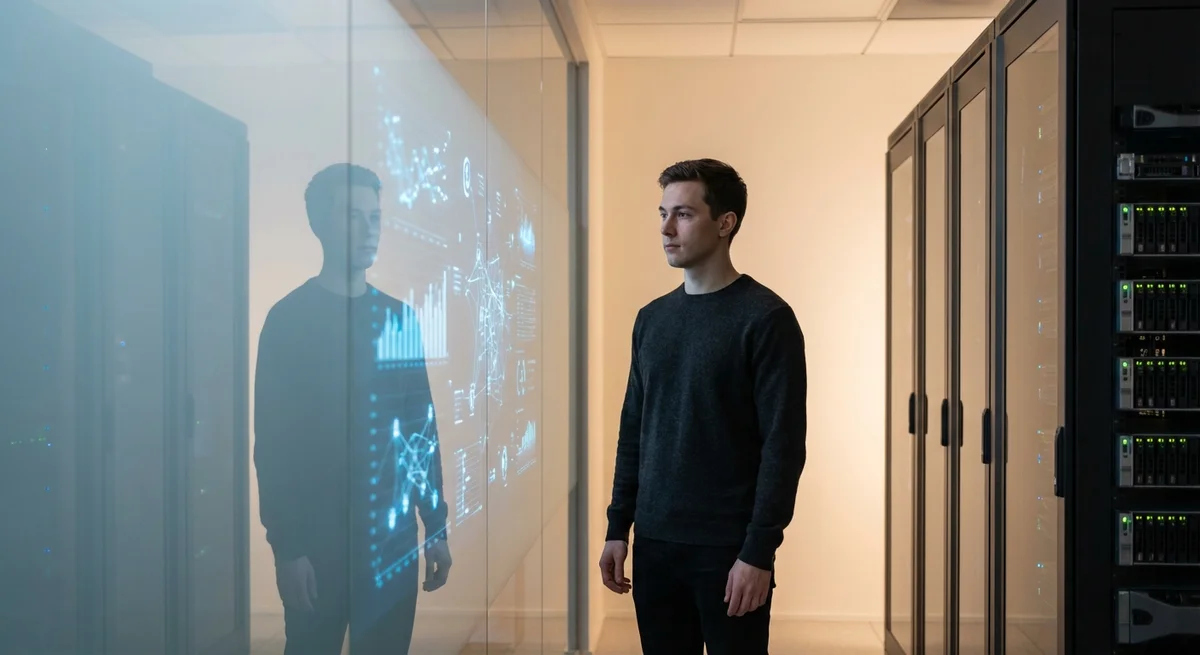
OpenAI has decided the cobbler can no longer go without shoes. While users around the world pester ChatGPT with questions about pancake recipes and code for landing pages, a "super-analyst" is hard at work inside the company: a custom agent built on the GPT-5 architecture. The move does not merely automate routine work; it changes the logic of how a technology company interacts with its own product. Even at OpenAI, working with data used to be classic drudgery: SQL queries, endless Python visualizations and reconciliations in Excel. Now the company has shifted that load onto an AI that understands the business context better than yesterday's Stanford graduate.
Context plays a key role here. Over the past two years, OpenAI has turned from a research lab into a huge corporation with millions of paying users and enormous volumes of logs. Analyzing that much data by hand means always arriving late. That is why the company built a tool that combines its latest LLM work with Codex, which writes code on the fly, and specialized memory modules. The agent does not just answer the question "how many subscriptions do we have?"; it can run deep retrospective analysis and find anomalies that a human would simply miss in the general noise.
The agent's main technical feature is its capacity for reasoning. Unlike standard models, which produce an answer based on probabilities, this tool works iteratively. It first plans its actions, writes code to test a hypothesis, runs it, analyzes the result and, if something went wrong, corrects itself. Add a memory system that lets the agent recall conclusions drawn a week ago, and you get the ideal employee: one who does not sleep, does not ask for stock options and does not make typos in database queries.
Why does this matter for the industry right now? OpenAI is effectively creating a template for the enterprise segment. Where AI adoption in business used to mean installing a chat widget, we are now seeing a shift to autonomous agents with access to the holy of holies: internal data. This shows the direction of travel: AI is ceasing to be a toy for generating content and is becoming the central hub for running a company. If OpenAI successfully replaces (or significantly cuts) its analytics department, it will be a powerful signal to the entire Fortune 500.
Of course, the question of trust arises. We all know about neural-network hallucinations, and when it comes to finances or user data, the cost of an error is critically high. However, OpenAI claims that pairing GPT-5 with code-verification tools reduces the risk of errors to a minimum. It is a logical step: AI checking AI. We are entering an era in which the management architecture of companies will be built around such agents, and humans will move up a level to become task-setters and validators of final decisions.
The irony is that OpenAI tests its most powerful and potentially dangerous developments on itself before releasing them to the world. This internal agent is essentially a closed beta test of what ChatGPT for business will become in the next year or two. While competitors try to catch up with GPT-4 on text quality, OpenAI's inner workings already run an infrastructure where data analyzes itself. This is not just a software update; it is a change in the management paradigm.
The bottom line: OpenAI is building a world where AI makes decisions based on data faster and more accurately than people. Would you be ready to entrust your company's strategy to an algorithm if it proves its effectiveness on the creators of ChatGPT?
- Nov 2, 2026Arca gives AI agents finance tasks lasting up to 10 days, but leaves the trades to humans
- Nov 2, 2026Meta's Muse assistant keeps dossiers on loved ones and gets root on Ubuntu by default
- Nov 1, 2026Local models lose to Opus and Codex: 0.21 on a MacBook versus 1.00 for Codex
- Nov 1, 2026Kimi scores 96.2% on a 1C database analytics test and emerges as a fallback if Claude access is blocked
Build & Ship Production AI Agents Without Boilerplate Code
Start your free 72-hour trial at Hamidun Academy (academy.hamidun.com) — interactive lessons on Claude Code & Cursor, live Tech Radar, and production agent templates.
The AI world, distilled — once a week
Seven stories that actually mattered, hand-picked. No noise, no reposts, no press releases.
Done! Check your inbox for a confirmation.