Positron vs. Nvidia: $230 Million to Topple the King
The AI hardware market is overheated, but investors keep hunting for an alternative to Nvidia's monopoly. Startup Positron has raised $230 million from Arm and Qatar's sovereign wealth fund, pushing its valuation past $1 billion. This is more than another cash injection: it is a strategic alliance. Arm wants a firmer foothold in data centers, while Qatar is diversifying its oil income through technology. Nvidia still holds more than 80% of the market. Positron is betting on an architecture tailored to the specific demands of training neural networks. That is a bold challenge given the strength of the CUDA ecosystem, which remains the main barrier for every competitor.
AI-processed from Bloomberg Tech; edited by Hamidun News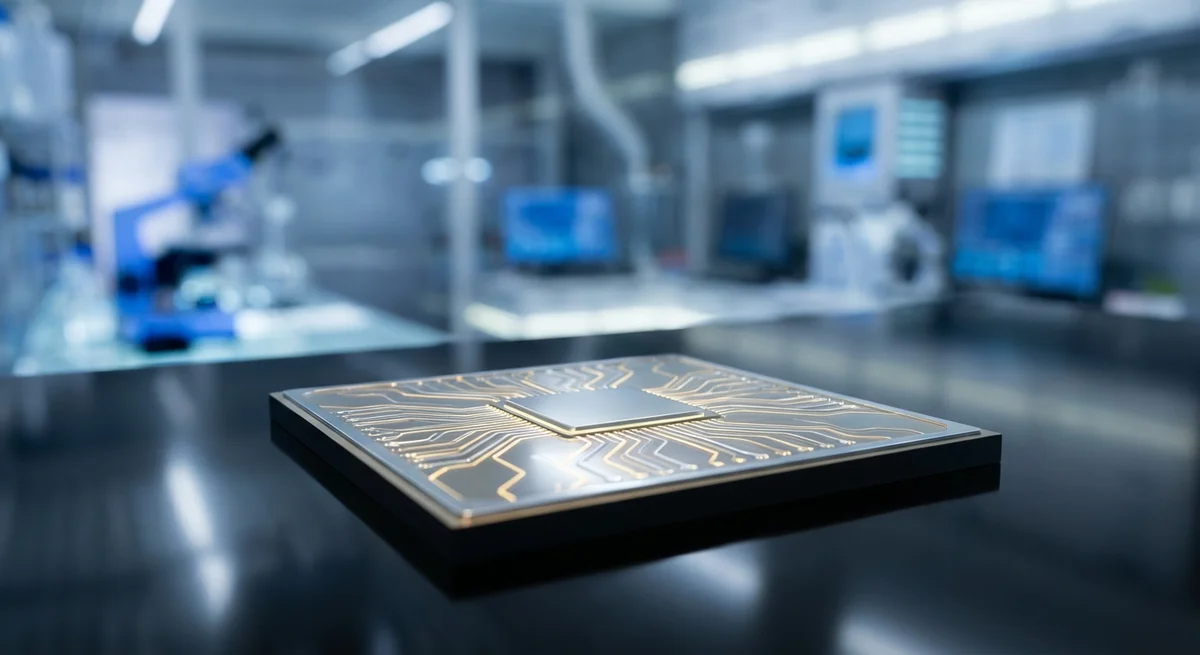
Imagine opening a café right across from McDonald's, except instead of burgers you serve fiendishly complex semiconductor architectures, and instead of Ronald McDonald you face Jensen Huang in his trademark leather jacket. That is roughly what startup Positron's entry into the AI chip market looks like. In an industry where Nvidia's dominance seems almost divine, a newcomer arriving with a $230 million check looks like either reckless courage or very fine calculation. Positron now officially holds "unicorn" status with a valuation above $1 billion, and the news invites a closer look at the balance of power in Silicon Valley.
The size of the investment is interesting, but so is the list of those who signed the checks. The participation of British giant Arm is a clear signal. The company whose architecture powers almost every smartphone in the world evidently wants a bigger slice of the data center pie. Arm long stayed in Nvidia's shadow when it came to heavy compute for training models, but it now appears to have decided to act through proxy startups. Qatar's sovereign wealth fund has joined them, underscoring a global trend: the Gulf states no longer want to be mere consumers of technology. They want to own the factories and the patents.
Why does this matter right now? We are in a phase where the "Nvidia tax" has become too burdensome for everyone, from startups to cloud giants. Everyone is looking for an alternative, but competitors' problems have always come down less to hardware than to software. Nvidia's CUDA platform has become the industry standard, and retraining engineers for new chips is expensive and thankless work. Positron claims its architecture will offer not only raw power but also the flexibility that current solutions lack. Yet history knows dozens of "Nvidia killers" that ended up in the archives of patent offices.
Competition in hardware is a long game. Developing a chip takes years, and production cycles at TSMC's fabs are booked seasons ahead. Positron will have to do more than show pretty charts in presentations: it must prove its silicon can work at the scale of thousands of nodes, without overheating and without requiring half the code of modern libraries to be rewritten. For the market, this is good news: monopoly always leads to stagnant prices and innovation. Even if Positron cannot capture 20% of the market, its mere existence forces Nvidia to run faster and, perhaps, to inflate its price tags a little less.
In the next couple of years we will see what these $230 million turn into. Either a real product that makes cloud providers think about switching suppliers, or another cautionary tale about how hard it is to fight a network effect. For now, Positron has secured the most important thing: a vote of confidence from those who understand processor architecture better than anyone in the world. That gives it the right to the first move in this chess match against Jensen Huang.
The bottom line: Arm and Qatar are betting that the world is tired of Nvidia's monopoly. Can Positron offer something beyond ambition?
- Nov 2, 2026Anthropic needs to grow revenue 32% a year to cover $850 billion in contracts
- Nov 2, 2026TensorFold 1.2.0 boosts Qwen3.8-27B throughput on M3 Ultra by 44.2% at 16 streams
- Nov 1, 2026Local models lose to Opus and Codex: 0.21 on a MacBook versus 1.00 for Codex
- Nov 1, 2026Habr author fine-tunes YOLOv8l on dental X-rays and pushes mAP50 to 0.642
Ship AI Faster with Founders, Engineers & Weekly Architecture Reviews
Inside Vibe Club (hamidun.com/club) — weekly live masterminds with Zhemal Khamidun, Tech Radar, full LMS access, and 370+ production Claude Code skills.
The AI world, distilled — once a week
Seven stories that actually mattered, hand-picked. No noise, no reposts, no press releases.
Done! Check your inbox for a confirmation.