Claude Opus 4.6: Anthropic Turns One Model into an Entire AI Department
Anthropic has updated its flagship Opus model to version 4.6. The headline addition is "agent teams." The neural network no longer just answers questions: it splits a complex task into parts and delegates them to specialized sub-agents. It is a direct response to OpenAI's strategy with its o1 model: while some teach AI to "think longer," others teach it to work as a team. For business, this means a shift from simple chatbots to autonomous workflows in which human involvement is kept to a minimum. The era of the single prompt is officially fading into the past.
AI-processed from TechCrunch; edited by Hamidun News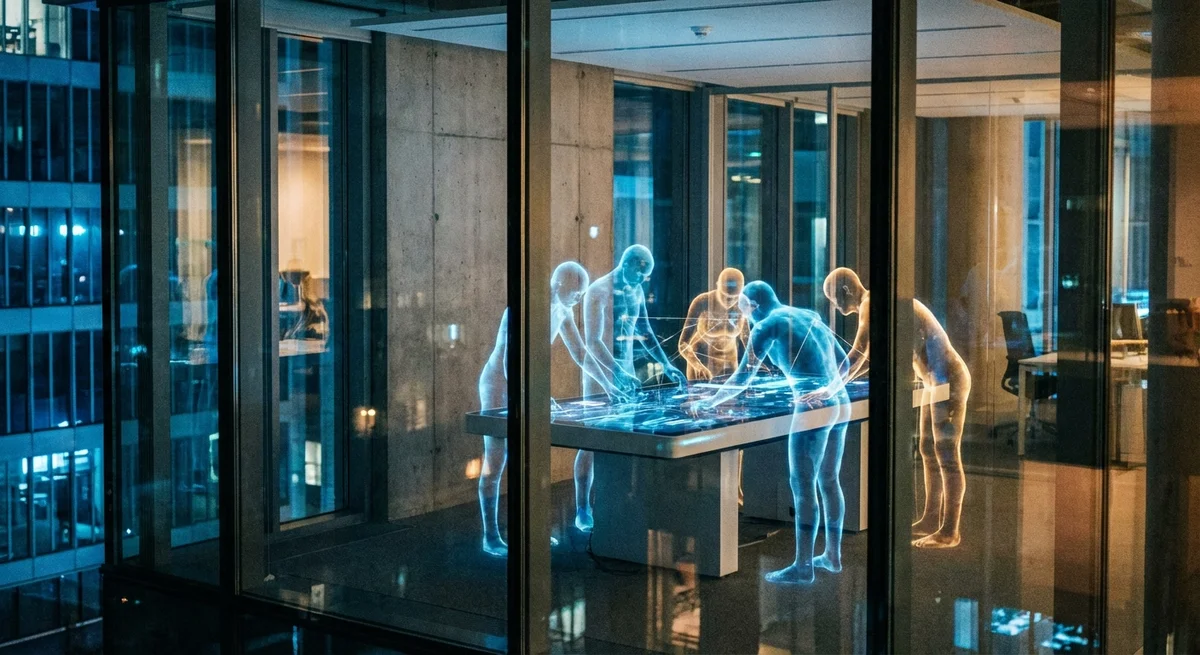
Remember when we felt like geniuses for adding "think step by step" to a prompt? Those days look numbered. Anthropic has just moved the goalposts in a game we had barely begun to understand. The release of Opus 4.6 is not a routine update of model weights for a couple of extra benchmark points. It is the industry's official admission that one person in the field is no warrior, even if that one is the smartest neural network on the planet. The new concept of "agent teams" changes the very mechanics of interacting with artificial intelligence.
Let's recall the context. For a long time Anthropic stayed in OpenAI's shadow, playing the part of "that cautious, clever brother." While Sam Altman promised us AGI every other Tuesday, Dario Amodei's team methodically worked on safety and on the quality of context understanding. Claude 3.5 Sonnet had already become a developer favorite for its human feel and clean code, but the heavyweight Opus needed something more than a speed boost. It needed a new architecture of meaning. After OpenAI released its o1, focused on deep reasoning, Anthropic chose a different path: orchestration.
So what has changed in Opus 4.6? Instead of trying to digest a complex, multi-level task in one huge chunk, the model can now create temporary sub-agents. Imagine giving an assignment to a manager who then hires an analyst, a copywriter and a proofreader to carry out the project. Opus 4.6 plays that manager. It analyzes the request, works out which skills the job needs, and distributes subtasks among specialized versions of itself. This tackles the main problem of large language models: losing focus during long chains of actions. When a single neural network tries to be strategist and executor at once, it inevitably starts to hallucinate. Dividing the duties cuts this risk almost to zero.
Why does this matter right now? We are on the verge of disillusionment with ordinary chatbots. Businesses are tired of "playing questions and answers"; they want results. Opus 4.6 targets exactly that demand. It is a tool for building autonomous systems that can carry a project from idea to delivery, checking themselves at every stage. If you used to build complex chains by hand in LangChain or other frameworks, Anthropic is now baking that logic into the core of the system. That is a serious blow to startups whose business rested only on wrappers for multi-agent systems.
It is interesting to watch two philosophies collide. OpenAI bets on "System 2 thinking": slow, deliberate reasoning by a single model. Anthropic bets on "collective intelligence" inside one system. Time will tell who is right, but right now Opus 4.6 looks like a far more practical tool for real-world tasks, where not only logic matters but also the volume of work completed. We are moving from the era of "AI assistants" to the era of "AI employees," and Anthropic has clearly taken the lead here.
The takeaway: Anthropic is turning the neural network from a conversation partner into an operating system for tasks. Will Opus 4.6 be the last nail in the coffin of the prompt engineer profession?
- Nov 2, 2026Karpathy builds a YouTube clone with 6454 videos from Hacker News recommendations in two hours
- Nov 2, 2026Karpathy used Claude to build HackerTube from 6,454 videos recommended on Hacker News
- Nov 2, 2026Arca gives AI agents finance tasks lasting up to 10 days, but leaves the trades to humans
- Nov 2, 2026Anthropic needs to grow revenue 32% a year to cover $850 billion in contracts
Test Frontier LLMs & Autonomous Agents in One Workspace
Run Claude Opus 5.5, GPT-6, Gemini 3.1, and DeepSeek side-by-side in Nomad AI (nomadnet.ai) — unified model routing, deep research, and multimodal workflows under one subscription.
The AI world, distilled — once a week
Seven stories that actually mattered, hand-picked. No noise, no reposts, no press releases.
Done! Check your inbox for a confirmation.