Michigan's Attorney General Doesn't Trust Oracle and OpenAI, and Is Moving to Block the Project
Oracle and OpenAI's ambitious plan to build a mega data center in Michigan has hit an unexpected obstacle. State Attorney General Dana Nessel has demanded a review of the approval granted to utility DTE Energy to supply power to the site. In her view, the companies' appetite for electricity threatens the grid's stability and the wallets of local residents. Nessel flatly called the companies unreliable partners. It is an important precedent: regulators are no longer willing to hand over gigawatts for empty promises of innovation when the energy security of an entire region is at stake.
AI-processed from Bloomberg Tech; edited by Hamidun News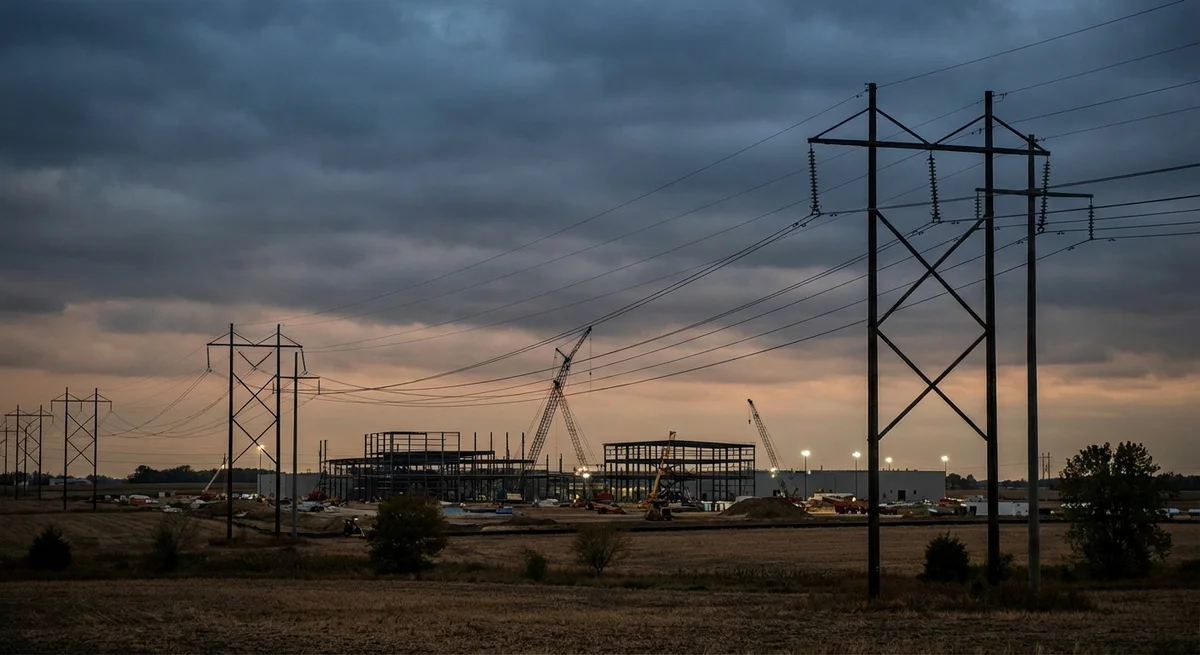
The tech world is used to having the red carpet rolled out, especially when billions in investment and new jobs are on the table. But in Michigan, something went wrong. State Attorney General Dana Nessel has decided that the appetite of Oracle and OpenAI is not a blessing for the economy but a direct threat to the region's stability. She has formally demanded a review of the decision that allows energy giant DTE Energy to supply electricity to a massive new data center.
The core of the conflict is simple, but the consequences could change the rules for the entire industry. Oracle planned to build a computing center that would host future iterations of OpenAI's models. That takes not just outlets but capacity comparable to the consumption of a small metropolis. DTE Energy, seeing a lucrative contract, rushed to give the green light. But Nessel did not mince words in her statement, calling the tech companies unreliable. It is rare for an official at that level to move from routine phrases to direct confrontation with the leaders of the AI market.
Why now? We are at a turning point. America's power grids, built over decades, are simply not designed for a consumer demanding gigawatts around the clock, 24/7, to suddenly appear next to residential neighborhoods. When AI giants come to a state, they promise a technological breakthrough, but residents see very different numbers on their electricity bills. Nessel fears that the cost of upgrading infrastructure for Oracle will ultimately land on ordinary taxpayers, while all the profit flows out to Silicon Valley.
Michigan is only the first swallow in a string of coming regulatory revolts. States used to compete for the right to host server farms, offering tax breaks and cheap energy. Now the physical survival of power systems is moving to the front. If OpenAI wants to train its next models, it will have to prove it will not leave half the country without air conditioning in forty-degree heat. Regulators have begun to realize that digital progress must not come at the expense of citizens' basic comfort.
The irony is that Oracle and OpenAI position themselves as engines of humanity, capable of solving any global problem. Yet they have stumbled over the most mundane barrier: electricity. It turns out even the most advanced intelligence is powerless if the state attorney general considers you a dubious partner who wants to profit at ordinary people's expense. It is a serious blow to the reputation of Larry Ellison and Sam Altman, who are used to their projects getting a green light by default.
Long legal proceedings lie ahead and, probably, attempts by Oracle to strike a deal behind closed doors by offering the state additional perks. But the flywheel of public discontent is already spinning. Other regions are watching the Michigan precedent closely. If Nessel manages to block the project or significantly limit it, it will signal to everyone that the era of uncontrolled resource consumption for AI is officially over. Now every megawatt will have to be paid for not only with money but with real social commitments.
Bottom line: Can Big Tech convince the public of its usefulness before regulators finally run out of patience, and the grid runs out of spare capacity?
- Nov 2, 2026Arca gives AI agents finance tasks lasting up to 10 days, but leaves the trades to humans
- Nov 2, 2026Meta's Muse assistant keeps dossiers on loved ones and gets root on Ubuntu by default
- Nov 1, 2026Local models lose to Opus and Codex: 0.21 on a MacBook versus 1.00 for Codex
- Nov 1, 2026Kimi scores 96.2% on a 1C database analytics test and emerges as a fallback if Claude access is blocked
Test Frontier LLMs & Autonomous Agents in One Workspace
Run Claude Opus 5.5, GPT-6, Gemini 3.1, and DeepSeek side-by-side in Nomad AI (nomadnet.ai) — unified model routing, deep research, and multimodal workflows under one subscription.
The AI world, distilled — once a week
Seven stories that actually mattered, hand-picked. No noise, no reposts, no press releases.
Done! Check your inbox for a confirmation.