MIT President: Why Basic Science Matters More Than the AI Hype
MIT President Sally Kornbluth has come out in defense of academic science, reminding listeners that AI is only the tip of the iceberg. While industry chases profit, scientists tackle systemic problems: from fighting cancer to the physics of sports. For the tech sector, this is a warning: without government funding and interdisciplinary research, progress in AI will quickly hit a ceiling. Kornbluth insists that innovation does not appear out of nowhere. It needs a strong research base that corporate interests cannot replace. It is a conversation about how not to squander intellectual capital in an era of quick fixes.
AI-processed from MIT News; edited by Hamidun News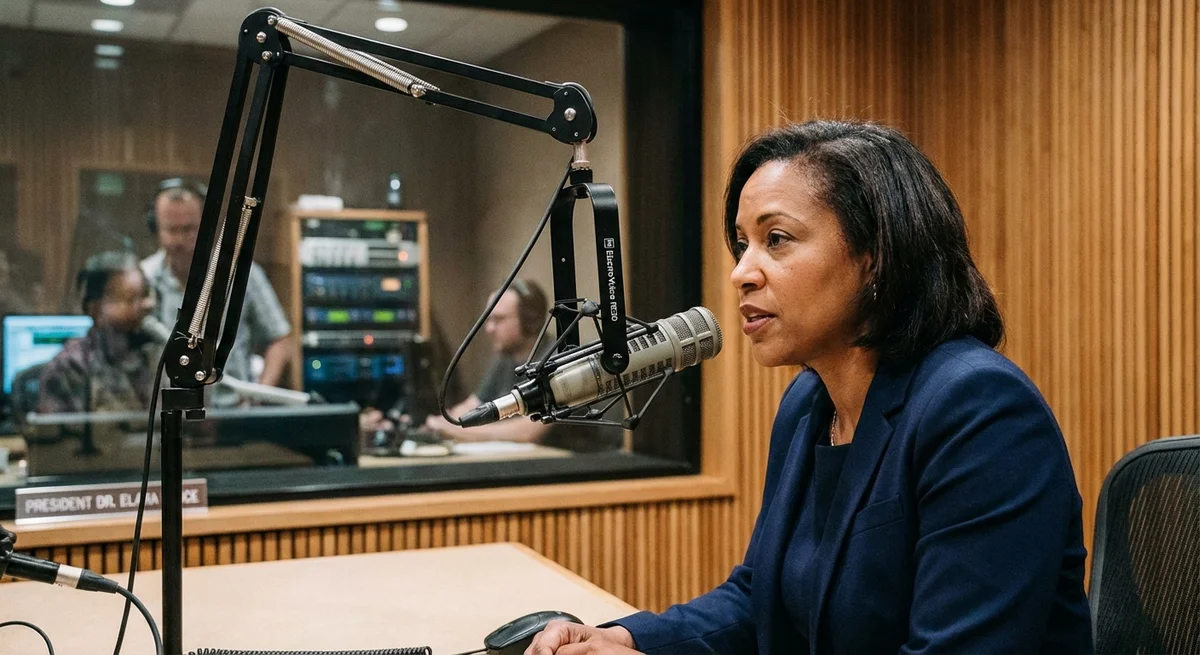
While Silicon Valley obsesses over parameter counts in neural networks, MIT President Sally Kornbluth went on Boston Public Radio with an important reminder: technological leadership is not only about software. It is deep, often invisible and expensive work by scientists that lays the foundation for decades to come. In this conversation, Kornbluth effectively became an advocate for the entire American scientific ecosystem, which is now under serious pressure.
The context is clear and a little worrying. We are used to the US being the undisputed leader in innovation, but that status rests on a research enterprise built over decades after World War II. Today, as budget debates in Washington grow more heated and private capital flows into quick AI-based solutions, fundamental science risks being left on starvation rations. Kornbluth understands that if labs are not protected today, tomorrow we will have nothing left to automate.
It is especially interesting how MIT is trying to demystify science. The university's faculty discuss everything from the math of football to the physics of Olympic figure skating. This is not just an attempt to entertain listeners. It shows that AI is only one tool in the vast arsenal of human knowledge. When we talk about searching for a cure for ovarian cancer, we mean the synergy of biology, chemistry and computing power. Without deep expertise in each of these fields, no algorithm will deliver a result.
Why does this matter for the AI industry right now? Because we are approaching the point where extensive model growth, simply adding data and GPUs, begins to slow down. Further progress will require qualitative breakthroughs in understanding how the human brain works, how information is structured and how to use energy efficiently. These answers do not lie on the surface, and you cannot simply pull them from the internet. They are found by people in the labs of MIT and other leading universities.
Sally Kornbluth stresses that modern science has become a team sport. The days of lone geniuses are over. Today success is a mathematician helping an oncologist, and a robotics specialist consulting a physicist. AI acts here as a catalyst, speeding up the testing of hypotheses that once took years. But for this catalyst to work, an environment for generating those hypotheses must exist.
The main risk the MIT president warns about is loss of focus. In the chase for the next flashy announcement in generative AI, society may forget that real breakthroughs often happen where there are no cameras and no enthusiastic tweets. We need to learn to value the process of research as much as we value its end product, a convenient smartphone app.
The future of AI is inseparable from the survival of academia. If universities become appendages of corporate R&D departments, we will lose the very freedom of inquiry that gave rise to the internet, GPS and those same neural networks. Kornbluth insists that supporting science is not charity but the most profitable investment in national security and economic prosperity.
The bottom line: whether AI becomes a tool for saving humanity or remains an expensive toy for generating memes depends on whether we keep supporting fundamental science. Do we have the patience to invest in something that will bear fruit only in twenty years?
Test Frontier LLMs & Autonomous Agents in One Workspace
Run Claude Opus 5.5, GPT-6, Gemini 3.1, and DeepSeek side-by-side in Nomad AI (nomadnet.ai) — unified model routing, deep research, and multimodal workflows under one subscription.
The AI world, distilled — once a week
Seven stories that actually mattered, hand-picked. No noise, no reposts, no press releases.
Done! Check your inbox for a confirmation.