AI will take robotics to the next level, says expert
Professor Wang Tianmiao of Beihang University (Beijing University of Aeronautics and Astronautics) argues that AI will be a key driver of robotics development. Large language models, soft robotics and electronic sensors will help robots understand their surroundings better, interact with them safely and handle tasks efficiently across many fields, from industry to the home. He expects robots to learn new tasks on their own and to take on work that people currently do in manufacturing, retail and even household settings.
AI-processed from 36Kr (36氪); edited by Hamidun News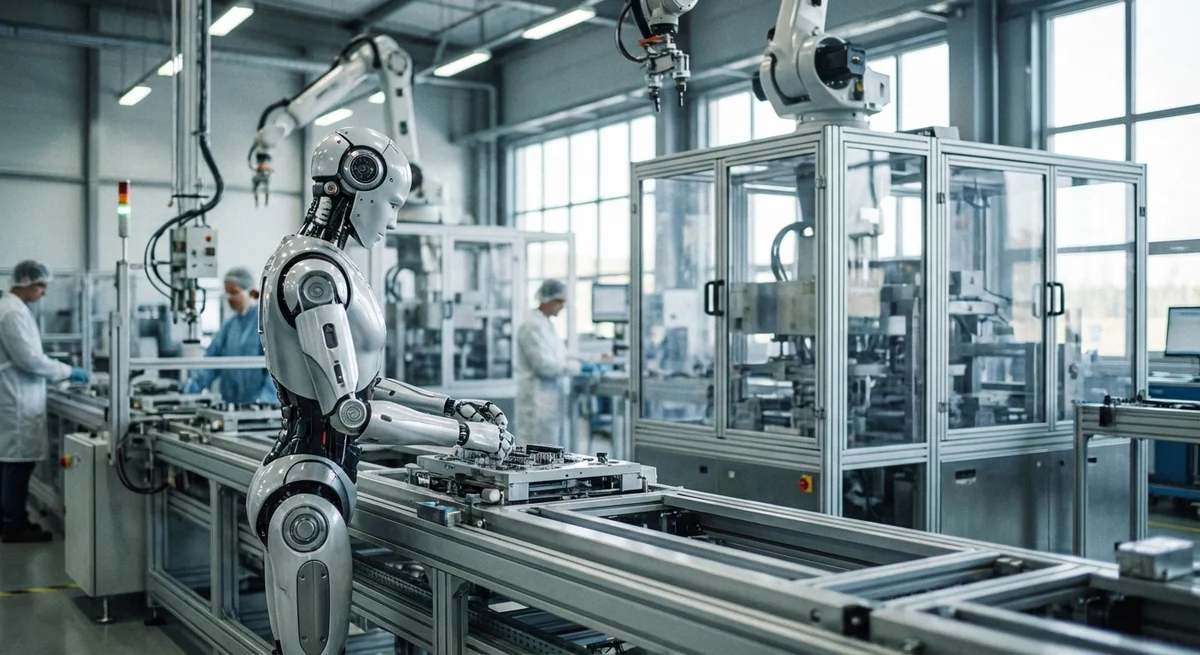
Professor Wang Tianmiao, a robotics expert at Beihang University (Beijing University of Aeronautics and Astronautics) and founder of the Zhizhi Ya Rui platform, is convinced that artificial intelligence (AI) will drive exponential growth in robots and widen their use. In his words, key AI advances such as large language models, soft-robot technologies and electronic sensors give robots the ability to understand the world around them, interact with it safely and take in information from their environment effectively. Wang Tianmiao stresses that these innovations are what will let robots adapt to different conditions and scenarios, opening up new uses for them.
He envisions a future in which robots can learn and perform tasks that people now do in industry, retail and even at home. This will lead to a kind of "spiral" development, in which technological progress stimulates broader application areas, and new needs in turn push further innovation. Large language models play a key role here, giving robots the ability to understand human language and instructions, and to analyze large volumes of data to make decisions.
Soft robotics, in turn, makes interaction between robots and people or the environment safe, allowing robots to work in dynamic and unpredictable conditions. Electronic sensors extend robots' perception, letting them "see", "hear" and "feel" the world around them with high accuracy. In Wang Tianmiao's view, robots will in future be able to master new tasks on their own and carry them out without prior programming.
This will open new prospects for production automation, allowing robots to handle both large-scale manufacturing and flexible production of small batches with a wide range of products. In addition, robots will be able to play an important role in conditions dangerous to humans, for example in disaster recovery and rescue operations. Overall, the expert is confident that combining AI and robotics will transform many sectors of the economy and everyday life.
Robots will become not merely automated tools but intelligent assistants capable of solving complex tasks and adapting to changing conditions. This will demand new skills and competencies from people, but will also open new opportunities for creativity and innovation. Robotics development, spurred by AI, carries enormous potential to improve quality of life and raise production efficiency.
Test Frontier LLMs & Autonomous Agents in One Workspace
Run Claude Opus 5.5, GPT-6, Gemini 3.1, and DeepSeek side-by-side in Nomad AI (nomadnet.ai) — unified model routing, deep research, and multimodal workflows under one subscription.
The AI world, distilled — once a week
Seven stories that actually mattered, hand-picked. No noise, no reposts, no press releases.
Done! Check your inbox for a confirmation.