Pony AI and Toyota Launch Mass Production of Driverless Robotaxis
Chinese robotaxi operator Pony AI has announced the start of commercial production of autonomous vehicles in partnership with Japanese automaker Toyota Motor Corp. Toyota, a longtime investor in the startup, will provide its manufacturing capacity to scale the technology. The shift to series production marks a milestone: the industry is moving from one-off prototypes to mass deployment of driverless systems. The partnership combines Pony AI's expertise in AI algorithms with Toyota's engineering experience, which should speed up the arrival of full robotaxi fleets on public roads in China.
AI-processed from Bloomberg Tech; edited by Hamidun News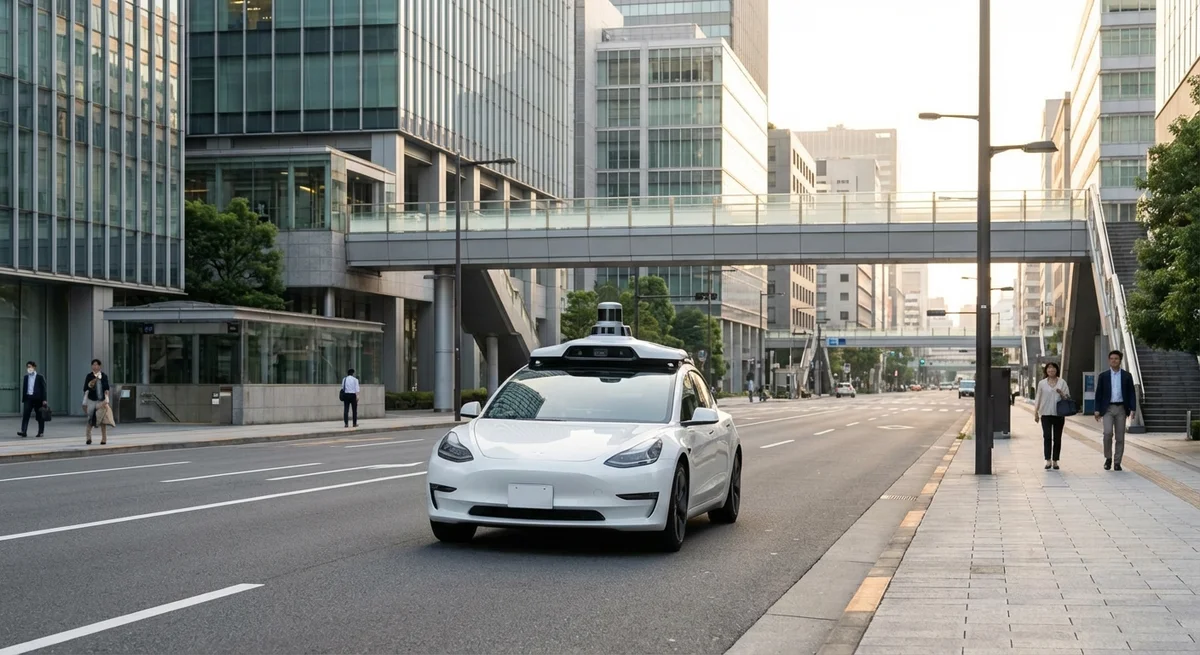
# Pony AI and Toyota Launch Mass Production of Driverless Robotaxis
Chinese company Pony AI has officially begun commercial production of autonomous vehicles in cooperation with Toyota, one of its key investors. The move turns a long history of development into a concrete result: from the lab and small pilot programs to a real assembly line that will turn out driverless cars by the thousands. For the self-driving industry, it signals a shift from proof of concept to scaling up, as the technology starts to become more accessible and cheaper.
The partnership between Pony AI and Toyota developed gradually. Toyota has put significant funds into the startup and has long believed in its technology. The Japanese automaker is now not just a sponsor but an active participant in the process. Toyota provides production sites, its automotive engineering experience, and know-how on organizing mass production of reliable vehicles. Pony AI, for its part, contributes AI algorithms, environment-perception systems, and years of work on driverless safety on China's busy city roads. This is not just a financial partnership. It is a merger of two very different areas of expertise.
Why does this matter right now? Robotaxis are one of the most anticipated and, at the same time, most difficult technologies in transportation. In the US, companies such as Waymo and Cruise have promised mass production for many years but have never reached serious volumes. Meanwhile, Pony AI, operating in the Chinese market with its dense cities and heavy traffic, has built up extensive experience driving safely in difficult conditions. The company has been running commercial rides for years in cities such as Guangzhou and Shenzhen. Moving to production at Toyota's facilities means a proven technology is finally finding a path to scale.
The logic of the cooperation is clear to both sides. Toyota needs ready-made, proven algorithms and experience to enter the driverless market. For a company focused on conventional cars, that is a painful transition, and its risk is greater than a startup's. Pony AI, in turn, gains access to world-class manufacturing standards, quality, and capacity, which it needs to build cars rather than assemble them by hand in garages. Without that, any startup is doomed to a years-long, drawn-out process of increasing volumes.
What happens to these driverless cars next? The plan is for robotaxi fleets operating in Chinese cities: vehicles without steering wheels or pedals, fully controlled by an AI system. This will change city logistics: simpler, cheaper and more convenient than traditional taxis. But it also raises questions: what will happen to drivers, how will such vehicles be insured, and are cities ready for them? There are no answers to these questions yet, but the very fact that production is starting means the countdown has begun.
For the driverless industry, this is a signal: Chinese companies are moving faster and more pragmatically than the West assumed. Pony AI and Toyota show that self-driving is not a perpetual fantasy but a set of skills that can be combined, put on an assembly line and sold. How many vehicles will be built this year, and how many next year, no one knows. But the direction is clear: the robotaxi era is no longer confined to labs. It is heading onto the roads.
- Nov 2, 2026DeepSeek open-sources Super-agent prototype: p95 task completion time of 15.7 minutes vs. 29.5
- Nov 2, 2026Bun creator uses Claude Code to port 750K lines from Zig to Rust in 11 days
- Nov 2, 2026Microsoft releases 4B model Mage-VL-Cowork, which solves 66.0% of OSWorld-Verified tasks
- Nov 2, 2026Meta's Muse assistant keeps dossiers on loved ones and gets root on Ubuntu by default
Ship AI Faster with Founders, Engineers & Weekly Architecture Reviews
Inside Vibe Club (hamidun.com/club) — weekly live masterminds with Zhemal Khamidun, Tech Radar, full LMS access, and 370+ production Claude Code skills.
The AI world, distilled — once a week
Seven stories that actually mattered, hand-picked. No noise, no reposts, no press releases.
Done! Check your inbox for a confirmation.