Horizon 1000: AI for Primary Health Care in Africa
OpenAI and the Gates Foundation (the Bill & Melinda Gates Foundation) are launching Horizon 1000, a $50 million pilot project to expand the use of AI in African healthcare. The initiative plans to reach 1,000 clinics by 2028, improving access to care and its quality. The project is meant to bring AI tools to primary care, where staff shortages and limited infrastructure are most acute.
AI-processed from OpenAI Blog; edited by Hamidun News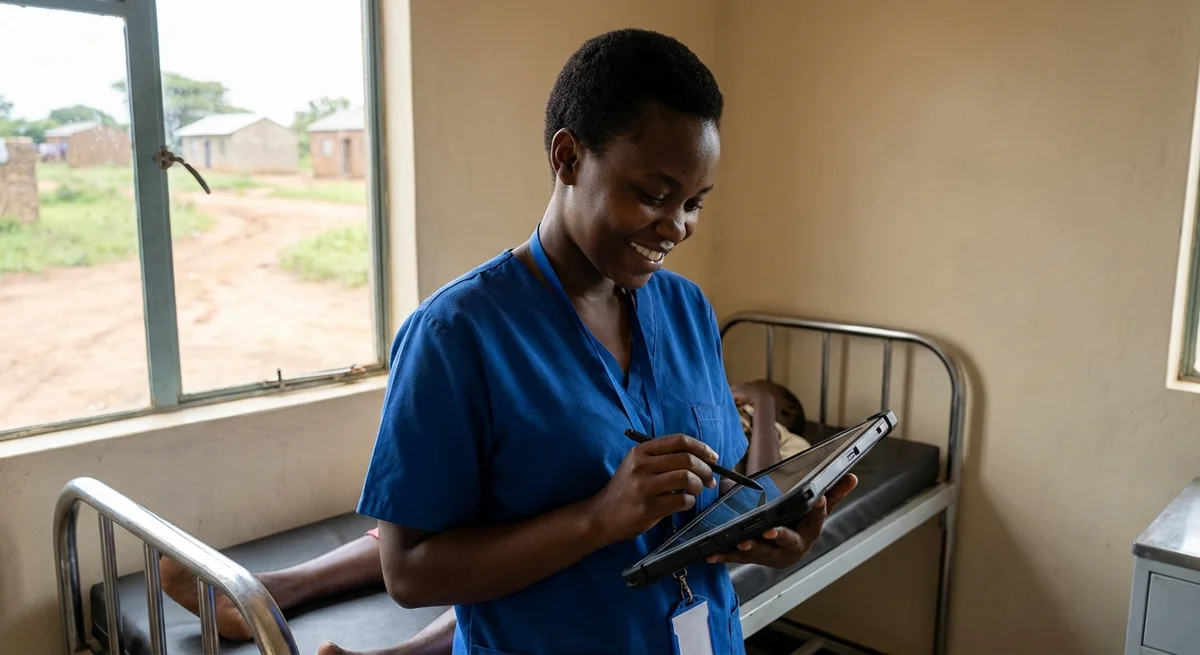
OpenAI and the Bill & Melinda Gates Foundation have announced Horizon 1000, an ambitious $50 million initiative that aims to radically improve primary health care in Africa through artificial intelligence. The project, which targets 1,000 clinics by 2028, marks a significant step toward democratizing access to medical services on the continent. But what exactly is behind it, and why does it matter?
Against a backdrop of global health inequality, Africa faces serious problems: a shortage of qualified staff, limited access to medical equipment and infrastructure, and high rates of illness and death from preventable diseases. AI opens up new ways to tackle these problems, offering tools for diagnosing, treating and preventing disease, as well as for optimizing how medical facilities run.
Horizon 1000 involves developing and deploying AI solutions adapted to the specific needs of African clinics. These may include decision-support systems for doctors, tools for automatically interpreting medical images, chatbots for advising patients, and systems for monitoring the epidemiological situation. A key element is training and supporting local health workers so they can use the new technology effectively.
The significance of the initiative goes well beyond simply deploying technology. Horizon 1000 could potentially change how medical care is delivered in Africa, making it more accessible, effective and personalized. It may also create new opportunities for local startups and technology companies specializing in healthcare AI.
There are risks, however. AI systems must be developed with ethical norms and cultural context in mind, so that they do not deepen existing inequality and so that patient data is securely protected. Developers also need to consider the possibility of dependence on the technology and the importance of keeping the human element in medicine.
In conclusion, Horizon 1000 is a promising initiative that could play an important role in improving the health of millions of people in Africa. Its success will depend on effective cooperation among OpenAI, the Gates Foundation, local governments and medical organizations, as well as on a willingness to address the ethical and practical questions raised by introducing AI into healthcare. This project is not just a technological fix, but an investment in the future of African healthcare.
Horizon 1000 could become a model for using AI in other developing countries, showing how technology can be used to solve global health problems.
- Nov 2, 2026Arca gives AI agents finance tasks lasting up to 10 days, but leaves the trades to humans
- Nov 2, 2026Meta's Muse assistant keeps dossiers on loved ones and gets root on Ubuntu by default
- Nov 1, 2026Local models lose to Opus and Codex: 0.21 on a MacBook versus 1.00 for Codex
- Nov 1, 2026Kimi scores 96.2% on a 1C database analytics test and emerges as a fallback if Claude access is blocked
Test Frontier LLMs & Autonomous Agents in One Workspace
Run Claude Opus 5.5, GPT-6, Gemini 3.1, and DeepSeek side-by-side in Nomad AI (nomadnet.ai) — unified model routing, deep research, and multimodal workflows under one subscription.
The AI world, distilled — once a week
Seven stories that actually mattered, hand-picked. No noise, no reposts, no press releases.
Done! Check your inbox for a confirmation.