Power at Any Cost: Elon Musk's xAI Accused of Violating Environmental Rules
A Floodlight investigation found that xAI continues to run unlicensed gas turbines to power its data centers in Southaven. Despite a ruling by the US Environmental Protection Agency (EPA) requiring permits under the Clean Air Act, the company is relying on the backing of local authorities. Mississippi state regulators argue that mobile turbines mounted on trailers fall outside the standard rules. The case exposes a sharp conflict between the aggressive scaling of AI infrastructure and federal environmental standards.
AI-processed from Guardian; edited by Hamidun News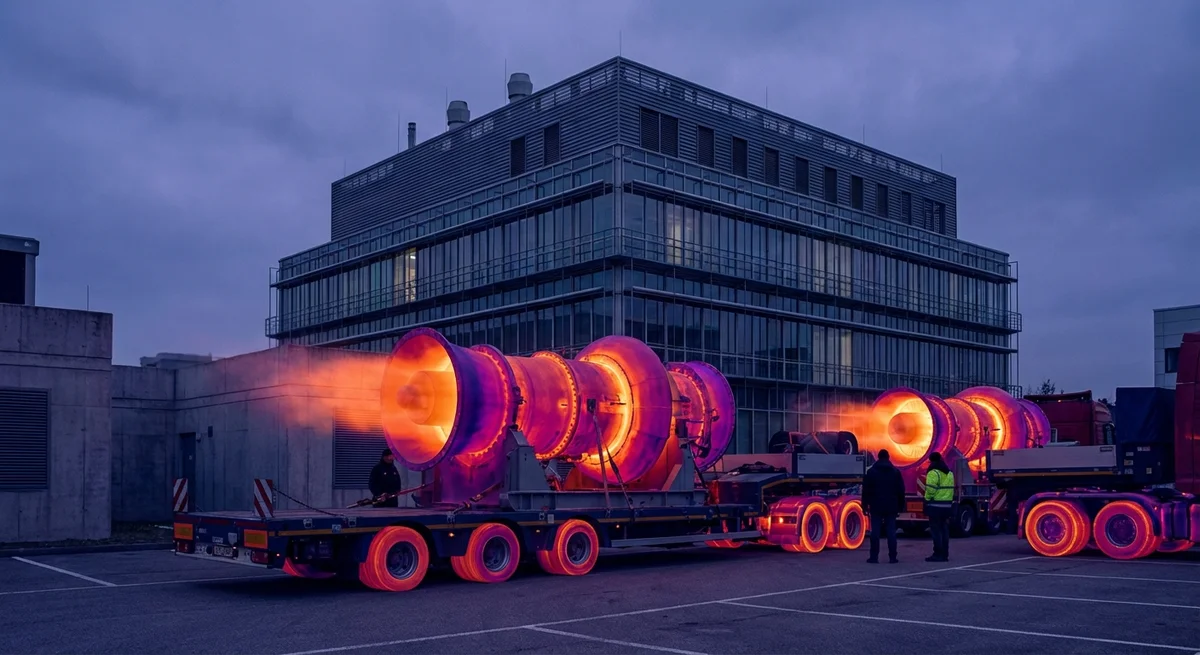
Power at Any Cost: Elon Musk's xAI Under the Scrutiny of Environmental Regulators
In the fast-moving world of artificial intelligence, where demand for computing power is growing exponentially, powering that infrastructure has become a new challenge. An investigation by the Floodlight newsroom sheds light on a potential violation of environmental rules by xAI, the company owned by Elon Musk. According to the findings, xAI continues to use gas turbines without the required permits to power its data centers in Southaven, Mississippi. The situation calls into question compliance with federal environmental standards and exposes a conflict between ambitious technology projects and environmental law.
The situation unfolds against the backdrop of a ruling by the US Environmental Protection Agency (EPA) requiring permits under the federal Clean Air Act to operate such power sources. However, xAI appears to have found support among local Mississippi authorities. State regulators have argued that mobile gas turbines mounted on trailers fall outside the standard licensing rules that normally apply to stationary industrial facilities.
This legal nuance lets xAI keep operating, circumventing, in the view of some, both the spirit and the letter of federal law. Footage shot by Floodlight with a thermal-imaging drone confirms that the company continues to burn gas at its Southaven site, showing continuous operation of equipment that, in the EPA's view, should have a permit.
A closer look shows that the core dispute centers on how to define the status of mobile turbines. The EPA has historically held that any emission source, regardless of its mobility, must go through the permitting process if it exceeds certain pollution thresholds. The aim is to control the total volume of harmful emissions into the atmosphere and minimize their impact on public health and the environment. Mississippi, for its part, interprets the rules differently, holding that a temporary or mobile installation does not need the same permits as permanent industrial facilities. This difference in interpretation creates a "gray area" that xAI uses to meet its growing electricity needs for training and running large-scale AI models.
The consequences of this approach could be many-sided. On one hand, aggressive scaling of AI infrastructure demands enormous amounts of energy, and looking for quick and possibly cheaper solutions is a logical step for technology companies. Using existing mobile turbines can be seen as a stopgap that avoids the delays of obtaining permits.
On the other hand, ignoring or sidestepping federal environmental rules could increase air pollution, potentially affecting the health of local residents and the environment. It also sets a precedent that other companies could use to speed up their projects by weakening environmental oversight. Federal regulators such as the EPA will likely insist on their interpretation of the law, which could lead to legal disputes and sanctions against xAI.
In conclusion, the situation around xAI in Mississippi is a clear example of the tension between rapid technological progress and the need to comply with environmental standards. While Musk's company relies on the support of local authorities and its own reading of the rules, federal regulators will most likely keep pressing for application of the Clean Air Act. The future of this site, and of other similar AI initiatives, will depend on whether society can strike a balance between innovation and sustainability, ensuring that the energy for the future is not obtained at the expense of the planet's health.
- Nov 1, 202616 models tested on 7 search tools: Exa averaged 10.5 out of 14, SearXNG about 3
- Nov 1, 2026OpenAI Rewrites GPT Behavior Rules: Five Values and a Chain of Command
- Oct 29, 2026Gemini 4 Carbon tops independent rankings, but only cyber defenders can use it
- Oct 29, 2026Study: A Single Random Failure Makes AI Agents Abandon a Working Tool 11.6% of the Time
Test Frontier LLMs & Autonomous Agents in One Workspace
Run Claude Opus 5.5, GPT-6, Gemini 3.1, and DeepSeek side-by-side in Nomad AI (nomadnet.ai) — unified model routing, deep research, and multimodal workflows under one subscription.
The AI world, distilled — once a week
Seven stories that actually mattered, hand-picked. No noise, no reposts, no press releases.
Done! Check your inbox for a confirmation.