Morgan Stanley doubles its forecast for humanoid robot sales in China
Morgan Stanley has raised its 2026 forecast for humanoid robot sales in China to 28,000 units, twice its previous estimate. Analysts expect the corporate sector to be the main driver of demand growth, ahead of government, research and entertainment.
AI-processed from 36Kr (36氪); edited by Hamidun News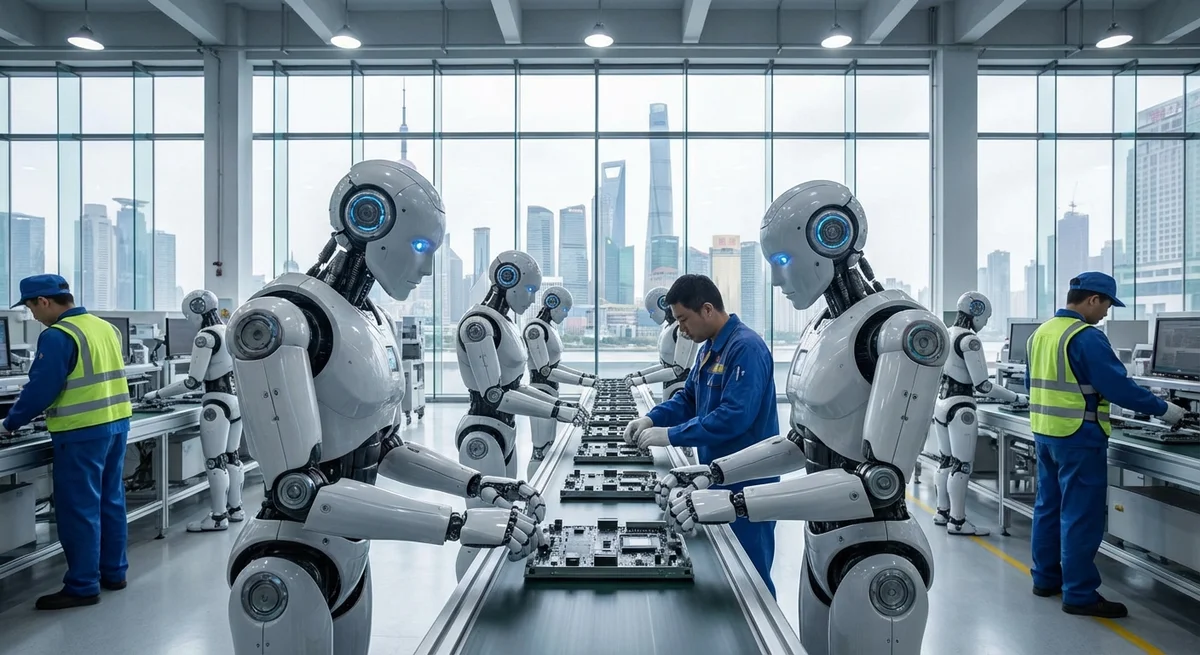
Morgan Stanley analysts have sharply raised their expectations for China's humanoid robot market. A new report forecasts that 28,000 of these machines will be sold in the country by 2026, double the previous forecast of 14,000 units. The revision reflects growing confidence in the commercial potential of robots, beyond their use in government projects, research or the entertainment industry.
China's robotics market is in a phase of rapid growth, fueled by state investment and rising interest from business. The Chinese government actively backs advanced technologies, including robotics, seeing them as key to raising productivity and the competitiveness of the national economy. Until recently, however, most demand for robots came from the public sector and research institutes.
According to Morgan Stanley's analysis, that is changing. Businesses are now becoming the key driver of demand, as they look to automate production, improve logistics efficiency and upgrade customer service. Humanoid robots are seen as a promising solution for a wide range of tasks, from assembly-line work to warehouse assistance and serving visitors in shopping malls.
Morgan Stanley's higher forecast has serious implications for the whole robotics industry. It suggests the market is moving from experiments and pilot projects to real commercial deployment. Robot makers get a strong incentive to develop better, more affordable models, and investors get a signal that the sector is worth backing.
For users, both businesses and end consumers, this opens up new possibilities. Companies will be able to optimize their business processes and cut costs, while consumers may gain access to better and more personalized services. However, the potential risks of automation must also be considered, such as job losses and the need to retrain workers.
In conclusion, Morgan Stanley's revised forecast is an important indicator of the maturity of China's humanoid robot market. The corporate sector is becoming the key engine of growth, opening new prospects for the industry and new opportunities for business and consumers. In the coming years, we will see robots deployed actively across different sectors of the economy, with a significant effect on the labor market and the structure of the economy as a whole.
It is worth noting that the success of humanoid robot adoption will depend not only on technological progress but also on society's readiness for change, as well as on effective government policy on labor market regulation and social protection.
- Oct 31, 2026Author puts his script before an AI jury: the verdict cost 850 thousand tokens
- Oct 31, 2026SciGame Tests Five LLM Agents: Familiar Formulas Get in the Way of Finding Altered Laws
- Oct 30, 2026Agent traffic on Zocdoc is up 30x since July, and ChatGPT faces two health lawsuits
- Oct 29, 2026OvisOCR3: an 0.8B-parameter model that reads documents better than specialized systems
Test Frontier LLMs & Autonomous Agents in One Workspace
Run Claude Opus 5.5, GPT-6, Gemini 3.1, and DeepSeek side-by-side in Nomad AI (nomadnet.ai) — unified model routing, deep research, and multimodal workflows under one subscription.
The AI world, distilled — once a week
Seven stories that actually mattered, hand-picked. No noise, no reposts, no press releases.
Done! Check your inbox for a confirmation.