OpenAI Enters India: Tata Partnership and Plans for Gigawatt-Scale Capacity
OpenAI is formally entering the Indian market with a large agreement with Tata Group. The company is reserving 100 MW of data center capacity to support its AI services, with a long-term goal of a sizable 1 GW. Beyond infrastructure, OpenAI plans a physical presence in the region: offices will open before the end of this year in the country's biggest tech hubs, Mumbai and Bengaluru. The move is part of a global strategy to diversify computing resources and strengthen ties with key players in emerging markets, where demand for AI solutions is growing rapidly.
AI-processed from TechCrunch; edited by Hamidun News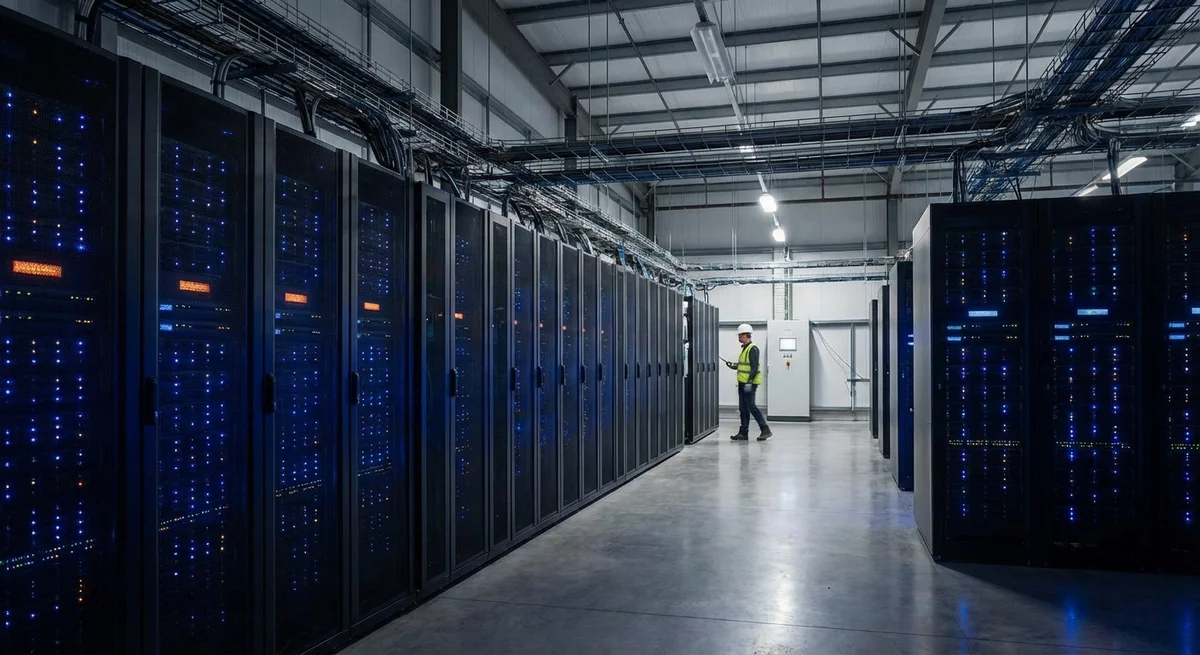
OpenAI Enters India: Tata Partnership and Plans for Gigawatt-Scale Capacity
**A key development in the AI market: OpenAI is formally entering the Indian market through a strategic agreement with Tata Group, one of the country's largest conglomerates. The partnership provides for reserving substantial computing capacity to support growing AI needs. It is an important step in the company's global expansion and in strengthening its position in one of the world's fastest-growing technology markets.
**Context: The global race for computing resources
In recent years, demand for the computing power needed to train and deploy AI models has reached unprecedented levels. Leading AI players such as OpenAI must secure reliable, scalable infrastructure for their most advanced work. India, with its fast-growing economy, large pool of tech talent and active government support for digitalization, is an ideal site for this kind of investment. Tata Group, whose reputation and infrastructure capabilities are well known, gives OpenAI a reliable and influential local partner. The agreement highlights India's growing importance as a key player in the global technology ecosystem, able to meet the needs of global AI giants.
**In depth: Infrastructure and presence
Under the terms of the agreement, OpenAI initially reserves 100 megawatts (MW) of computing capacity in Tata data centers. This volume is meant to cover the company's current and near-term resource needs for its AI services, including developing and running models such as GPT. But OpenAI's ambitions go much further: the company aims to secure a sizable 1 gigawatt (GW) of capacity over the long term.
That scale points to a long-term strategy of deep integration into the Indian market and an expectation of exponential growth in demand for its services. Besides the infrastructure plans, OpenAI intends to strengthen its physical presence in India. Before the end of this year, the company plans to open offices in the country's two biggest tech hubs, Mumbai and Bengaluru.
This will bring OpenAI closer to its Indian customers and partners and let it recruit local talent for its research and engineering teams.
**Implications: Diversification and growth
OpenAI's move into India has far-reaching implications. First, it is part of the company's global strategy to diversify its computing resources. Depending on one or a few providers or geographic regions can pose risks, and entering new markets with strong partners such as Tata reduces them.
Second, the partnership opens new growth opportunities for OpenAI in India, where demand for advanced AI solutions is rising quickly from both business and the public sector. Indian companies and startups will be able to access more powerful and reliable AI services, which in turn will foster innovation and the development of the local economy. In addition, OpenAI's presence in India may stimulate further investment in local IT infrastructure and attract more AI talent.
**Conclusion: A new stage
OpenAI's entry into the Indian market in partnership with Tata Group is a landmark event that highlights India's growing role in the global technology industry. Reserving gigawatt-scale capacity and opening new offices signal the company's serious intentions and its view of the Indian market's long-term potential. The collaboration promises not only to strengthen OpenAI's position but also to accelerate the development of AI in India, opening new horizons for innovation and economic growth.
- Nov 2, 2026Arca gives AI agents finance tasks lasting up to 10 days, but leaves the trades to humans
- Nov 2, 2026Meta's Muse assistant keeps dossiers on loved ones and gets root on Ubuntu by default
- Nov 1, 2026Local models lose to Opus and Codex: 0.21 on a MacBook versus 1.00 for Codex
- Nov 1, 2026Kimi scores 96.2% on a 1C database analytics test and emerges as a fallback if Claude access is blocked
Ship AI Faster with Founders, Engineers & Weekly Architecture Reviews
Inside Vibe Club (hamidun.com/club) — weekly live masterminds with Zhemal Khamidun, Tech Radar, full LMS access, and 370+ production Claude Code skills.
The AI world, distilled — once a week
Seven stories that actually mattered, hand-picked. No noise, no reposts, no press releases.
Done! Check your inbox for a confirmation.