ByteDance's Seedance 2.0: Breakthrough in AI Video or Pretty Garbage?
ByteDance has unveiled Seedance 2.0, a new video generation model. Irish director Ruairi Robinson posted a series of clips featuring a digital double of Tom Cruise fighting Brad Pitt, robots and zombies. The characters move surprisingly smoothly, and the "camerawork" looks cinematic. Generative AI enthusiasts are already burying traditional cinema. Look closer, though, and Seedance 2.0 still produces the telltale "AI slop": technically impressive content that lacks genuine quality.
AI-processed from The Verge; edited by Hamidun News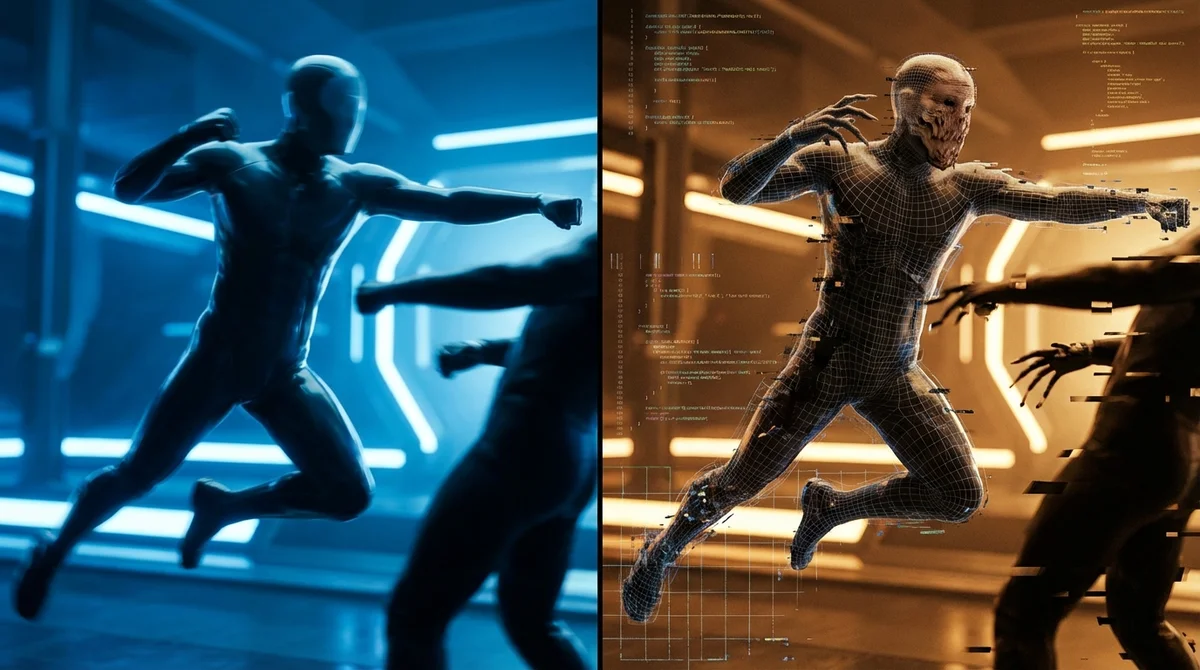
When Irish director Ruairi Robinson began posting short clips made with Seedance 2.0, the newest video generation model from ByteDance, TikTok's parent company, the industry briefly froze. A digital double of Tom Cruise fought Brad Pitt, fended off humanoid robots and cut down zombies. The characters moved with an almost choreographed complexity, and the virtual camera worked as if a cinematographer with twenty years of experience were behind it. It was genuinely impressive, and deceptive at the same time.
To understand the context, look back at the past year and a half of the generative video race. After OpenAI announced Sora in February 2024, the market exploded: Runway, Pika, Kling, Minimax and dozens of other companies rushed to prove that their model was closest to making traditional film production obsolete. Every new release brought a wave of excited posts declaring that Hollywood was "already dead." Seedance 2.0 became the latest occasion for such claims, but this time the arguments carried more weight. ByteDance is not a garage startup but a tech giant with enormous computing resources and access to the world's largest video platform.
Technically, Seedance 2.0 does take a step forward. The model handles motion physics noticeably better: characters no longer "float" through a scene like jellyfish in zero gravity, which plagued early video generators. Interaction between objects is more believable: when the digital Cruise lands a punch, his opponent reacts with a delay and inertia that at least vaguely resemble real physics. The dynamic "camerawork" — with push-ins, pans and changes of angle — gives the clips a cinematic quality that no model had managed before. Robinson, as a professional director, clearly knows how to present the material, and his prompt engineering works in his favor.
But here is the problem: on closer inspection, Seedance 2.0 still produces what the industry has come to call "slop" — visually flashy but essentially empty content. Characters' faces warp in slow motion in the way typical of neural networks. Hands remain an Achilles' heel: fingers merge, vanish or multiply at the most inopportune moments. The textures of clothing and surfaces give away their synthetic nature under a careful look: they are too smooth, too perfect, lacking the microscopic chaos that distinguishes the real world from the digital one. Most importantly, these clips have no narrative. There are spectacular seconds, but no story, no emotional arc, no meaning beyond a technical demonstration.
This leads to a deeper question that the generative AI industry would rather ignore for now. Filmmaking is not only, or even mainly, about generating beautiful frames. It is directing actors, script logic, editing rhythm, sound design, and thousands of micro-decisions that turn a set of images into a coherent narrative. Seedance 2.0 can generate an impressive five-second clip, but ask the model for a coherent two-minute scene with consistent action logic, and the illusion falls apart. Between the "wow effect" of a demo clip and a real production tool lies a chasm that no model has yet crossed.
For ByteDance, Seedance 2.0 is above all a strategic move in the context of TikTok. The company does not need to replace Hollywood; it needs to give millions of content creators on its platform a tool for producing more spectacular short clips. In that sense, the model hits the mark. A five-second clip of a digital Tom Cruise fighting zombies fits the vertical video format and the algorithmic feed perfectly. It is not cinema, it is content, and as such Seedance 2.0 may turn out to be a genuinely successful product.
Generative video keeps advancing at an impressive pace, and it would be foolish to deny the progress. What Seedance 2.0 shows today was unthinkable a year ago. But it is just as foolish to take demo clips as proof that traditional film production is living out its last days. Between "almost real" and "real" the difference is qualitative, not quantitative. And it is precisely in that gap, in those last percentage points of realism, that the hardest part of the problem lies. Seedance 2.0 is an impressive technology demonstration. But for now it is a demonstration, not a revolution.
- Nov 2, 2026Karpathy builds a YouTube clone with 6454 videos from Hacker News recommendations in two hours
- Nov 2, 2026Karpathy used Claude to build HackerTube from 6,454 videos recommended on Hacker News
- Nov 2, 2026The Verge reviewer builds a $50 Meta Muse Charm alternative with Claude Code
- Nov 2, 20268 Skills for video in Claude Code: from 244 pixel effects to rough-cut editing
Test Frontier LLMs & Autonomous Agents in One Workspace
Run Claude Opus 5.5, GPT-6, Gemini 3.1, and DeepSeek side-by-side in Nomad AI (nomadnet.ai) — unified model routing, deep research, and multimodal workflows under one subscription.
The AI world, distilled — once a week
Seven stories that actually mattered, hand-picked. No noise, no reposts, no press releases.
Done! Check your inbox for a confirmation.