OpenAI scrambles to rewrite Pentagon contract after Altman admits the deal was 'sloppy'
OpenAI is revising its contract with the US Department of Defense, renamed the Department of War, after Sam Altman publicly admitted the deal looks 'opportunistic and sloppy.' The company says it will explicitly prohibit the use of its technology for domestic mass surveillance and by intelligence agencies such as the NSA. The contract drew a wave of criticism. Experts feared ChatGPT could be pulled into domestic surveillance systems. Altman is now trying to balance government contracts against the company's reputation.
AI-processed from Guardian; edited by Hamidun News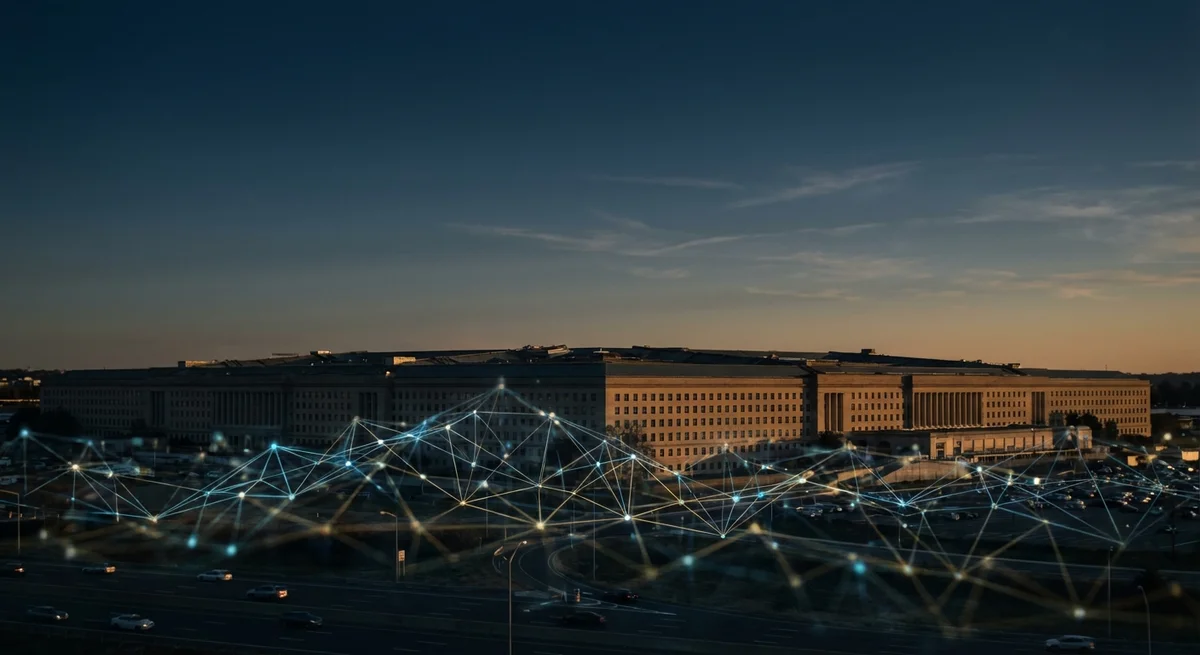
Sam Altman rarely admits mistakes in public. But on Monday evening, the head of OpenAI all but conceded that one of his company's highest-profile deals was handled, to put it mildly, carelessly. The contract to supply artificial intelligence technology to the US Department of Defense, now officially called the Department of War, will be revised, and its text will include explicit limits on using AI for mass surveillance and the work of intelligence agencies.
The story began when OpenAI signed the agreement with the military in a rush. Details leaked to the press before the company could prepare a coherent public explanation. The reaction was predictably harsh: civil rights advocates, digital security experts and part of the tech community voiced serious concern that ChatGPT technology could be integrated into systems for monitoring citizens at home. The potential link to the National Security Agency (NSA) caused particular alarm. Since Edward Snowden's revelations, the agency's reputation has remained toxic for any technology company that values user trust.
Speaking on Monday, Altman used language unusual for the head of a company worth hundreds of billions of dollars. He called the deal 'opportunistic and sloppy,' words that executives usually reserve for competitors' blunders, not their own decisions. Still, the admission looks more like a calculated step in managing a reputational crisis than genuine contrition. OpenAI found itself in a position where silence would have cost more than public self-flagellation.
According to Altman, the revised contract will contain an explicit ban on two key scenarios: using OpenAI technology for mass surveillance of the domestic population, and handing it to the Defense Department's intelligence units, including the NSA. On paper, that sounds like a serious restriction. In practice, more questions remain than answers. Who will monitor compliance? How, exactly, is 'mass surveillance' defined in legal terms? And what stops the military from using OpenAI's work in adjacent projects that formally fall outside the restrictions?
The context of this story is much wider than a single contract. OpenAI has made a remarkable journey from a nonprofit lab created for 'safe AI for the benefit of humanity' to a commercial giant actively pursuing government contracts. As recently as 2023, the company flatly refused to work with the military. In 2024 the policy was quietly revised: first cooperation on cybersecurity was allowed, then the boundaries blurred further. The contract with the Department of War is the logical, if painful, result of this drift. Every step came with caveats about 'protective' and 'defensive' purposes, but the direction of travel was obvious.
For the industry as a whole, OpenAI's situation sets an important precedent. Every major AI developer, from Google DeepMind to Anthropic, will sooner or later face a similar choice. Government contracts bring steady revenue and political patronage, but they also put at risk a company's reputation among users and developers for whom data privacy is a core value. Microsoft, OpenAI's largest investor, has long worked with the Pentagon through its cloud services and the JEDI project. But Microsoft has no consumer product with two hundred million users who entrust it daily with their thoughts, queries and data.
The renaming of the Department of Defense to the Department of War deserves separate attention. The administration's decision restores the agency's historical name, used until 1947. For OpenAI this creates an additional optics problem: working with a 'Department of Defense' is one thing, working with a 'Department of War' is quite another. The semantics work against the company, reinforcing the sense that technology built to help people could be turned against them.
Altman has promised transparency and limits. But trust is a resource that is spent faster than it is earned. OpenAI must prove that its pledge to ban mass surveillance is not just a line in a press release but a control mechanism that actually works. Otherwise, the company risks discovering that it has lost something more valuable than any government contract: the belief that it still stands with people, not with the systems that watch them.
- Nov 2, 2026Meta's Muse assistant keeps dossiers on loved ones and gets root on Ubuntu by default
- Nov 1, 2026Local models lose to Opus and Codex: 0.21 on a MacBook versus 1.00 for Codex
- Nov 1, 2026Kimi scores 96.2% on a 1C database analytics test and emerges as a fallback if Claude access is blocked
- Nov 1, 2026OpenAI Rewrites GPT Behavior Rules: Five Values and a Chain of Command
Test Frontier LLMs & Autonomous Agents in One Workspace
Run Claude Opus 5.5, GPT-6, Gemini 3.1, and DeepSeek side-by-side in Nomad AI (nomadnet.ai) — unified model routing, deep research, and multimodal workflows under one subscription.
The AI world, distilled — once a week
Seven stories that actually mattered, hand-picked. No noise, no reposts, no press releases.
Done! Check your inbox for a confirmation.