OpenAI and Oracle Cancel Expansion of Flagship Texas Data Center
Oracle and OpenAI have officially dropped plans to expand their key data center in Texas. The decision followed protracted funding talks that produced no agreement, and came as OpenAI's technical needs changed. The collapse highlights the growing difficulty of building large-scale AI infrastructure, including power supply and capital costs. OpenAI must now look for alternative sites to host its computing capacity.
AI-processed from Bloomberg Tech; edited by Hamidun News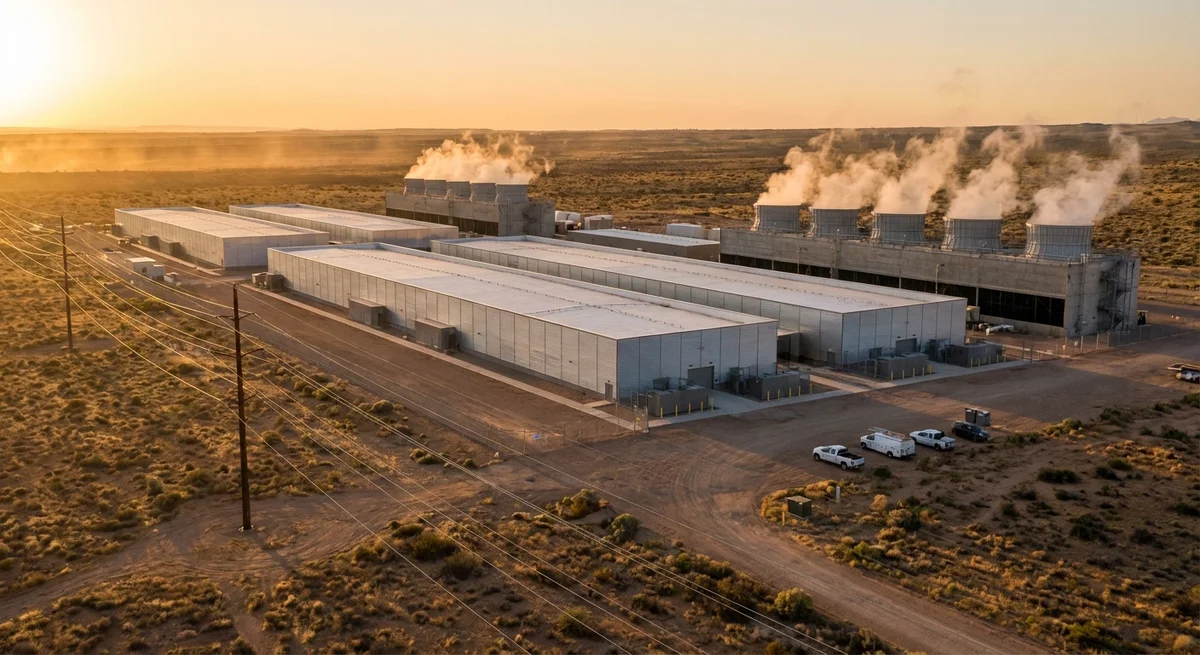
OpenAI and Oracle Cancel Expansion of Flagship Texas Data Center
Oracle and OpenAI have officially abandoned plans to expand their key data center in Texas. The decision, which surprised many in the industry, followed protracted funding negotiations that apparently failed to produce an agreement between the parties. OpenAI's own changing technical needs also played a significant role, as its requirements for computing power and infrastructure keep evolving at the rapid pace of AI development. The collapse of this large-scale project highlights the growing difficulty of building and operating the infrastructure needed to deploy AI technology at scale, including critical factors such as power supply and enormous capital costs.
The Texas expansion was an ambitious project. The plan was to build the world's largest data center, able to meet OpenAI's growing appetite for the computing resources needed to train and run its advanced AI models. Oracle, for its part, was to provide cloud infrastructure and support.
The project was seen as a key step toward securing OpenAI's long-term competitiveness and as a showcase of Oracle's cloud computing capabilities for AI. However, according to sources close to the negotiations, the sticking point was the financial terms and the structure of the deal, which the parties could not agree on. At the same time, the rapid development of OpenAI's technology led it to revise its long-term strategy and, as a result, its hardware requirements.
A closer look at the reasons for the cancellation shows the problem goes beyond financial disagreements. The change in OpenAI's technical needs is a critical factor. AI companies are constantly searching for the best ways to host their compute clusters.
Requirements for performance, latency, bandwidth and, above all, energy efficiency keep rising. What was relevant a year or two ago may be insufficient or suboptimal today. In OpenAI's case, new, more efficient or more cost-effective hosting options may have emerged, or its priorities for the architecture of its computing systems may have shifted.
Scalability and infrastructure flexibility also play a decisive role. Large AI projects demand not only huge upfront investment but also the ability to adapt quickly to changing market conditions and technological breakthroughs.
The consequences of the cancellation are significant. First, it puts OpenAI in a difficult position, forcing it to urgently seek alternative sites for its growing computing capacity. That could mean higher costs, delays to new projects and, potentially, reduced competitiveness. Second, it casts a shadow over Oracle's reputation as a reliable partner for large AI startups, showing that even the biggest players struggle to deliver large-scale infrastructure projects. Third, the failure of such a landmark project may affect the whole industry, signaling higher risks and complexity in securing the infrastructure a fast-growing AI sector needs. Questions of energy availability, supply chain resilience and the high cost of building data centers are becoming ever more pressing.
In conclusion, the cancellation of the OpenAI and Oracle flagship data center expansion in Texas is a vivid example of the difficulties AI industry leaders face when scaling their infrastructure. A project conceived as a monumental achievement ran into insurmountable obstacles: financial disagreements and shifting technological needs. OpenAI now faces the difficult task of finding new ways to sustain its rapid growth, and the whole industry will watch closely to see how these challenges are overcome. The episode shows that in the race for AI dominance, infrastructure is becoming just as important as the algorithms and models themselves.
- Nov 2, 2026Arca gives AI agents finance tasks lasting up to 10 days, but leaves the trades to humans
- Nov 2, 2026Meta's Muse assistant keeps dossiers on loved ones and gets root on Ubuntu by default
- Nov 1, 2026Local models lose to Opus and Codex: 0.21 on a MacBook versus 1.00 for Codex
- Nov 1, 2026Kimi scores 96.2% on a 1C database analytics test and emerges as a fallback if Claude access is blocked
Ship AI Faster with Founders, Engineers & Weekly Architecture Reviews
Inside Vibe Club (hamidun.com/club) — weekly live masterminds with Zhemal Khamidun, Tech Radar, full LMS access, and 370+ production Claude Code skills.
The AI world, distilled — once a week
Seven stories that actually mattered, hand-picked. No noise, no reposts, no press releases.
Done! Check your inbox for a confirmation.