YouTube expands deepfake protection: Hollywood stars will be able to remove AI clones
YouTube is extending its deepfake detection tool to Hollywood celebrities. The feature, called likeness detection, automatically scans the platform, finds AI-generated content featuring public figures and lets them request removal. The tool was tested with content creators last fall and expanded to politicians and journalists in March. Now it is the turn of film and music stars.
AI-processed from The Verge; edited by Hamidun News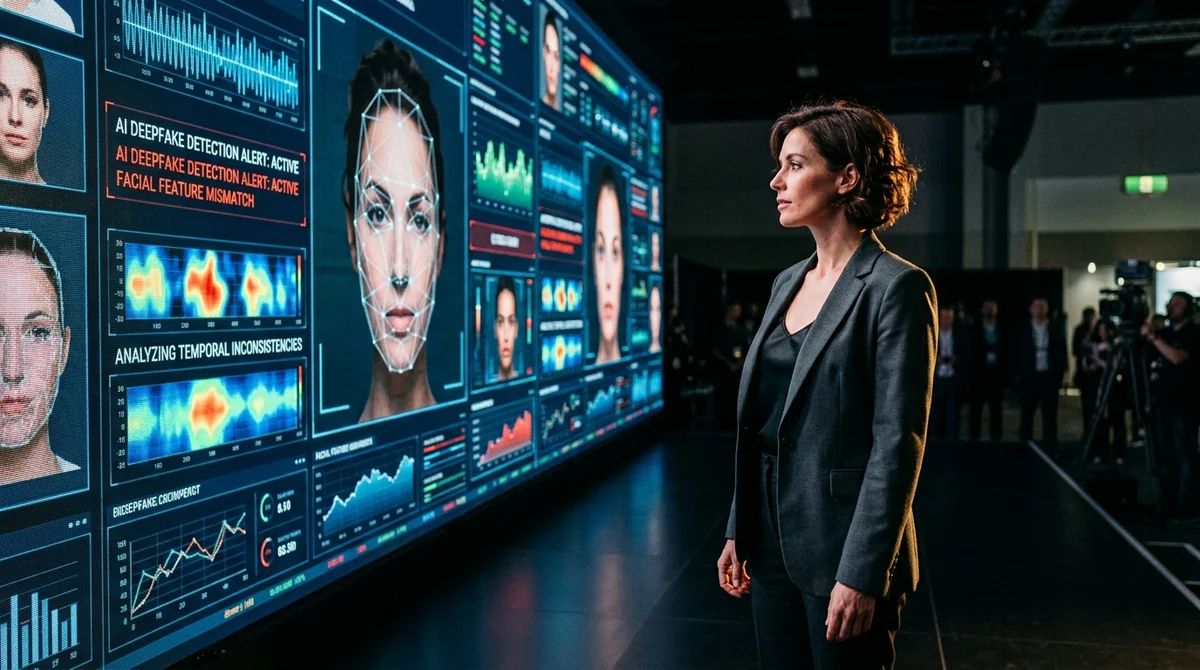
YouTube has announced that it is extending its deepfake detection tool to Hollywood celebrities, which means hundreds of thousands of AI-generated videos featuring their faces could soon disappear from the platform.
The feature is called likeness detection. It automatically scans all of YouTube for AI-generated content featuring a public figure registered in the program. In their dashboard, the celebrity sees a list of videos imitating their appearance or voice and can either monitor the situation or submit a removal request.
An important caveat: every request is reviewed manually and assessed against YouTube's privacy policy. Not everything will be approved. Parodies, satirical videos and content clearly labeled as fiction may stay on the platform. YouTube stresses that the mechanism is not an automatic ban but a monitoring tool.
The program has rolled out in stages. In fall 2025, YouTube began testing likeness detection with ordinary content creators, such as bloggers and influencers. In March 2026 the program expanded to politicians and journalists, people who are especially vulnerable to deepfake-driven disinformation campaigns. Now it is Hollywood's turn: actors, musicians, athletes and other pop-culture stars.
Why does this matter right now?
Over the past two years, the number of deepfakes on video platforms has grown exponentially. Hollywood celebrities are at particular risk: their faces and voices are easy to obtain for training models, and the audience for such videos runs into the millions. After a wave of scandals in 2024, when several stars discovered explicit deepfakes of themselves, lawyers began filing complaints with platforms en masse. YouTube responded slowly: each case was reviewed manually and took weeks. Celebrities now have a systematic monitoring tool, not just the right to file a complaint.
Technically, likeness detection relies on video recognition and metadata analysis. YouTube does not disclose details about the specific models, but the system is trained to distinguish real archival footage from synthetically generated content. Details on the tool's accuracy have not yet been published, but judging by earlier expansions of the program, false positives should be few.
YouTube becomes the first major video platform to give public figures a proactive tool against deepfakes. Until now, only reactive mechanisms existed: filing a complaint after content had already gone viral. The new approach flips that: a celebrity learns about a deepfake before it has gathered millions of views.
Scalability remains an open question. YouTube hosts more than 800 million videos, and new content is uploaded at 500 hours per minute. How quickly the system can process that flow, time will tell. But the tool's very existence sets a new standard: TikTok, Instagram and other platforms are now under pressure to offer something similar.
*Meta has been designated an extremist organization and is banned in Russia.
- Nov 2, 2026Meta's Muse assistant keeps dossiers on loved ones and gets root on Ubuntu by default
- Nov 2, 2026The Verge reviewer builds a $50 Meta Muse Charm alternative with Claude Code
- Nov 1, 2026MoneyGate safety layer blocked all 42 fraudulent requests to local AI models
- Oct 31, 2026Open-source LLM gateway KTMS 1.0 plugs your own GPUs into the cloud and survives outages
Test Frontier LLMs & Autonomous Agents in One Workspace
Run Claude Opus 5.5, GPT-6, Gemini 3.1, and DeepSeek side-by-side in Nomad AI (nomadnet.ai) — unified model routing, deep research, and multimodal workflows under one subscription.
The AI world, distilled — once a week
Seven stories that actually mattered, hand-picked. No noise, no reposts, no press releases.
Done! Check your inbox for a confirmation.