AI vs. Blood Disease: A Breakthrough from Cambridge
Researchers at the University of Cambridge have built an AI system that analyzes blood cells. It outperforms doctors in accurately detecting morphological abnormalities. The article covers the details and the outlook for the technology.
AI-processed from Habr AI; edited by Hamidun News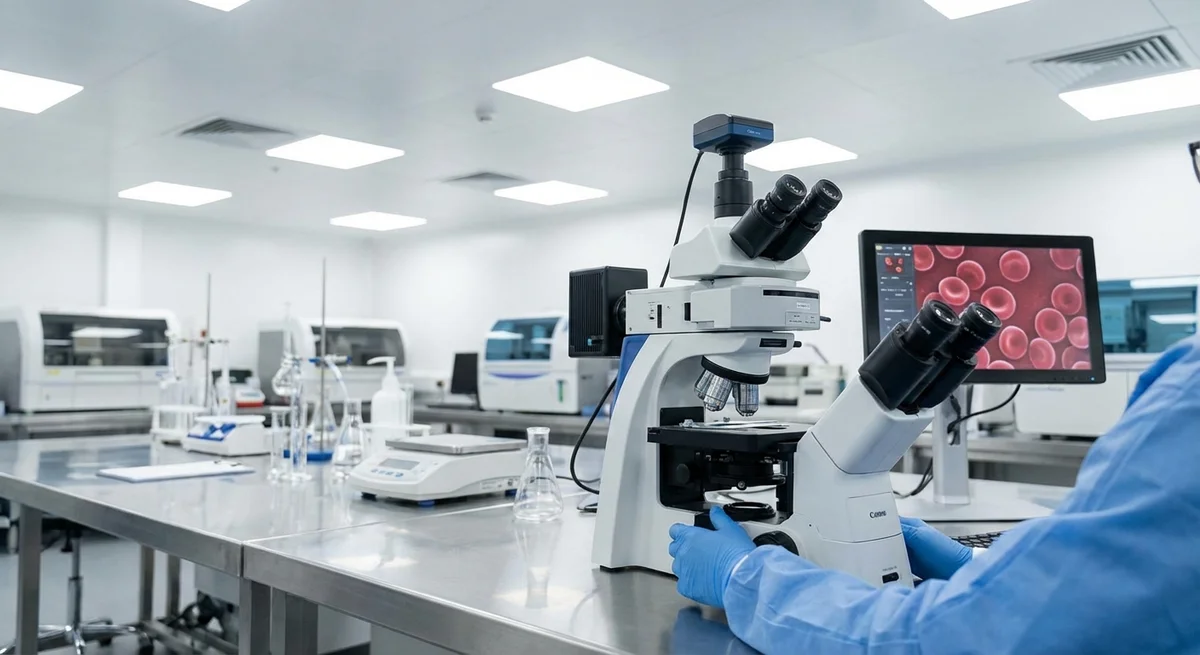
Disease and injury have always accompanied living organisms. For millennia, humanity has tried to understand illness, cure it and, where possible, avoid it. Centuries of research have greatly expanded our understanding of the human body, but we are still far from complete knowledge. Studying blood cells is especially important, since they play a key role in preventing and treating many diseases.
A recent study by researchers at the University of Cambridge is a significant step forward in this area. They developed an artificial intelligence system that can detect abnormalities in blood cell morphology with high accuracy, outperforming even experienced doctors. The work opens new prospects for diagnosing and treating hematological diseases, but it requires detailed analysis.
How exactly does the system work? It is built on deep learning, which lets the AI analyze images of blood cells with microscopic precision. The system was trained on a huge dataset of images of normal and pathological cells, which allowed it to pick up even minor deviations that a human eye may miss. The diagnostic accuracy the AI demonstrated is significantly higher than that of traditional methods, as confirmed by independent studies.
The AI's advantage lies not only in accuracy but also in speed. The system can process large volumes of data in a short time, which speeds up diagnosis and makes it possible to start treatment at early stages of disease. This matters most in acute conditions such as leukemia or sepsis, where time is critical.
However, bringing AI into clinical practice raises a number of questions. First, the system's reliability and safety must be ensured. Second, standards and protocols for using AI in diagnostics need to be developed. Third, it is important to consider the ethical aspects of automating medical diagnosis. Even so, the prospects for AI in hematology are enormous. The system could become an indispensable assistant to doctors, helping them diagnose and treat blood diseases more effectively.
In the future, similar systems could be integrated into automated diagnostic units, available even in remote regions that lack qualified specialists. This would improve access to quality medical care and save many lives. The Cambridge study shows the huge potential of AI in medicine and opens a new era in the diagnosis and treatment of blood diseases.
In conclusion, AI for blood cell analysis is a significant breakthrough that promises to change how hematological diseases are diagnosed. Accuracy, speed and accessibility are the key advantages of this technology, and they could save many lives. Research in this area should continue so that the potential of AI in medicine can be fully realized.
Test Frontier LLMs & Autonomous Agents in One Workspace
Run Claude Opus 5.5, GPT-6, Gemini 3.1, and DeepSeek side-by-side in Nomad AI (nomadnet.ai) — unified model routing, deep research, and multimodal workflows under one subscription.
The AI world, distilled — once a week
Seven stories that actually mattered, hand-picked. No noise, no reposts, no press releases.
Done! Check your inbox for a confirmation.