Anthropic expands compute deal with Google and Broadcom as run-rate revenue hits $30 billion
Anthropic has expanded its compute agreements with Google and Broadcom, locking in capacity to support its rapid growth. Run-rate revenue has reached $30 billion, up from $3-4 billion just a year ago. The main drivers are enterprise contracts for the Claude API and integration into Amazon products.
AI-processed from TechCrunch; edited by Hamidun News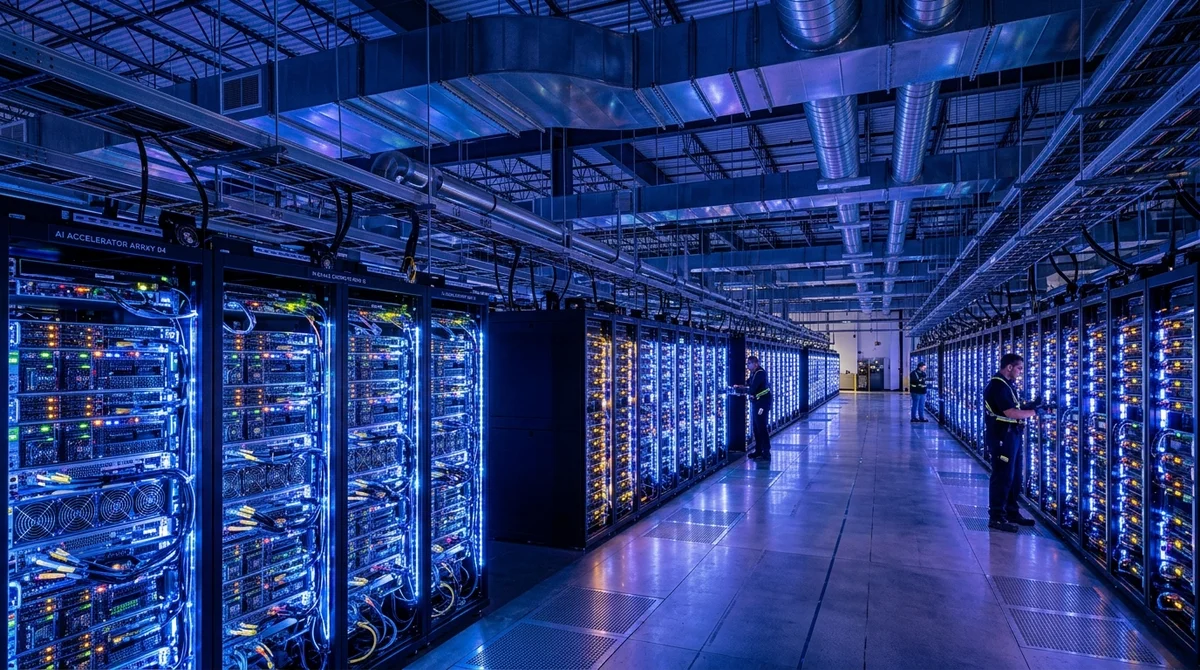
Anthropic is expanding its compute agreements with Google and Broadcom as its business surges: the company's annualized run-rate revenue has reached $30 billion. That ranks among the most striking growth trajectories of any generative AI company in recent years.
Anthropic's partnership with Google began in 2023. The search giant first invested several hundred million dollars, then raised its total commitment to several billion. Along with capital, Google provided access to its cloud infrastructure, primarily its TPU tensor processors, which now form the backbone for training and inference of the Claude model family. The expanded agreement guarantees Anthropic additional compute capacity as demand grows.
Broadcom's role in this setup is to supply specialized chips. The company builds ASIC solutions for large tech customers and designs custom accelerators for specific AI workloads. Deeper ties with Broadcom signal that Anthropic is serious about diversifying its hardware base, reducing its reliance on standard NVIDIA GPUs amid persistent shortages and pricing pressure in the market.
The $30 billion run-rate suggests Anthropic's revenue is growing faster than even optimistic analysts expected. In mid-2024, the figure cited was roughly $1 billion in ARR; by the end of that year, estimates had climbed to $3-4 billion. The 7-8x jump over just a few quarters comes from widespread enterprise adoption of the Claude API, heavy use of Claude in products from Amazon (another major investor), and a growing consumer audience for Claude.ai.
Compute is the single biggest cost for any AI company. Training large language models takes thousands of accelerators running nonstop for months, and serving inference to a growing user base is no cheaper. Expanding compute deals is the standard response to rising demand. The more important point is that Anthropic is building a diversified strategy, relying on both Google's TPUs and Broadcom's specialized chips rather than tying itself to a single supplier.
The move fits a trend visible across every major AI lab. Microsoft is building its own Maia chips for Azure, Meta is developing MTIA, and Google is already on the sixth generation of its TPU. Everyone remains heavily dependent on NVIDIA, but the leading players are investing in alternative hardware. Anthropic is following the same path, and at its current growth rate it has both the financial resources and the strategic motivation to do so ahead of time.
Expanding its compute deals against a $30 billion run-rate sends a clear signal: Anthropic isn't just meeting current demand, it's reserving capacity for the next wave of growth. In an industry where compute shortages directly limit how fast products can ship, that move makes strategic sense.
*Meta is designated an extremist organization and banned in the Russian Federation.
- Nov 1, 2026Local models lose to Opus and Codex: 0.21 on a MacBook versus 1.00 for Codex
- Nov 1, 2026Kimi scores 96.2% on a 1C database analytics test and emerges as a fallback if Claude access is blocked
- Nov 1, 2026OpenAI Rewrites GPT Behavior Rules: Five Values and a Chain of Command
- Nov 1, 2026Google admits AI Mode cuts search revenue, shares fall 15%
Test Frontier LLMs & Autonomous Agents in One Workspace
Run Claude Opus 5.5, GPT-6, Gemini 3.1, and DeepSeek side-by-side in Nomad AI (nomadnet.ai) — unified model routing, deep research, and multimodal workflows under one subscription.
The AI world, distilled — once a week
Seven stories that actually mattered, hand-picked. No noise, no reposts, no press releases.
Done! Check your inbox for a confirmation.