OpenAI Shuts Down Sora Video Generator, Putting Billion-Dollar Disney Deal at Risk
OpenAI is shutting down Sora, the AI video generator it launched in late 2024. Sam Altman told employees personally that both the app and the developer API will be switched off. The deal with Disney, which put $1 billion into OpenAI with Sora in mind, is now at risk. The company has not confirmed rumors that the technology would be folded into ChatGPT. Competitors such as Google Veo 2 and Runway continue to develop their products.
AI-processed from The Verge; edited by Hamidun News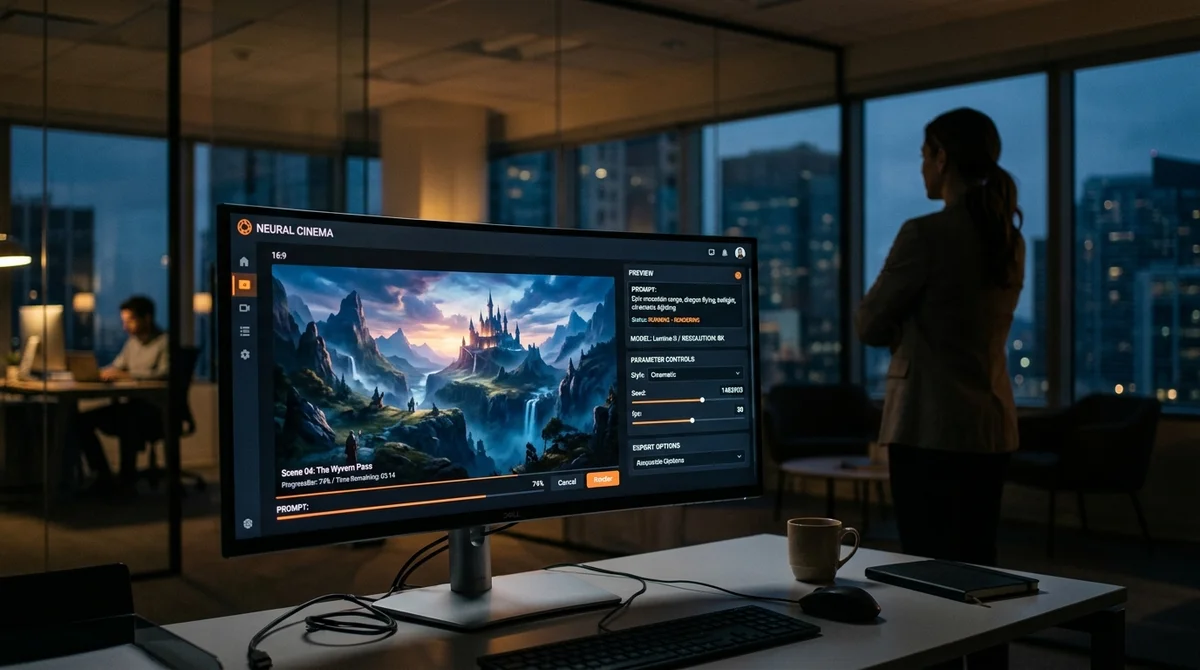
OpenAI has announced the shutdown of Sora, its text-to-video generator, which the company launched in late 2024 as one of its key products. Sam Altman personally told employees that the TikTok-like Sora app and API access for developers will be switched off. The rumored integration of the technology into ChatGPT will not happen.
When OpenAI first showed Sora, the industry's reaction was almost unanimous: a breakthrough. Horses galloped through snowy mountains, fantastical cities stretched to the horizon, and cinematic scenes appeared from a line of text in seconds. The company clearly aimed for leadership in AI video, a segment analysts valued at tens of billions of dollars in the coming years. Launching a consumer app in late 2024 looked like a logical step toward monetizing the technology.
In December 2024, Disney announced a strategic partnership with OpenAI. The world's largest media group promised to invest $1 billion in the company and gained the right to license Disney characters for products built on Sora. For the industry, it was a signal: conservative Hollywood was taking AI video seriously. The Disney partnership gave Sora a weight and legitimacy that no competitor had.
Now that Sora is being shut down, the partnership is at risk: according to The Hollywood Reporter, the deal is tied to the product's existence.
OpenAI's decision looks especially odd given growing competition. Google is actively developing Veo 2 and offering it to enterprise customers through Workspace. Runway regularly ships updates and is expanding its partnerships with studios. Kuaishou's Chinese model Kling is gaining popularity in Western markets, attracting users put off by Sora's pricing. Steady growth in the segment means OpenAI's exit is not the end of the market but a gift to competitors who are ready to keep investing. A company with every resource needed to win this race is voluntarily leaving it.
Sora's problem lay in the gap between the presentation and reality. The demo clips were impressive, but real users regularly reported artifacts, weak control over character movement, unpredictable scenes and limited editing options. The developer API attracted a narrow audience: the product proved more expensive and less flexible than the alternatives. Commercial success was not enough to justify the scale.
The Sora shutdown fits a broader pattern: AI companies quickly launch consumer products, then just as quickly retool or close them when monetization falls short of expectations. The difference is that Sora had already acquired major corporate partnerships. Those are now in limbo, and the partners must reconsider their agreements with a company that has changed course.
The shutdown raises questions OpenAI has not yet answered. What will happen to the Sora development team, one of the strongest video-AI groups in the industry? Will the technology survive in another format, for example as a built-in ChatGPT Plus feature for enterprise customers? How irreversible is the break with Disney, which put in a symbolic billion dollars for a product that no longer exists? The answers will determine whether the shutdown is a tactical pivot or an admission of failure for an entire line of work.
For the industry, the episode is an important lesson. Even the best-capitalized AI startup in the world can close a product if it has not found a sustainable business model. The Disney deal exposes the risks of a strategy in which corporate partnerships are built around a specific tool rather than a platform. OpenAI, judging by the signals, is concentrating on ChatGPT and enterprise solutions. Video generation, at least in its current form, did not fit that plan.
- Nov 2, 2026Meta's Muse assistant keeps dossiers on loved ones and gets root on Ubuntu by default
- Nov 1, 2026Local models lose to Opus and Codex: 0.21 on a MacBook versus 1.00 for Codex
- Nov 1, 2026Kimi scores 96.2% on a 1C database analytics test and emerges as a fallback if Claude access is blocked
- Nov 1, 2026OpenAI Rewrites GPT Behavior Rules: Five Values and a Chain of Command
Test Frontier LLMs & Autonomous Agents in One Workspace
Run Claude Opus 5.5, GPT-6, Gemini 3.1, and DeepSeek side-by-side in Nomad AI (nomadnet.ai) — unified model routing, deep research, and multimodal workflows under one subscription.
The AI world, distilled — once a week
Seven stories that actually mattered, hand-picked. No noise, no reposts, no press releases.
Done! Check your inbox for a confirmation.