Jensen Huang Says AGI Has Already Been Achieved — and Explains What He Means
Nvidia CEO Jensen Huang said on Lex Fridman's podcast: "I think we've achieved AGI." The problem is that AGI is a vague term, and each major player interprets it differently. Some reject it entirely, others rebrand it to suit themselves — but the essence remains the same.
AI-processed from The Verge; edited by Hamidun News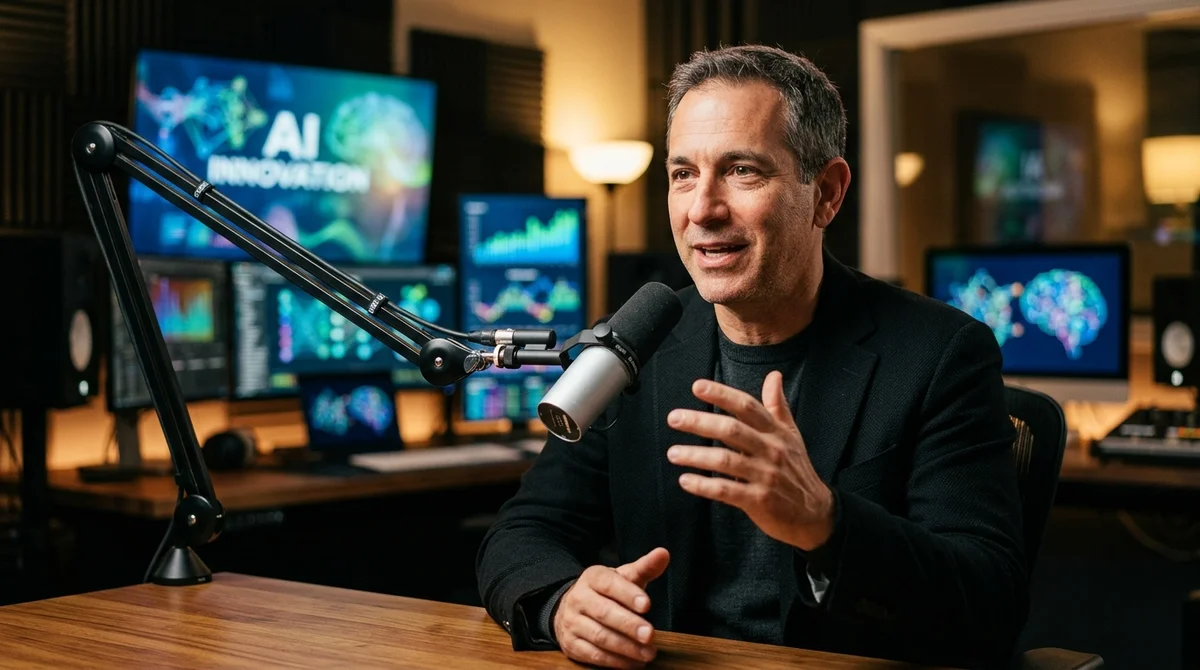
Nvidia CEO Jensen Huang made a statement on the Lex Fridman podcast that instantly rippled across the entire industry: "I think we've achieved AGI." The statement sounded casual — but behind it lies a question the industry has been unable to resolve for years. AGI, or Artificial General Intelligence, formally means a system capable of solving any intellectual task at human level or above.
It's precisely the word "any" that makes this term so slippery: it has no single measurable definition, which means everyone can consider it achieved by their own criteria. Huang is neither the first nor the last tech leader to manipulate this concept in the public sphere. In recent months, executives from the largest AI companies have increasingly distanced themselves from the term AGI: some call it overheated and marketing-driven, others introduce their own abbreviations — ASI, "frontier AI," "human-level AI" — which essentially describe the same thing but sound more technical and less sensational.
The context of Huang's statement is important: Nvidia is the primary supplier of chips for training and inference of modern language models. The company earns tens of billions of dollars precisely from the AGI race launched by OpenAI, Google, Meta, Anthropic, and others. For him, the statement "AGI has been achieved" is not so much a technical assertion as a signal to the market: demand for compute will not fall, but will only grow.
Yet Huang himself, based on the context of the interview, invested pragmatic meaning in his words: modern models already pass tests that until recently were considered markers of human intelligence — from coding tasks to medical diagnostics. Whether this can be called AGI depends on whose dictionary you use. All of this exposes a fundamental problem: the industry has not agreed on what exactly it is building.
While the largest players compete over who announces the breakthrough first, the very concept of AGI is turning into a marketing tool rather than a scientific criterion. Huang's statement is a vivid symptom of this confusion, not its resolution.
- Oct 28, 2026Liquid AI releases LFM2.5-24B-A2B: an agent model with 2B active parameters
- Oct 28, 2026PyTorch 2.15 speeds up MoE models on Mac by 5–6.5x and adds FP8
- Oct 28, 2026Anthropic files S-1 for IPO at $2 trillion valuation: 85% margin, profitable Q2
- Oct 28, 2026NVIDIA Kumo Relational Beats Supervised ML on 41 Tasks Without Any Training
Ship AI Faster with Founders, Engineers & Weekly Architecture Reviews
Inside Vibe Club (hamidun.com/club) — weekly live masterminds with Zhemal Khamidun, Tech Radar, full LMS access, and 370+ production Claude Code skills.
The AI world, distilled — once a week
Seven stories that actually mattered, hand-picked. No noise, no reposts, no press releases.
Done! Check your inbox for a confirmation.