ChatGPT Didn't Cure a Dog's Cancer: How a Viral Story Got Exaggerated
Paul Conyngham, a Sydney tech entrepreneur, said ChatGPT helped save his dog Rosie from cancer after vets gave up. The story went viral instantly. It was exactly the kind of "proof" the AI industry had long been waiting for. But The Verge dug into the details and found that the picture is far more complicated.
AI-processed from The Verge; edited by Hamidun News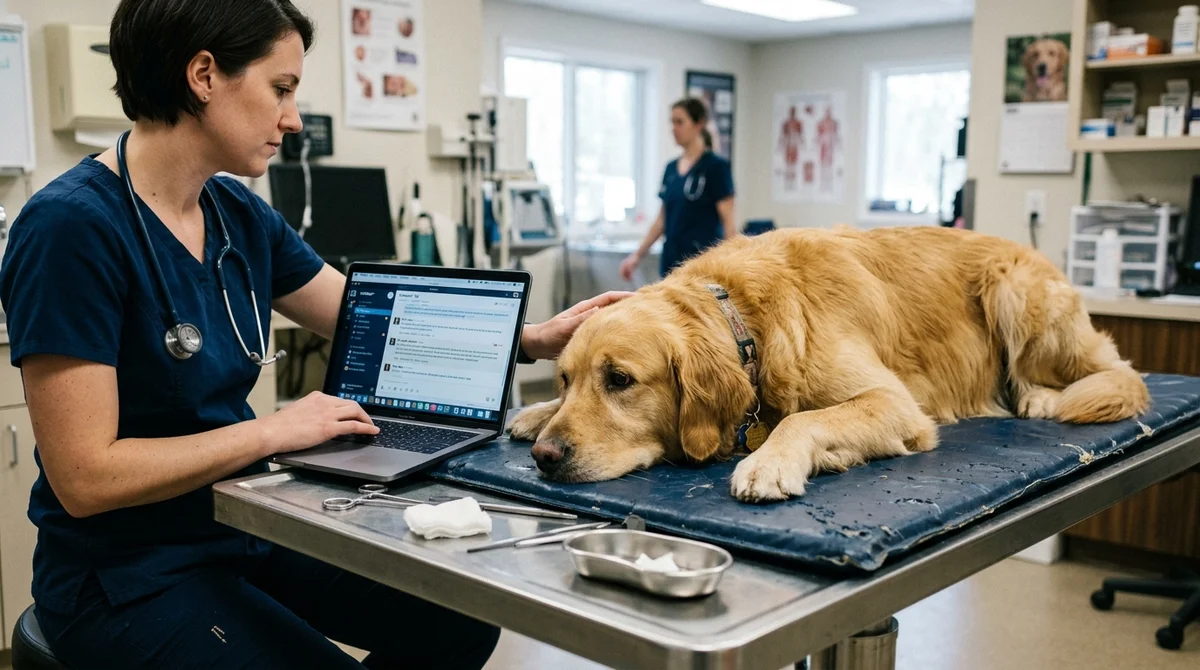
The story of how ChatGPT cured a dog of cancer spread across the internet at a speed Big Tech could only welcome: living proof that artificial intelligence is ready to transform medicine and beat one of the deadliest diseases. As usual, reality turned out to be far more complicated.
In 2024, Sydney tech entrepreneur Paul Conyngham learned that his Staffordshire bull terrier, Rosie, had cancer. Chemotherapy slowed the disease, but the tumors did not shrink. When vets told him "nothing can be done," Conyngham, who has no professional training in biology or medicine, turned to ChatGPT. By his account, the neural network helped him devise something like a personalized treatment plan. The dog survived, and her owner credited the AI.
The story first appeared in the Australian newspaper The Australian and began spreading immediately: tech media, bloggers and AI enthusiasts around the world picked it up. The narrative had everything a viral story needs: a sympathetic hero, a deadly disease, a hopeless situation and a rescue thanks to technology. It is exactly the kind of case that advocates of AI in medicine have long been waiting for.
However, after examining the details, journalists at The Verge found that the picture is far more complicated. ChatGPT's role in Rosie's recovery cannot be independently verified. It is unknown what prompts the chatbot gave, how medically accurate they were, and, most importantly, what actually influenced the outcome. Cancers in animals, as in people, can follow an unpredictable course, and a vet saying "nothing can be done" does not always mean a final verdict.
The story is a good example of how the media environment around AI works as an amplifier. An anecdote, presented from the right angle, becomes "proof" of a revolution. Questions about methodology, reproducibility and actual cause and effect do not make the headlines.
The key takeaway is not whether ChatGPT is a good or bad medical tool; that is a separate and serious discussion. What matters is that individual success stories, especially emotionally charged ones, are a poor basis for judging a technology's real capabilities.
AI is indeed being actively adopted in medical research and diagnostics, with real results and peer-reviewed data. But those stories get told far more quietly than the one about the rescued dog.
- Nov 2, 2026Arca gives AI agents finance tasks lasting up to 10 days, but leaves the trades to humans
- Nov 2, 2026Meta's Muse assistant keeps dossiers on loved ones and gets root on Ubuntu by default
- Nov 1, 2026Local models lose to Opus and Codex: 0.21 on a MacBook versus 1.00 for Codex
- Nov 1, 2026Kimi scores 96.2% on a 1C database analytics test and emerges as a fallback if Claude access is blocked
Test Frontier LLMs & Autonomous Agents in One Workspace
Run Claude Opus 5.5, GPT-6, Gemini 3.1, and DeepSeek side-by-side in Nomad AI (nomadnet.ai) — unified model routing, deep research, and multimodal workflows under one subscription.
The AI world, distilled — once a week
Seven stories that actually mattered, hand-picked. No noise, no reposts, no press releases.
Done! Check your inbox for a confirmation.