Pentagon calls Anthropic a national security threat due to ethical restrictions on AI
The Pentagon has designated Anthropic as a supply chain risk due to the company's so-called "red lines." The essence: Anthropic reserves the right to disable its AI systems during military operations if it deems necessary. The Defense Department called this an unacceptable risk to national security — for the first time, ethical restrictions of an AI company are officially considered a military threat.
AI-processed from TechCrunch; edited by Hamidun News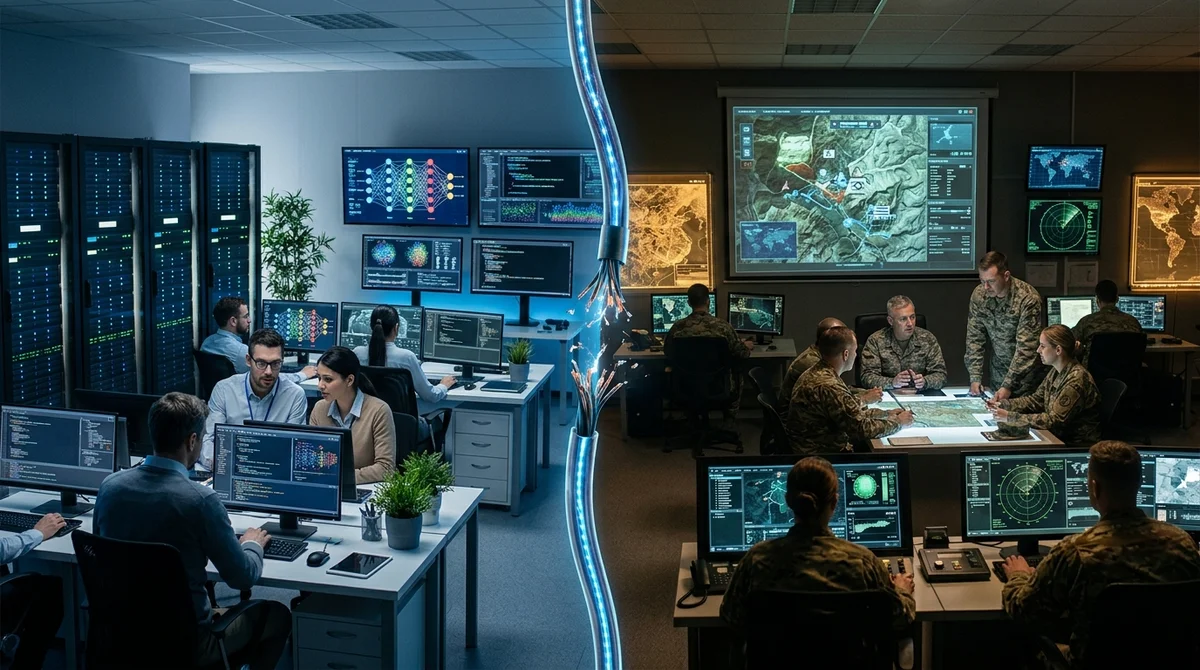
The U.S. Department of Defense has officially listed Anthropic as a supply chain risk, citing concerns that the company could disable its technologies during military operations.
This decision resulted from Anthropic's own policy—the so-called "red lines" that define how and when the company has the right to restrict or terminate its AI systems. The crux of the conflict lies in the very nature of corporate control over critical technologies. Anthropic, like many other AI companies, has formulated a set of ethical principles that limit the application of its models in dangerous contexts.
Among these principles are conditions under which the company reserves the right to force disable systems. This is precisely what alarmed the Pentagon. For military departments, any dependence on a technology supplier capable of unilaterally interrupting service is a vulnerability.
In the defense sphere, critical systems must operate continuously regardless of the vendor's position. If AI tools are embedded in intelligence, logistics, or combat chains, the possibility of their shutdown by the developer creates a risk analogous to what the military calls a single point of failure. An official Pentagon spokesperson confirmed that the presence of "red lines" was the key basis for assigning Anthropic risk status.
In essence, the department is saying the following: a company with ethical constraints that permit refusal to cooperate in combat conditions cannot be considered a reliable defense partner. Anthropic is known as one of the most principled AI companies regarding the safe deployment of its models. Responsible Scaling Principles (RSP) distinguish it from many competitors.
The company publicly stated that it will not assist in creating weapons of mass destruction and reserves the right to refuse contracts that contradict these principles. Now these same principles have led to an official clash with a federal customer. The situation raises doubts about the very possibility for responsible AI companies to work with the defense sector without sacrificing their ethical commitments.
Broader context is important. The U.S.
Armed Forces are actively integrating AI into various systems—from analyzing intelligence data and planning logistics to supporting tactical decision-making. According to open sources, Anthropic already has contracts with U.S.
government structures, including through Amazon Web Services, which uses Claude models in government cloud solutions. This makes the situation particularly delicate: the company is simultaneously an active supplier and officially recognized risk. The precedent matters for the entire industry.
If the Department of Defense consistently refuses vendors with ethical constraints, this will create pressure on AI companies to abandon such principles in order to access large government contracts. An alternative scenario is the formation of two separate ecosystems: military AI systems without ethical constraints and civilian ones with them. For Anthropic's investors and partners, this is a signal that the company's ethical positions carry real monetary costs and market opportunities.
For regulators and society, it is an acute question: should AI companies have the right to refuse the state, and if so—under what conditions? The tension between developer ethical control and state security requirements is only growing, and the Anthropic case will apparently not be the last.
- Oct 28, 2026Wired Tested 6 AI Agents in a Day: Dots Leads, Gemini Spark Fails at Lunch
- Oct 28, 2026Anthropic files for IPO: $16.3 billion in revenue in six months, ticker ANT
- Oct 28, 2026Anthropic reveals how it builds Claude with Claude: the brain separate from the hands
- Oct 28, 2026Anthropic Turns Claude Code Into a Platform: Claude Mods Flip the Agent Harness
Test Frontier LLMs & Autonomous Agents in One Workspace
Run Claude Opus 5.5, GPT-6, Gemini 3.1, and DeepSeek side-by-side in Nomad AI (nomadnet.ai) — unified model routing, deep research, and multimodal workflows under one subscription.
The AI world, distilled — once a week
Seven stories that actually mattered, hand-picked. No noise, no reposts, no press releases.
Done! Check your inbox for a confirmation.