OpenAI launched Chronicle in Codex — a Windows Recall equivalent for developers
OpenAI launched Chronicle in the Codex app — a feature that periodically takes screenshots so the AI agent can understand a developer's work context. It is a direct equivalent of Microsoft's controversial Windows Recall, but tailored to programmers' needs. It is currently available in preliminary testing.
AI-processed from 3DNews AI; edited by Hamidun News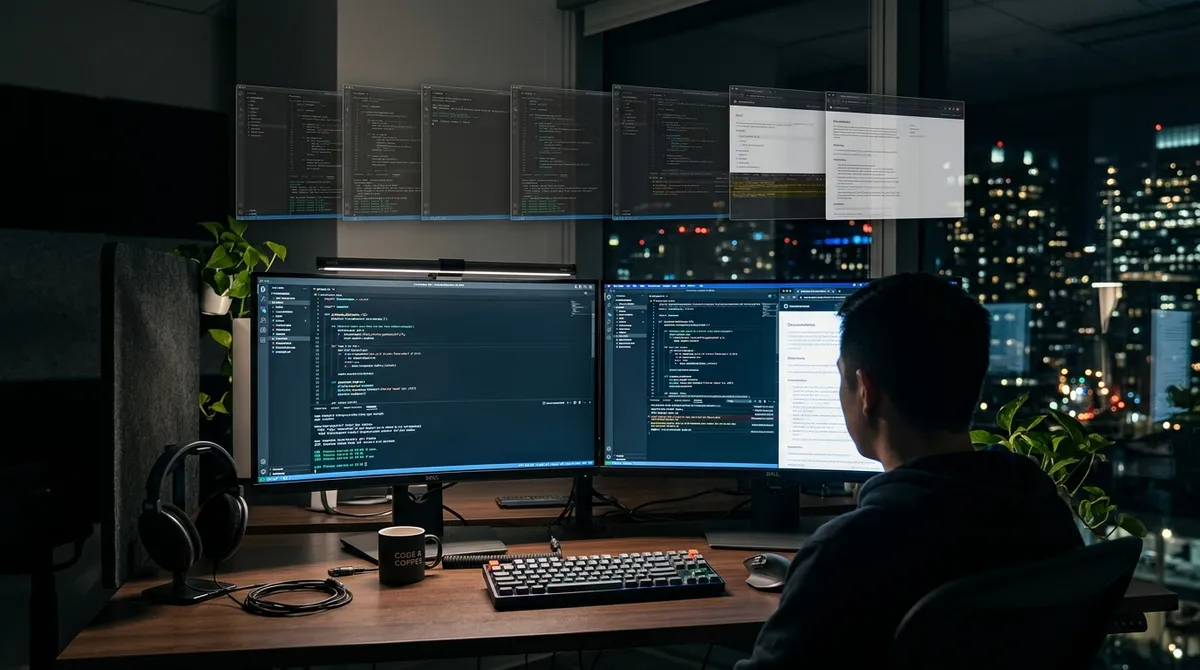
OpenAI has released the Chronicle feature in the Codex agent application — a tool that periodically takes screenshots of a developer's screen so that AI can better understand the context of what's happening. Chronicle is operating in preview mode and is designed to provide Codex with more information about the user's working environment. Screenshots allow the agent to see what code is open in the editor, what errors are displayed in the terminal, what documents the developer is studying — all of this helps form more accurate answers and suggestions.
The feature directly echoes Windows Recall from Microsoft — a tool that also makes regular screenshots of user activity to create a "memory" of the system. Recall triggered a wave of criticism after its announcement in 2024: experts pointed to privacy risks, the possibility of password leaks, banking data and personal correspondence captured in the frame. Microsoft postponed the full launch several times and seriously reworked the data storage mechanism.
OpenAI, it seems, is banking on the fact that in a professional context — among developers working with code — such an approach will be received more positively. The target audience for Chronicle is more uniform: a programmer's screen contains mainly code, terminal, and documentation, rather than personal correspondence or financial services. Nevertheless, questions about where screenshots are stored, who has access to them, and how long they are preserved remain without a detailed public answer.
Codex is already positioned as an autonomous agent capable of performing multi-step tasks in a code base without constant human involvement. Chronicle logically complements this concept: an agent that "sees" the screen can make more meaningful decisions and less often ask the user to clarify the context manually. The release of Chronicle in preview shows that the race for "screen memory" in AI tools is gaining momentum.
After Microsoft and now OpenAI, this approach will likely appear in other market players — the question is only how transparent the conditions for working with the collected data will be.
- Oct 28, 2026Keystone removes the model name from code: open-source LLM gateway adds 0.64 ms
- Oct 28, 2026Wired Tested 6 AI Agents in a Day: Dots Leads, Gemini Spark Fails at Lunch
- Oct 28, 2026Anthropic Turns Claude Code Into a Platform: Claude Mods Flip the Agent Harness
- Oct 28, 2026Liquid AI releases LFM2.5-24B-A2B: an agent model with 2B active parameters
Build & Ship Production AI Agents Without Boilerplate Code
Start your free 72-hour trial at Hamidun Academy (academy.hamidun.com) — interactive lessons on Claude Code & Cursor, live Tech Radar, and production agent templates.
The AI world, distilled — once a week
Seven stories that actually mattered, hand-picked. No noise, no reposts, no press releases.
Done! Check your inbox for a confirmation.