OpenAI launches Chronicle in Codex, a Windows Recall-style feature for developers
OpenAI has launched Chronicle in the Codex app, a feature that periodically captures screenshots so the AI agent understands the context of a developer's work. It is a direct counterpart to Microsoft's controversial Windows Recall, but built for programmers' needs. It is currently available only as a preview for testing.
AI-processed from 3DNews AI; edited by Hamidun News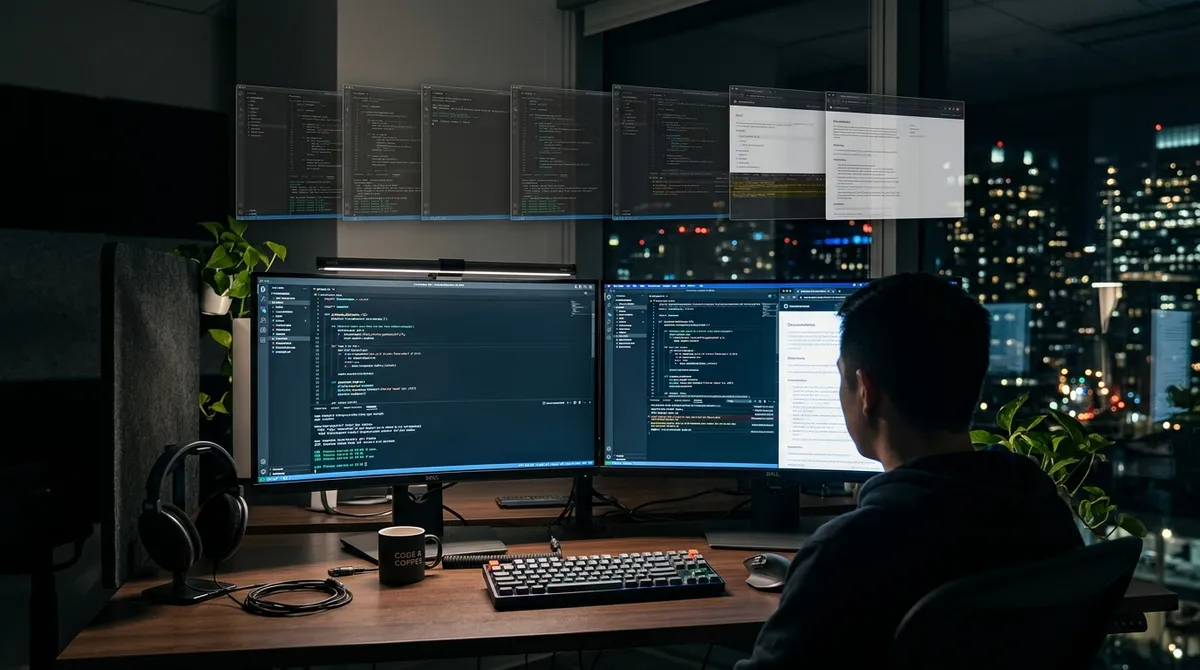
OpenAI has released Chronicle in the Codex agent app, a tool that periodically takes screenshots of a developer's screen so the AI can better understand what is going on. Chronicle runs in preview testing mode and is designed to give Codex more information about the user's working environment.
The screenshots let the agent see which code is open in the editor, which errors appear in the terminal, and which documents the developer is reading. All of this helps it produce more accurate answers and suggestions.
The feature closely mirrors Microsoft's Windows Recall, a tool that also takes regular screenshots of user activity to build a "memory" for the system. Recall drew a wave of criticism after its announcement in 2024: experts pointed to privacy risks and the possibility of leaking passwords, banking data and personal messages that end up in the frame. Microsoft postponed the full launch several times and substantially reworked how the data is stored.
OpenAI appears to be betting that this approach will be received more favorably in a professional context, among developers who work with code. Chronicle's target audience is more homogeneous: a programmer's screen mostly shows code, a terminal and documentation, not personal correspondence or financial services.
Still, questions about where the screenshots are stored, who can access them and how long they are kept remain without a detailed public answer.
Codex is already positioned as an autonomous agent that can carry out multistep tasks in a codebase without constant human involvement. Chronicle fits that concept logically: an agent that "sees" the screen can make better-informed decisions and less often ask the user to clarify context manually.
Chronicle's arrival in preview shows that the race for "screen memory" in AI tools is picking up speed. After Microsoft, and now OpenAI, other players in the market will likely adopt the same approach. The question is how transparent the terms for handling the collected data will be.
- Nov 2, 2026Arca gives AI agents finance tasks lasting up to 10 days, but leaves the trades to humans
- Nov 2, 2026Meta's Muse assistant keeps dossiers on loved ones and gets root on Ubuntu by default
- Nov 1, 2026Local models lose to Opus and Codex: 0.21 on a MacBook versus 1.00 for Codex
- Nov 1, 2026Kimi scores 96.2% on a 1C database analytics test and emerges as a fallback if Claude access is blocked
Build & Ship Production AI Agents Without Boilerplate Code
Start your free 72-hour trial at Hamidun Academy (academy.hamidun.com) — interactive lessons on Claude Code & Cursor, live Tech Radar, and production agent templates.
The AI world, distilled — once a week
Seven stories that actually mattered, hand-picked. No noise, no reposts, no press releases.
Done! Check your inbox for a confirmation.