Reviewing vibe code: how Claude Opus writes beautiful C++ that doesn't work correctly
Generating code with AI has become easy — but checking it now matters more than ever. Using markus, a project written by Claude Opus, the PVS-Studio team shows how beautiful C++ can hide problems with decomposition, efficiency, and security. Code review skills are moving to the forefront.
AI-processed from Habr AI; edited by Hamidun News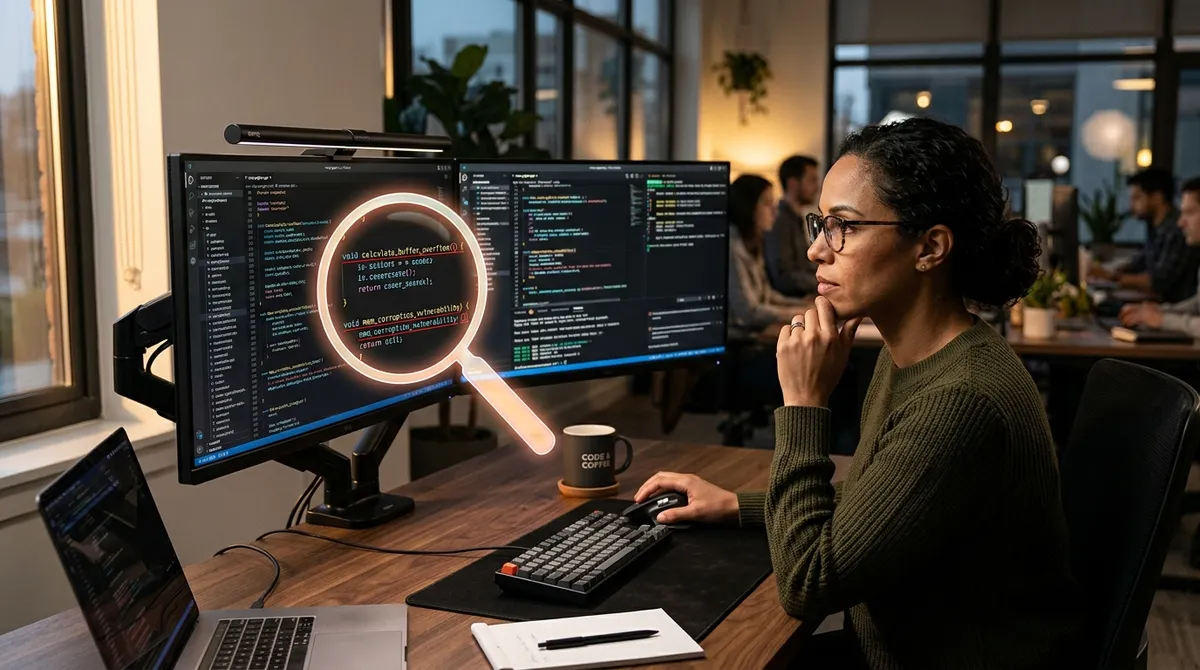
Beautiful AI-written code isn't necessarily good code. PVS-Studio's specialists put that claim to a practical test by reviewing markus, a small project generated entirely with Claude Opus.
Vibe coding — where a developer describes a task to a language model and accepts the output with almost no changes — is gaining popularity. It lowers the barrier to entry and speeds up prototyping. But it also raises the risk: code accepted without review can look professional and read easily while still containing architectural and logic errors that surface only under load or with specific inputs.
The authors took markus, a small C++ program created by Claude Opus, and gave it a full review. The results are telling. The code gives the impression of being optimized and well structured, but a careful look reveals poor decomposition, incorrect implementations of individual functions, efficiency concerns, and potential security vulnerabilities. None of these problems jump out on a quick read — AI knows how to make code look convincing.
That's to be expected. Language models are trained on vast amounts of source code, and they reproduce stylistic patterns and syntactic constructs with high accuracy. But a model isn't responsible for runtime behavior, doesn't test edge cases, and doesn't think about how the code will be maintained six months from now. That responsibility stays with the human.
This shifts where an experienced developer's value lies. Almost anyone can now write a function with a prompt. But understanding whether it's implemented correctly, whether it fits the architecture, and whether it creates debt for the future still requires expertise. In the era of AI-driven development, code review is turning from a supporting process into the key quality filter.
PVS-Studio's materials point out that static analysis tools are especially relevant right now, as the volume of generated code grows faster than teams' ability to review it manually. Automated analysis doesn't replace review, but it helps catch what the eye has learned to overlook.
The takeaway is simple: read AI-generated code as critically as you would a junior developer's code during their probation period. Clean formatting and a confident style are no guarantee of correctness. The ability to see past the facade is exactly what sets a strong engineer apart in 2025.
- Nov 2, 2026Karpathy builds a YouTube clone with 6454 videos from Hacker News recommendations in two hours
- Nov 2, 2026Karpathy used Claude to build HackerTube from 6,454 videos recommended on Hacker News
- Nov 2, 2026Arca gives AI agents finance tasks lasting up to 10 days, but leaves the trades to humans
- Nov 2, 2026Anthropic needs to grow revenue 32% a year to cover $850 billion in contracts
Build & Ship Production AI Agents Without Boilerplate Code
Start your free 72-hour trial at Hamidun Academy (academy.hamidun.com) — interactive lessons on Claude Code & Cursor, live Tech Radar, and production agent templates.
The AI world, distilled — once a week
Seven stories that actually mattered, hand-picked. No noise, no reposts, no press releases.
Done! Check your inbox for a confirmation.