Google to invest up to $40 billion in Anthropic, intensifying the AI compute race
Google plans to invest up to $40 billion in Anthropic: $10 billion upfront and another $30 billion if Anthropic meets KPIs. The deal comes bundled with a new package of Google Cloud computing capacity and lands right after the limited launch of Mythos, Anthropic's most powerful model for cybersecurity tasks. It is one more signal for the market: the main scarce resource in AI is no longer money but compute.
AI-processed from TechCrunch; edited by Hamidun News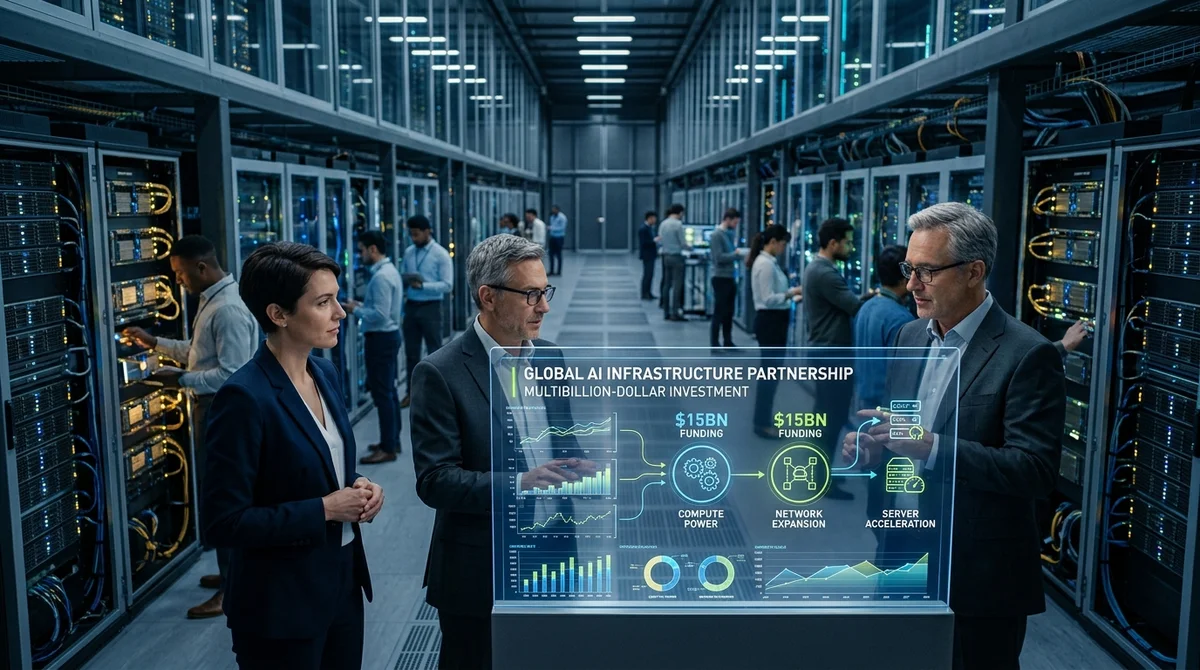
Google is ready to invest up to $40 billion in Anthropic in cash and computing resources. The figure shows how quickly the AI market is turning into a race of infrastructure as much as of models. For Anthropic, it is a chance to lock in access to critical capacity after the launch of Mythos, its strongest model, with a focus on cybersecurity. For Google, it is a chance to embed itself deeper in the ecosystem of one of the key players in generative AI, even though the two formally compete.
Google intends to invest $10 billion immediately, at an Anthropic valuation of $350 billion. It may provide another $30 billion later if Anthropic meets certain performance targets. This is not only direct funding: the package also covers support for the startup's growing compute needs. With the cost of training and serving frontier models climbing fast, this structure looks almost as important as the cash itself.
The trigger for the new wave of interest was the recent limited release of Mythos. Anthropic describes it as the most powerful system in its lineup and stresses its notable cybersecurity capabilities. Because of the risk of misuse, the company did not open broad access to it and initially limited work to a small circle of partners. Reports of unauthorized access to Mythos have already surfaced, which only sharpened attention on the model and on how its use is controlled.
The Google deal fits into a broader reshuffling of the compute market. Major AI developers are now fighting not just for users and answer quality, but for data centers, accelerators, power and long-term cloud contracts. OpenAI has also been actively building out a network of agreements with cloud, chip and energy suppliers in recent months. Anthropic is moving the same way: earlier in April it agreed a data-center capacity deal with CoreWeave, and then received another $5 billion from Amazon under a broader agreement that envisions up to $100 billion in spending on compute infrastructure and about 5 gigawatts of capacity over time.
Google's position here is especially interesting because it plays two roles at once. On one hand, it remains a direct rival to Anthropic in AI models. On the other, it sells the infrastructure on which those models are trained and run. Anthropic already depends heavily on Google Cloud, including access to TPUs, Google's specialized AI accelerators, which are considered one of the few large-scale alternatives to scarce Nvidia hardware. In early April, Anthropic also announced a partnership with Google and Broadcom for multi-gigawatt TPU capacity starting in 2027; Broadcom's later disclosures cited a figure of 3.5 gigawatts.
The new agreement extends that arrangement. Google Cloud is now to provide Anthropic with another 5 gigawatts of computing capacity over the next five years, with the option of further increases. For the market, this is an important signal: investments are increasingly structured not just as a stake purchase but as a long-term tie between a model maker and a specific cloud and chip supplier. In practice, this means the winners of the AI race will be determined not only by the quality of their algorithms, but by their ability to reserve electricity, racks, networks and accelerators years in advance.
There is a financial layer to this story too. As recently as February, Anthropic was valued at $350 billion, and investors then began discussing levels of $800 billion and higher. Against that backdrop, the company is reportedly considering an IPO as early as October. If that scenario plays out, the current backing from Google and Amazon could matter not only for securing infrastructure but also for shaping the market's image of Anthropic as a business able to scale quickly without compute bottlenecks.
What this means: the AI market is entering a phase where money alone no longer solves the problem. Capital now has to come bundled with guaranteed access to chips and electricity, and the largest cloud players are becoming the de facto architects of the industry. Google's investment in Anthropic shows that even competitors are willing to strengthen each other if it helps them claim a place in the supply chain of next-generation AI.
- Nov 2, 2026Karpathy builds a YouTube clone with 6454 videos from Hacker News recommendations in two hours
- Nov 2, 2026Karpathy used Claude to build HackerTube from 6,454 videos recommended on Hacker News
- Nov 2, 2026Arca gives AI agents finance tasks lasting up to 10 days, but leaves the trades to humans
- Nov 2, 2026Anthropic needs to grow revenue 32% a year to cover $850 billion in contracts
Test Frontier LLMs & Autonomous Agents in One Workspace
Run Claude Opus 5.5, GPT-6, Gemini 3.1, and DeepSeek side-by-side in Nomad AI (nomadnet.ai) — unified model routing, deep research, and multimodal workflows under one subscription.
The AI world, distilled — once a week
Seven stories that actually mattered, hand-picked. No noise, no reposts, no press releases.
Done! Check your inbox for a confirmation.