US Justice Department backs xAI in fight with Colorado over AI regulation
The US Justice Department has backed xAI in its lawsuit against Colorado's AI regulation law. The agency argues that the state's rules violate the Equal Protection Clause of the 14th Amendment: companies must reduce unintentional discrimination, yet some differential treatment is allowed when it promotes diversity. The case is quickly outgrowing a local dispute and becoming a fight over who will write the rules for AI in the United States.
AI-processed from Guardian; edited by Hamidun News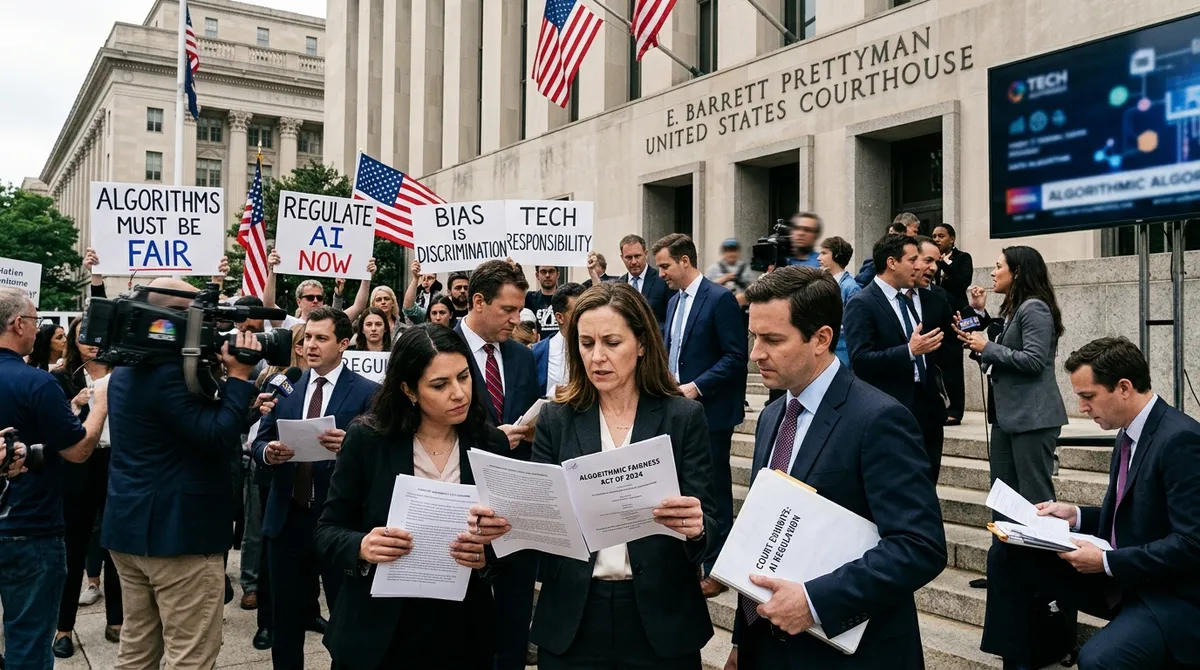
The US federal government has sharply raised the stakes in the dispute over who gets to set the rules for artificial intelligence. The Department of Justice has joined the lawsuit on the side of xAI, which is challenging Colorado's AI regulation law, turning a local suit into a confrontation between Washington and an individual state.
The Justice Department's intervention became known on April 24. The agency told the court it wants to take part in the case, in which Elon Musk's company is trying to overturn Colorado rules aimed at controlling AI systems. In effect, the federal government signaled that the dispute concerns more than one company and one state: it concerns the future architecture of regulation for the entire US industry.
While states try to introduce their own restrictions and requirements, the White House under Donald Trump is pushing for a single federal framework in place of a patchwork of local rules. For the industry this is especially sensitive: models, HR tools, moderation systems and automated decision services usually operate in several markets at once and fit poorly with a set of incompatible regional rules.
The Justice Department's key argument is not about innovation or competition but about constitutional law. In the agency's view, Colorado's law violates the Equal Protection Clause of the 14th Amendment to the US Constitution. The filing says the state requires companies to prevent unintentional discriminatory effects of their systems, yet at the same time permits certain forms of differential treatment if they are aimed at promoting diversity. Federal lawyers see this contradiction as the problem: companies working with AI are obliged to avoid one form of discrimination, while another is in some cases effectively treated as acceptable.
For xAI, the Justice Department's support meaningfully strengthens its position in court. The company opposed state-level regulation from the start, and it now has an ally in the federal government, which is prepared to contest Colorado not only on how AI rules are designed but on whether they are constitutional. For Colorado, by contrast, defending the law gets harder: it must now answer not just the complaints of a single technology company but the arguments of the US administration.
The Justice Department's participation also raises the political weight of the case. Other states preparing their own AI rules will watch it, as will companies assessing where the line falls between regulation and excessive interference. More broadly, the case shows how quickly AI has moved from the realm of industry policy into open institutional conflict among states, courts and the federal government.
The dispute also exposes the main fault line in the American approach to AI. Some politicians and regulators believe the risks of algorithmic discrimination, errors and opaque decisions call for rules right now, even if each state adopts them separately. Others insist that this model will create a legal mosaic, complicate product launches nationwide and give officials too much room for interpretation. Against this backdrop, the Justice Department's move looks less like a technical procedural step than a political signal: the administration wants to seize the initiative and show that AI rules should be shaped in Washington, not in state capitals.
For the market, this means the next stage of the fight over artificial intelligence will play out not only in labs and boardrooms but also in courts. If the federal line prevails, the US could move toward a single AI regulatory regime. If states keep room for their own laws, tech companies will have to operate under increasingly fragmented requirements. Either way, xAI v. Colorado is becoming an important test of who will write the rules for the American AI market.
- Nov 1, 202616 models tested on 7 search tools: Exa averaged 10.5 out of 14, SearXNG about 3
- Nov 1, 2026OpenAI Rewrites GPT Behavior Rules: Five Values and a Chain of Command
- Oct 29, 2026Gemini 4 Carbon tops independent rankings, but only cyber defenders can use it
- Oct 29, 2026Study: A Single Random Failure Makes AI Agents Abandon a Working Tool 11.6% of the Time
Test Frontier LLMs & Autonomous Agents in One Workspace
Run Claude Opus 5.5, GPT-6, Gemini 3.1, and DeepSeek side-by-side in Nomad AI (nomadnet.ai) — unified model routing, deep research, and multimodal workflows under one subscription.
The AI world, distilled — once a week
Seven stories that actually mattered, hand-picked. No noise, no reposts, no press releases.
Done! Check your inbox for a confirmation.