China orders Meta to unwind $2 billion Manus acquisition and tightens rules for AI deals
China has ordered Meta to cancel its $2 billion acquisition of Manus, treating the deal as the transfer of critical AI expertise rather than just a company. The startup, with Chinese roots and Singapore registration, is at the center of a dispute over whether a team, its processes and its know-how can count as an export. For the market, the signal is clear: cross-border AI deals will face a much tougher political filter. *Meta has been designated an extremist organization and is banned in Russia.
AI-processed from TNW; edited by Hamidun News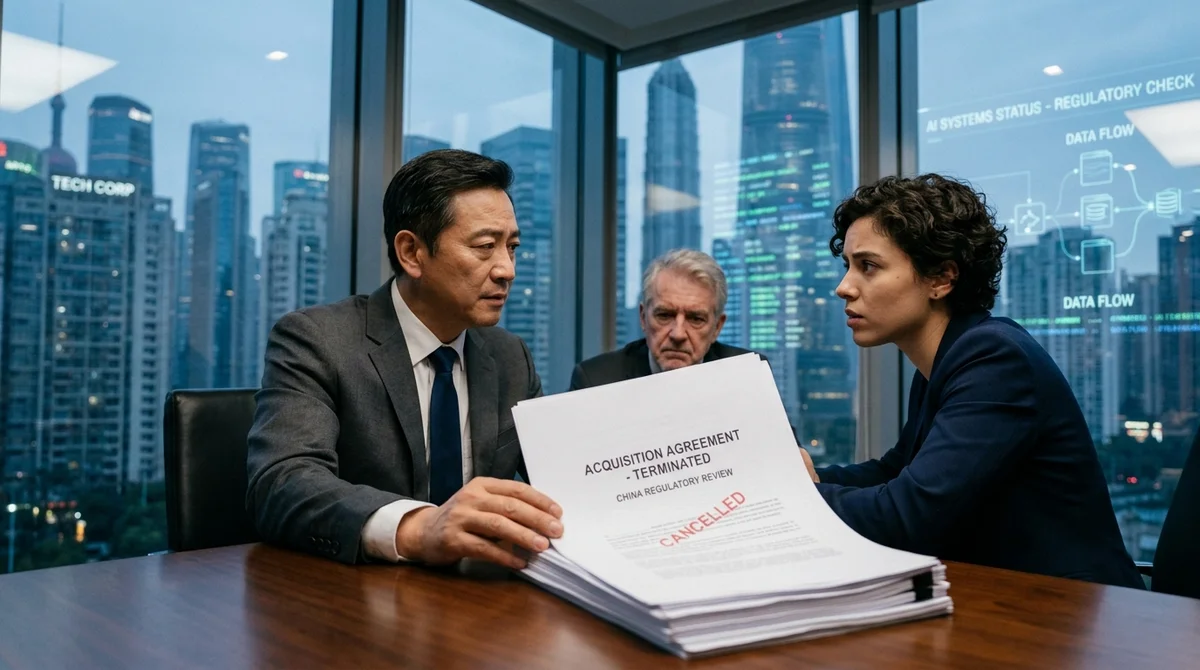
Chinese authorities have demanded that Meta cancel its $2 billion purchase of the AI startup Manus, and the decision looks more important than the size of the deal. The regulator made clear that this is not simply the sale of a company to a foreign buyer, but the transfer of sensitive technological expertise: a team, a research culture, applied work and management know-how. For the market, it signals that in the era of generative and agentic AI, a state may treat exports not only as code, servers or data, but also as a company's very ability to build such systems.
A dispute over a single deal quickly became a test of who controls the AI expertise that grew up inside China's ecosystem. The formal order to cancel the deal came from the relevant unit of China's National Development and Reform Commission, which reviews foreign investment from a security standpoint. The deal was announced in December 2025, and within a few months the dispute escalated into heavy-handed intervention.
According to the report, Manus co-founders Xiao Hong and Ji Yichao were barred from leaving China back in March after being summoned to Beijing to explain possible violations of foreign investment rules. That raised the stakes sharply: the matter went far beyond corporate procedure and became a precedent at the intersection of technology, geopolitics and national security. Manus was no random asset.
The startup, founded by Chinese entrepreneurs and registered in Singapore, quickly drew attention as one of the strongest agentic AI platforms of early 2025. That structure is typical of Chinese AI companies that want international investment while keeping their operational roots in China. Its system could autonomously carry out complex multistep tasks in the browser, code editors and file environments without constant human involvement at each stage.
In spring 2025 the company raised $75 million from Benchmark, and it then became the subject of a Meta deal worth more than $2 billion. Meta, as reported, planned to shut down Manus's Chinese operations and fully eliminate any further Chinese ownership after closing. The key question for Beijing, it seems, was not whether Meta would strengthen its position in the Chinese consumer market, where its main services are already blocked, but which asset was passing under the control of an American corporation.
China's Ministry of Commerce opened a formal review in January 2026, examining it through the lens of export controls: does it count as an export when what is transferred is not a physical product but a team, a system, processes and accumulated expertise inside an organization of Chinese origin? That framing is what makes the Manus case so important. If the state accepts that an AI team itself can be an export, dozens of startups with a similar structure come under additional scrutiny: Chinese founders, international jurisdiction and global investors.
In practice, this shifts the negotiating positions of buyers, funds and founders before a contract is even signed. A new red line emerges from this case for the whole market. Registration in Singapore or another external jurisdiction no longer guarantees that Chinese authorities will forgo the right to intervene in the sale of a business to an American buyer.
Moreover, the Manus story may become a reference case for a broader policy under which Chinese tech companies would need separate approval to raise capital from the US or to pursue exit deals. For Meta, the consequences are painful but limited: the company will have to either unwind the purchase or seek a legal ruling on which parts of the deal can be kept at all. For the industry, the lesson is wider: AI M&A must now be assessed not only on price, synergies and antitrust risk, but also on how states treat the movement of talent, models and organizational knowledge across borders.
The more valuable teams that can build autonomous AI systems become, the more often they will be treated as a strategic resource rather than an ordinary corporate acquisition target.
*Meta has been designated an extremist organization and is banned in Russia.
- Nov 2, 2026Meta's Muse assistant keeps dossiers on loved ones and gets root on Ubuntu by default
- Nov 2, 2026The Verge reviewer builds a $50 Meta Muse Charm alternative with Claude Code
- Nov 1, 2026MoneyGate safety layer blocked all 42 fraudulent requests to local AI models
- Oct 31, 2026Open-source LLM gateway KTMS 1.0 plugs your own GPUs into the cloud and survives outages
Ship AI Faster with Founders, Engineers & Weekly Architecture Reviews
Inside Vibe Club (hamidun.com/club) — weekly live masterminds with Zhemal Khamidun, Tech Radar, full LMS access, and 370+ production Claude Code skills.
The AI world, distilled — once a week
Seven stories that actually mattered, hand-picked. No noise, no reposts, no press releases.
Done! Check your inbox for a confirmation.