Copenhagen's Atech raises pre-seed from Lovable, Sequoia Scout and a16z Scout
Copenhagen-based Atech has raised an undisclosed pre-seed round. It wants to make building hardware as easy as vibe-coding made building software. The platform lets users describe a device in plain language and get a working prototype, hiding the complexity of circuit design, firmware and component selection. Investors in the round include Lovable, Nordic Makers, Emblem, and the scout funds of Sequoia and a16z, giving the startup a strong early signal of credibility.
AI-processed from TNW; edited by Hamidun News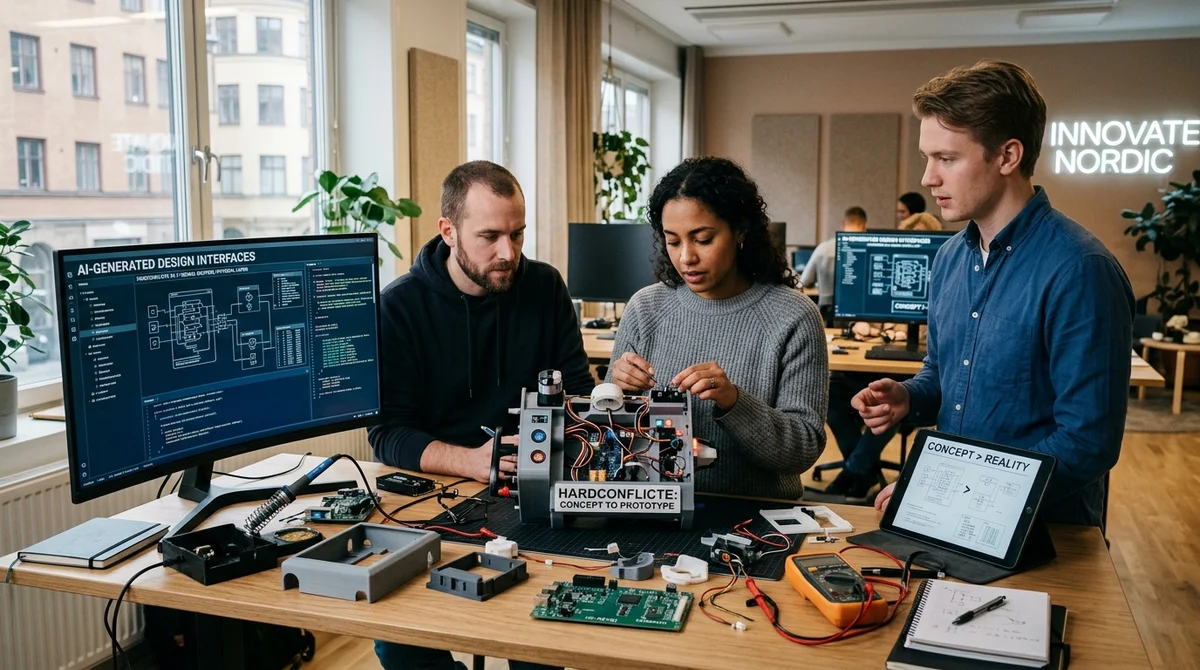
Atech wants to do for hardware what vibe-coding did for web development: turn an idea described in plain language into a working prototype. The Copenhagen startup has already landed a pre-seed round from a group of notable investors, and, more importantly, public backing from Lovable, one of the most visible players in generative development. The size of the round is undisclosed.
Investors include Nordic Makers, Emblem, Lovable itself, as well as Sequoia Scout Fund and Andreessen Horowitz Scout Fund. For an early-stage company this is a strong list of names, but precision matters here: this is not a classic direct investment by Sequoia or a16z in the company. It is participation by their scout programs, through which partners in the network and founders can make small investments in young startups. For Atech this is less about the amount of capital than about the signal to the market: people close to the most influential venture brands have noticed the team.
The startup was founded by Vladimir Baran, Thomas Erik Harmer and David Stolmark.
Atech's product is built around what the company calls vibe-engineering for hardware. The user describes a device in plain language, and the platform is supposed to return a working prototype, handling the technical complexity under the hood. In essence, the team wants to create for physical products the same level of abstraction that modern AI tools have given software development. Today a web app can be built and launched over a weekend even without a deep engineering background, while hardware has almost no comparable end-to-end experience. That is the gap Atech is trying to close.
The bet looks easy to understand, because building hardware prototypes still requires either years of specialized training or significant spending on hired experts. You need to understand circuit design, component selection, firmware, board layout, manufacturing constraints and testing. In software, a mistake often ends with a quick patch and a new deploy. In hardware the cost of a mistake is higher: you can end up with a physical object that simply does not work. That is why the idea of "describe a device in text and quickly get a result" sounds far more ambitious than the same pitch for the web.
Lovable's participation carries particular weight. The Swedish startup became one of the most visible symbols of the vibe-coding wave: it lets non-programmers build full-stack web applications through text prompts, and in a short time it grew to a valuation above $1 billion. Lovable's chief executive personally backed Atech and drew a direct parallel between what his company did for software and what the new team is trying to do for hardware. This is not just a compliment to fellow founders. For Atech, the endorsement provides the frame in which the market will read the deal: as an attempt to carry over an already understood and proven interface model, "language -> product", into the world of physical engineering.
More broadly, Atech fits into a trend increasingly described as Physical AI. These are intelligent systems that do not merely generate text or code but interact with the physical world: robots, drones, industrial equipment, autonomous vehicles and other devices. As this segment grows, hardware prototyping speed is becoming not a niche skill but a competitive advantage.
But this is also where Atech's main risk lies. In software, abstraction can hide a huge layer of complexity; in hardware, it runs into the real limits of materials, electronics, manufacturing and logistics. The company still has to prove that its stack can reliably cover PCB layout, component selection, firmware and manufacturing trade-offs.
If Atech succeeds, the market could get one of the most interesting interface shifts in recent years: the path from idea to physical device would get noticeably shorter, and entry into hardware would open up to small teams and solo makers. For now this is an early bet with an undisclosed amount and many open technical questions, but the investor lineup and Lovable's backing show that the thesis of more accessible hardware development already has influential supporters.
- Nov 2, 2026Karpathy builds a YouTube clone with 6454 videos from Hacker News recommendations in two hours
- Nov 2, 2026Karpathy used Claude to build HackerTube from 6,454 videos recommended on Hacker News
- Nov 2, 2026Arca gives AI agents finance tasks lasting up to 10 days, but leaves the trades to humans
- Nov 2, 2026DeepSeek open-sources Super-agent prototype: p95 task completion time of 15.7 minutes vs. 29.5
Ship AI Faster with Founders, Engineers & Weekly Architecture Reviews
Inside Vibe Club (hamidun.com/club) — weekly live masterminds with Zhemal Khamidun, Tech Radar, full LMS access, and 370+ production Claude Code skills.
The AI world, distilled — once a week
Seven stories that actually mattered, hand-picked. No noise, no reposts, no press releases.
Done! Check your inbox for a confirmation.