Anthropic unveils Mythos: a vulnerability-hunting AI that is already reshaping cybersecurity and warfare
Anthropic has unveiled Mythos, a model it chose not to release widely because of a sharp jump in cyber capabilities. According to the company, it can autonomously find and exploit vulnerabilities in popular operating systems and browsers. CSIS expert Gregory Allen argues that such systems will hand defenders a powerful tool, but that they will also raise risks during a transition period, up to and including faster US military and intelligence cycles.
AI-processed from Bloomberg Tech; edited by Hamidun News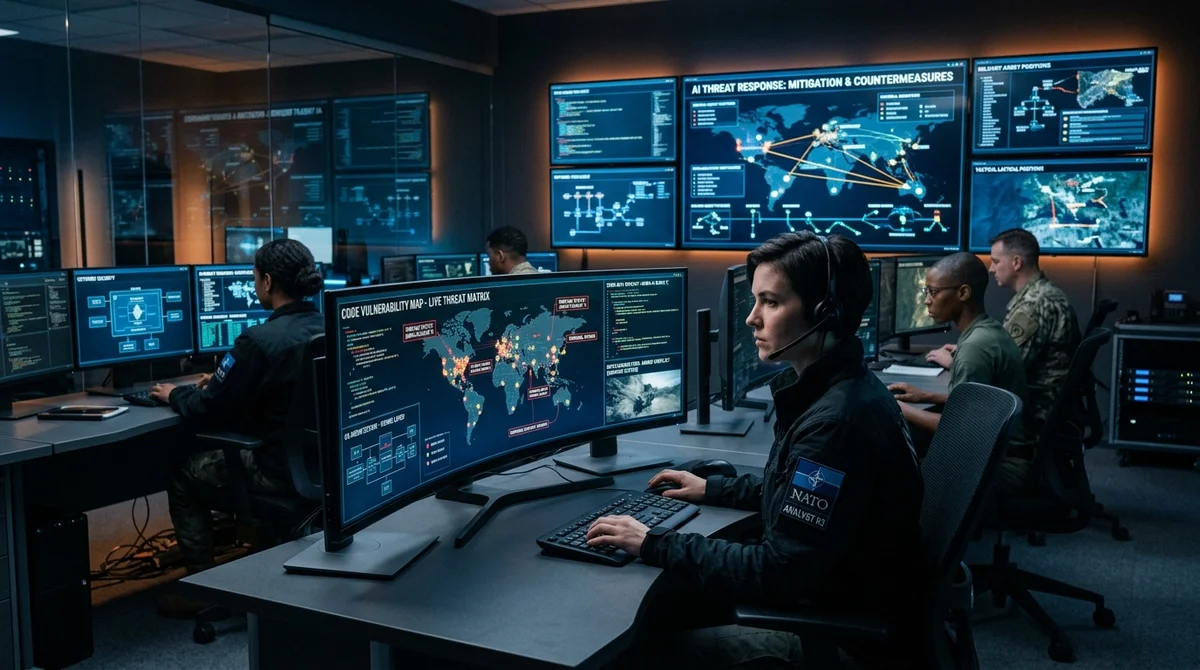
For Anthropic, Mythos is not just another chatbot release. It signals that AI has crossed a threshold beyond which it can noticeably change both cybersecurity and military planning. The model does not merely find errors in code; it turns them into working exploits with almost no human involvement. That is why the company did not open it to the general public. Gregory Allen, senior adviser at the Wadhwani AI Center at CSIS, says plainly that such systems strengthen defense and make the world more dangerous at the same time during a transition period, while vulnerable software has not yet been rewritten or patched.
Anthropic announced Claude Mythos Preview on April 7, 2026. The company describes the model as a frontier general-purpose system with strong agentic skills in coding and reasoning, but Mythos stands apart by its level of cyber capability. According to Anthropic itself, the model has already found thousands of high-severity vulnerabilities, including flaws in every major operating system and every major web browser. In official materials, the company writes that Mythos can autonomously discover and exploit zero-day vulnerabilities.
In internal and external testing this looks like a qualitative leap: on the CyberGym benchmark the model scored 83.1%, versus 66.6% for Anthropic's closest previous model. Examples already disclosed include a 27-year-old bug in OpenBSD, a 16-year-old vulnerability in FFmpeg and a chain of bugs in the Linux kernel.
Because of its dual-use nature, Mythos was not released publicly. Instead, Anthropic launched Project Glasswing, a limited program in which companies and organizations responsible for critical software and infrastructure get the model. The company lists AWS, Apple, Cisco, CrowdStrike, Google, JPMorganChase, Microsoft, NVIDIA, Palo Alto Networks and the Linux Foundation among the launch partners.
Access has also been granted to more than 40 additional organizations that maintain or build critical software. Anthropic is committing up to $100 million in Mythos usage credits to the program, plus $4 million in direct donations to the open-source ecosystem. The logic is simple: if such models soon become more widely available, defenders should have at least a small window of time to close the most dangerous holes.
Allen believes that window is the key story. In his words, cybersecurity has lived with a shortage of specialists for years, and skilled attackers and vulnerability researchers are too expensive and too rare. If AI starts doing a significant share of that work itself, the economics of the entire industry change. In the ideal scenario, almost every new software product would go through something like a "Mythos test" before release: the model would try to break it before malicious actors do. But between the current state of the internet and that scenario lies a huge body of old code, including open-source projects that rely on small teams and volunteers.
Allen expects the next 12 months to be a period of large-scale and painful restructuring, especially for banks, energy companies and other owners of critical infrastructure. He also claims the US federal government is very far from building a comparable frontier model and therefore depends on private companies; in Anthropic's case, he estimates, the lead over competitors may be between six and 18 months.
The military side of the conversation is just as stark. Allen says Anthropic's models are useful not only in cyber defense but also in intelligence and combat tasks, and he claims that such AI capabilities are already being used by the US in the war with Iran. As a frame of reference he recalls Project Maven: originally an attempt to automate the first-pass analysis of video feeds from drones and satellites to relieve analysts. Now, he says, combining computer vision with large language models lets systems do more than mark an object on a screen: they can compare changes over time, flag anomalies, draft a first version of an intelligence summary and speed up the entire decision cycle.
Allen cites a telling figure: where the benchmark for the American system used to be dozens of strikes per day, in the first 24 hours of the Iran campaign, he says, the number was roughly 1,000 targets hit. Behind each such figure stand not only the strikes themselves but also thousands of decisions on processing intelligence, identifying and prioritizing mobile and camouflaged targets.
The main takeaway is that Mythos matters not as a rare closed model in itself but as a sign of a new phase. AI is beginning to replace scarce expert labor in the most sensitive areas, from code auditing to intelligence analysis. For the market, this means rising demand for faster vulnerability remediation, new secure-by-default development standards and a tighter link between AI labs, clouds, banks and the state. For governments, it means an uncomfortable dependence on private developers who move faster than bureaucracy. And for everyone else, it means a short window in which the same tools can still be used primarily for defense rather than attack.
- Nov 2, 2026Bun creator uses Claude Code to port 750K lines from Zig to Rust in 11 days
- Nov 2, 2026mcp-linter finds 18 undescribed parameters in Anthropic's filesystem server
- Nov 2, 2026The Verge reviewer builds a $50 Meta Muse Charm alternative with Claude Code
- Nov 2, 20268 Skills for video in Claude Code: from 244 pixel effects to rough-cut editing
Test Frontier LLMs & Autonomous Agents in One Workspace
Run Claude Opus 5.5, GPT-6, Gemini 3.1, and DeepSeek side-by-side in Nomad AI (nomadnet.ai) — unified model routing, deep research, and multimodal workflows under one subscription.
The AI world, distilled — once a week
Seven stories that actually mattered, hand-picked. No noise, no reposts, no press releases.
Done! Check your inbox for a confirmation.