Anthropic updates Opus 4.7 as TSMC raises its forecast on the AI chip boom
On April 16, Anthropic released Opus 4.7, a direct upgrade to Opus 4.6 focused on more reliable agentic workflows. The release came just a week after the limited launch of Mythos Preview. Meanwhile, the market showed where the real money is: TSMC sharply increased its profit and raised its 2026 forecast, while Musk's Terafab is already fueling debate over the future of AI chip manufacturing.
AI-processed from Bloomberg Tech; edited by Hamidun News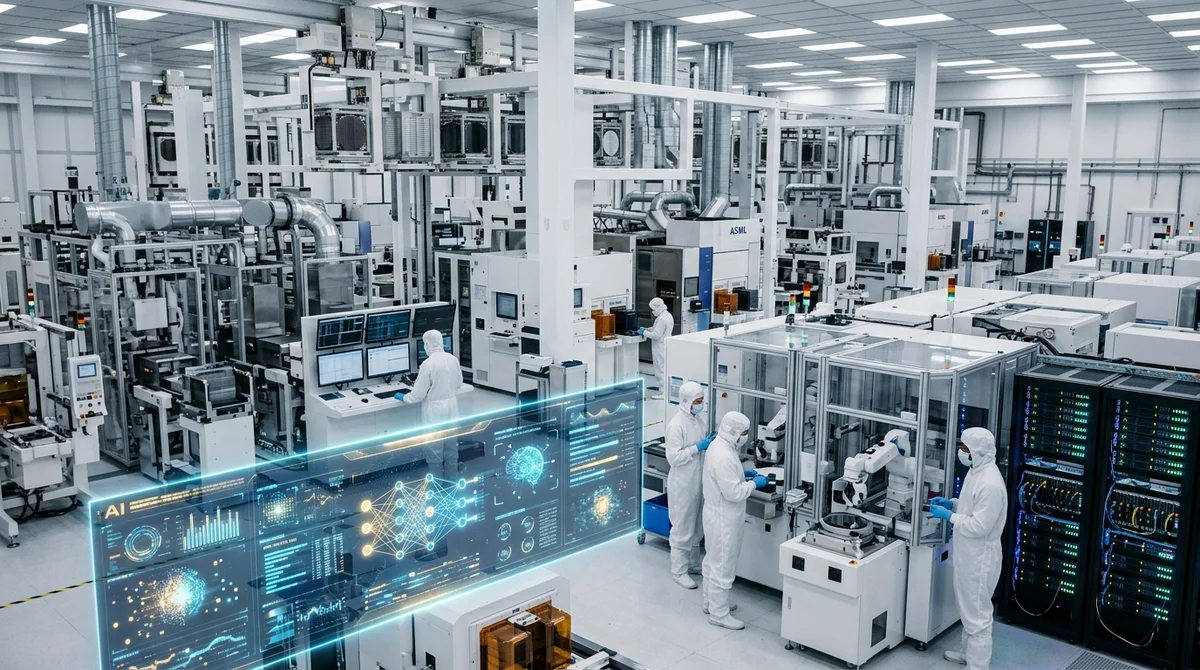
On April 16, 2026, Anthropic released Opus 4.7, an update to its flagship model that looks less like a cosmetic patch and more like an attempt to move the most useful improvements quickly from the lab into a working product. The timing is telling: just a week earlier, the company had opened Mythos Preview on a limited basis, but kept it inside a controlled cybersecurity program. The result is a rare picture for the market: the same player almost simultaneously shows both its most ambitious research effort and a more down-to-earth commercial version for broad use.
Anthropic positions Opus 4.7 as a direct upgrade to Opus 4.6. The company emphasizes not just "smarter" but more practical qualities: steady performance on long multistep tasks, better instruction following, fewer failures when working with tools, and more honest behavior when the model lacks data. According to the release description and early partner assessments, the focus is primarily on agentic scenarios, where AI must not just answer a single question but plan, check itself, keep working after errors and carry a task through to a result. For developers this is an important shift: the market increasingly compares models not by flashy demos but by how well they hold up across long work chains.
At the same time, Anthropic does not merge Opus 4.7 and Mythos into a single story. Mythos Preview, announced on April 7 as part of Project Glasswing, remains a closed research access program for organizations involved in protecting critical infrastructure and in complex cybersecurity work.
The program includes major technology and infrastructure partners, and Anthropic itself effectively acknowledges that the model's strongest capabilities in finding and fixing vulnerabilities are not yet ready for an ordinary mass release. Against this backdrop, the release of Opus 4.7 can be read as a compromise: the company is speeding up delivery of improvements to the market, but is not opening all the most sensitive functions at once.
This is an important signal for the whole industry: the race for capabilities is now running in tandem with the race to control risks.
At the same time, it is becoming clear that the competition reaches far beyond the models themselves. The Terafab story, which Elon Musk is moving into a more active phase, shows that the next level of competition is control over the compute base. The skepticism from the semiconductor industry is understandable. Building modern chip production is far harder than launching a new AI service or even a new model: it requires equipment, engineering culture, supply chains, skilled teams and, above all, a stable yield of good dies. But the very fact that such projects are accelerating right now points to a growing fear of compute shortages and dependence on other companies' fabs.
In this picture, TSMC is the hardest indicator of real demand. The company reported that in the first quarter of 2026 its revenue rose 35.1% year over year to 1.134 trillion new Taiwan dollars, while net profit grew 58.3% to 572.48 billion. The second-quarter outlook also looks strong: TSMC expects revenue in the range of $39.0 billion to $40.2 billion. More important still, the manufacturer raised its full-year 2026 revenue growth target to above 30% in dollar terms. This is not abstract faith in AI but money already flowing through the world's largest contract manufacturer of advanced chips. When TSMC raises its forecasts because of demand for AI accelerators, it means the wave of infrastructure investment remains very deep.
All of this adds up to a more sober picture of the AI market. The first layer is models, where Anthropic is trying to speed up releases while separating mass-market and sensitive capabilities. The second layer is hardware, where even the most ambitious entrepreneurs want more control over production.
The third layer is existing industrial demand, which TSMC is already monetizing. For users and companies this means something simple: the fight is no longer over a single "best chatbot" but over the entire vertical, from algorithms and agentic features to fabs and accelerator supply. That is why the release of Opus 4.
7 matters not by itself but as part of a larger shift: AI is ceasing to be only a product race and is increasingly becoming an infrastructure race.
- Nov 2, 2026Karpathy builds a YouTube clone with 6454 videos from Hacker News recommendations in two hours
- Nov 2, 2026Karpathy used Claude to build HackerTube from 6,454 videos recommended on Hacker News
- Nov 2, 2026Arca gives AI agents finance tasks lasting up to 10 days, but leaves the trades to humans
- Nov 2, 2026Anthropic needs to grow revenue 32% a year to cover $850 billion in contracts
Test Frontier LLMs & Autonomous Agents in One Workspace
Run Claude Opus 5.5, GPT-6, Gemini 3.1, and DeepSeek side-by-side in Nomad AI (nomadnet.ai) — unified model routing, deep research, and multimodal workflows under one subscription.
The AI world, distilled — once a week
Seven stories that actually mattered, hand-picked. No noise, no reposts, no press releases.
Done! Check your inbox for a confirmation.