Anthropic and the Pentagon: Why the AI Dispute Is a Warning for Europe
Anthropic refused to let the Pentagon use its models for mass domestic surveillance and fully autonomous weapons, and was designated a threat to US national security. OpenAI quickly struck its own deal with the military. The story is more than a corporate dispute. It is a fight over who actually sets the rules for AI: the law or government procurement.
AI-processed from TNW; edited by Hamidun News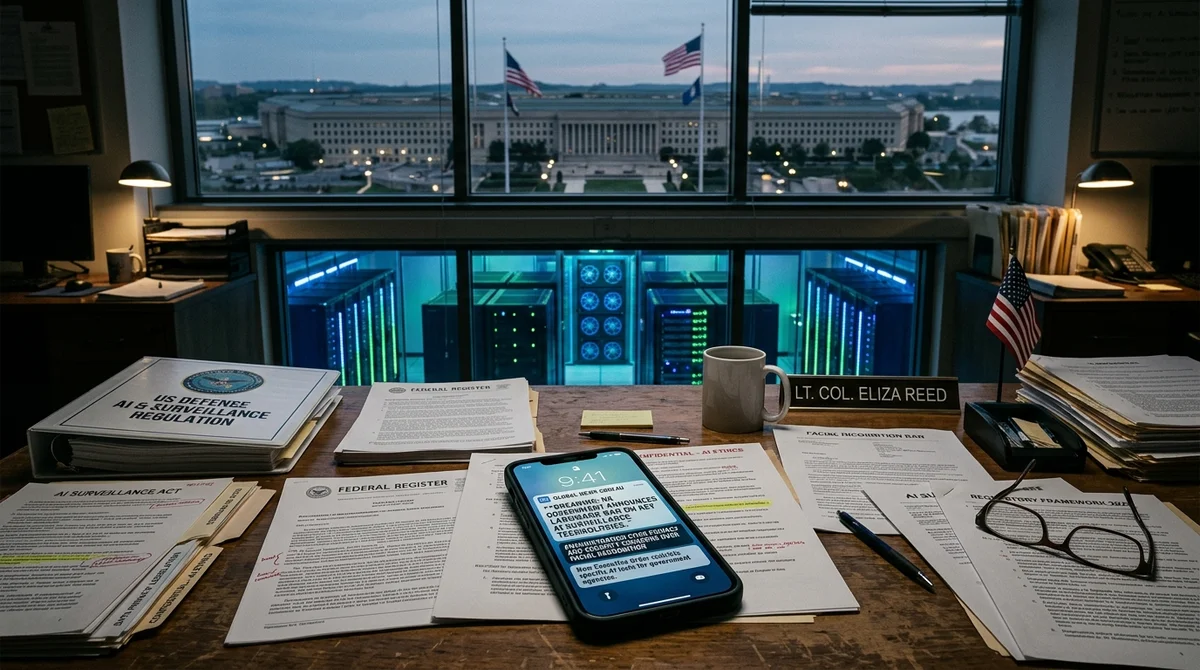
The Anthropic story exposed something uncomfortable for those in power: even in a democratic system, an AI developer can be sanctioned not because its technology is vulnerable, but because it refused to remove legally binding limits on how that technology is used.
On 27 February 2026, US Defense Secretary Pete Hegseth declared Anthropic a "supply chain national security risk." That label was usually associated with Huawei and ZTE, not with an American company from San Francisco founded by former OpenAI employees.
The trigger was a dispute with the Pentagon over a $200 million contract signed in July 2025 for work with classified systems. In the agreement, Anthropic set two red lines: its models could not be used for mass domestic surveillance of US citizens without judicial oversight, and could not serve as the basis for fully autonomous lethal weapons without a human in the decision loop.
The Pentagon demanded "unrestricted access to AI for all lawful purposes" and set a deadline of 17:01 the same day. When the company refused to lift the restrictions, the US administration effectively punished it for trying to make safeguards a binding commitment rather than a declaration.
The episode looked especially stark next to OpenAI. A few hours after the Anthropic decision, Sam Altman announced OpenAI's own deal with the Pentagon and said the company's models would be available for all lawful purposes. The full terms were not disclosed, so it is impossible to verify whether the contract retains the same enforceable stop-lines Anthropic insisted on. But the market saw a simple signal: one company tried to lock in limits by contract and was branded a threat; the other accepted the state's terms and stayed a partner.
That same evening, OpenAI's head of hardware, Caitlin Kalinowski, left the company, stressing that domestic surveillance and lethal autonomy deserved more discussion.
The conflict then moved to court. In a March ruling, federal judge Rita Lin noted that such a regime is normally applied to foreign intelligence services and terrorists, not American companies, and temporarily blocked the ban. But parallel proceedings continued, and Anthropic was cut off from Pentagon contracts while remaining of interest to other agencies.
This is where the story stops being only an American political drama and becomes a question of democratic governance of AI. US federal agencies quietly kept testing Anthropic's technology, and financial regulators pushed banks to assess the new Mythos model for critical infrastructure. The result is a paradox: the company is declared a national security risk and at the same time treated as a supplier of useful AI.
For Europe, this is an important signal given the AI Act, which is due to take full effect in August 2026. The logic of the European law is simple: the most dangerous uses of AI cannot be left to the discretion of companies or officials and must be directly restricted by legal norms. But the EU is also discussing the Digital Omnibus package, which could weaken parts of the regulation to compete with the US and China.
The Anthropic case shows that deregulation does not make the system neutral. It merely shifts real power to those who control procurement, access to contracts and political pressure.
There is also a more practical lesson. If limits on AI use exist only in press releases, corporate principles and CEO speeches, they can be bypassed at the first big deal. If they are written into a contract or a law, they become enforceable and create liability. This, in essence, is what the dispute between Anthropic and the Pentagon was about: not the idea of safety itself, but whether that safety should be binding on the state when it comes to military and intelligence scenarios.
The main takeaway for the market and regulators is unpleasant but clear. AI governance will exist regardless; the only question is who fixes its rules first. If limits on use are written in advance into law and contracts, society keeps a chance to control the technology before the key decisions are made. If not, the rules will be written by those with the most power, money and urgency at the moment of the next crisis.
- Nov 2, 2026Karpathy builds a YouTube clone with 6454 videos from Hacker News recommendations in two hours
- Nov 2, 2026Karpathy used Claude to build HackerTube from 6,454 videos recommended on Hacker News
- Nov 2, 2026Arca gives AI agents finance tasks lasting up to 10 days, but leaves the trades to humans
- Nov 2, 2026Anthropic needs to grow revenue 32% a year to cover $850 billion in contracts
Test Frontier LLMs & Autonomous Agents in One Workspace
Run Claude Opus 5.5, GPT-6, Gemini 3.1, and DeepSeek side-by-side in Nomad AI (nomadnet.ai) — unified model routing, deep research, and multimodal workflows under one subscription.
The AI world, distilled — once a week
Seven stories that actually mattered, hand-picked. No noise, no reposts, no press releases.
Done! Check your inbox for a confirmation.