SpaceX Prepares a Record IPO as OpenAI and Anthropic Edge Toward Going Public
SpaceX has confidentially filed for an IPO and could list as early as June at a valuation above $1.75 trillion. If the deal goes through, it will be the largest offering in history and a strong signal to the market: OpenAI and Anthropic are also heading toward public capital. For investors, it is a chance to buy into AI leaders directly for the first time, rather than through private rounds.
AI-processed from Bloomberg Tech; edited by Hamidun News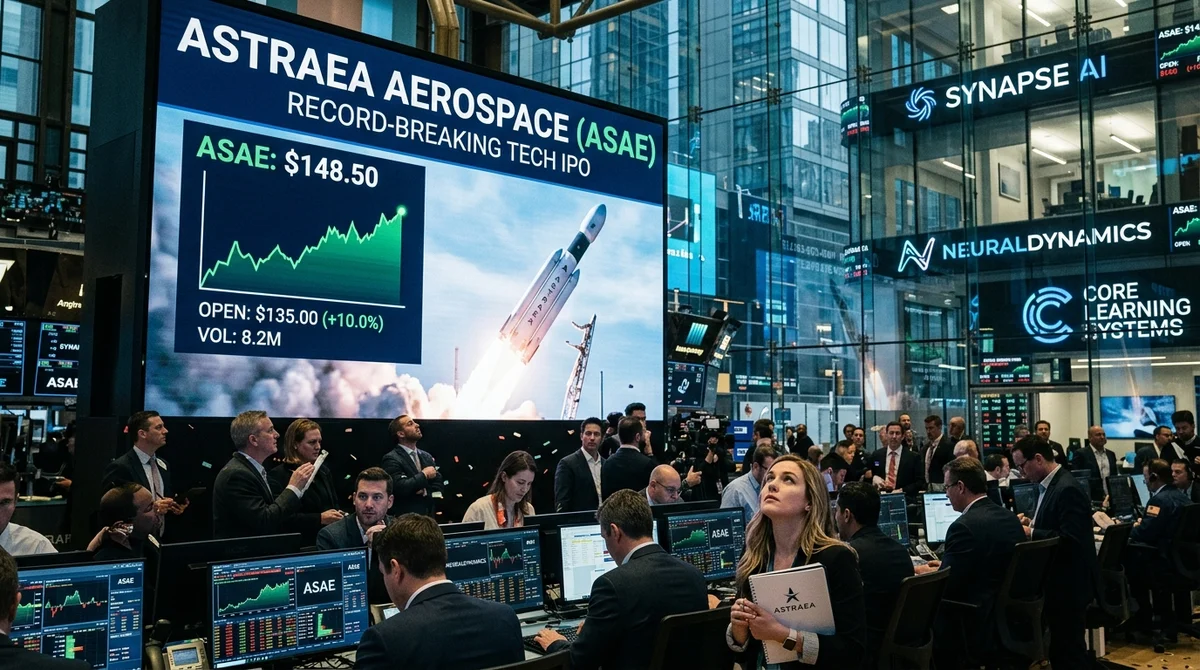
SpaceX could become more than the largest IPO in history. It could signal a new phase for the AI market: after years in which the most valuable technology companies preferred to stay private, investors may finally get direct access to businesses that burn tens of billions of dollars on compute, satellites and infrastructure. If the offering goes to plan, 2026 will quickly turn from a year of anticipation into a year of mega-listings, and OpenAI and Anthropic may follow SpaceX onto the exchange.
According to Bloomberg, SpaceX confidentially filed for a US IPO on April 1, 2026. The company could go public as early as June and expects a valuation above $1.75 trillion. At that scale, this is not just a large offering but a potential record: the deal could reach $75 billion, well above the historical benchmark set by Saudi Aramco, which raised $29 billion in 2019. For Wall Street, it is a rare chance to list a company that could rank among the most valuable public companies in the world on its first day of trading.
Interest in SpaceX is not only about the brand and Elon Musk. The company already has two revenue engines that investors understand: its launch business and the Starlink satellite internet service. According to Bloomberg Intelligence, they generate most of the revenue, which could approach $20 billion in 2026. The AI segment is still noticeably smaller: after the xAI deal, SpaceX has become more closely associated with artificial intelligence, but by the same estimates, that segment contributes less than $1 billion in revenue. In other words, investors are being offered not a pure bet on chatbots but a hybrid of space infrastructure and AI ambitions.
That is why a SpaceX debut matters for the whole sector. The market has long been waiting for the largest private AI companies to stop living off venture rounds and start explaining their economics to public shareholders. According to Fortune, citing Crunchbase, venture investment in startups rose to roughly $300 billion in the first quarter of 2026 alone, and the lion's share of that capital went to AI.
But private money is not infinite: the race for models, data centers, chips and enterprise contracts requires amounts of capital that are easier and cheaper to raise on the public market. A successful SpaceX IPO could show that the market is ready to digest companies with giant valuations and complex business structures.
OpenAI and Anthropic appear to be watching that signal closely. Bloomberg describes OpenAI as one of the companies keeping maximum flexibility in case of a listing. Anthropic's window looks even more concrete: in late March, Bloomberg reported that the developer of Claude is considering an IPO as early as October 2026.
The two companies approach the public market with different stories. OpenAI is betting on scale, mass adoption of its products and enormous computing capacity. Anthropic pitches itself as a more disciplined player with a strong position in the enterprise segment and a focus on safety. For investors, it will be not only a choice between two models but a test of which AI economics looks more convincing today.
There is a flip side. The bigger these offerings are, the more likely they are to draw liquidity away from the rest of the IPO market. Fortune writes that the global IPO market began to revive in 2025: 1,293 IPOs raised about $171.8 billion, 39% more by volume than a year earlier. But SpaceX, OpenAI and Anthropic are so large that they could either breathe new energy into the market or, conversely, absorb almost all the attention and money of institutional investors. The public market loves growth, but it loves transparency, predictability and clear margins even more, and AI companies still face open questions on those points.
The main takeaway is simple: the conversation about the future of AI is no longer purely a venture one. If SpaceX does list in summer 2026 and opens the way for OpenAI and Anthropic, investors will for the first time be able to buy in en masse, not to the dream of the next technology platform, but to a very expensive, capital-intensive and risky business. For the industry, it is a moment of maturing. For the market, it is a stress test of how much it is willing to pay for AI not in private deals but in daily quotes.
- Nov 2, 2026Meta's Muse assistant keeps dossiers on loved ones and gets root on Ubuntu by default
- Nov 1, 2026Local models lose to Opus and Codex: 0.21 on a MacBook versus 1.00 for Codex
- Nov 1, 2026Kimi scores 96.2% on a 1C database analytics test and emerges as a fallback if Claude access is blocked
- Nov 1, 2026OpenAI Rewrites GPT Behavior Rules: Five Values and a Chain of Command
Ship AI Faster with Founders, Engineers & Weekly Architecture Reviews
Inside Vibe Club (hamidun.com/club) — weekly live masterminds with Zhemal Khamidun, Tech Radar, full LMS access, and 370+ production Claude Code skills.
The AI world, distilled — once a week
Seven stories that actually mattered, hand-picked. No noise, no reposts, no press releases.
Done! Check your inbox for a confirmation.