Super Micro co-founder pleads not guilty in case over Nvidia server shipments to China
Super Micro co-founder Yih-Shyan "Wally" Liaw has pleaded not guilty to charges of illegally diverting Nvidia-based servers to China. The hearing took place in Manhattan, and the shipments named in the indictment are valued at billions of dollars. The case matters beyond the company itself. It concerns the most sensitive segment of AI infrastructure: the powerful server systems used to train and run models.
AI-processed from Bloomberg Tech; edited by Hamidun News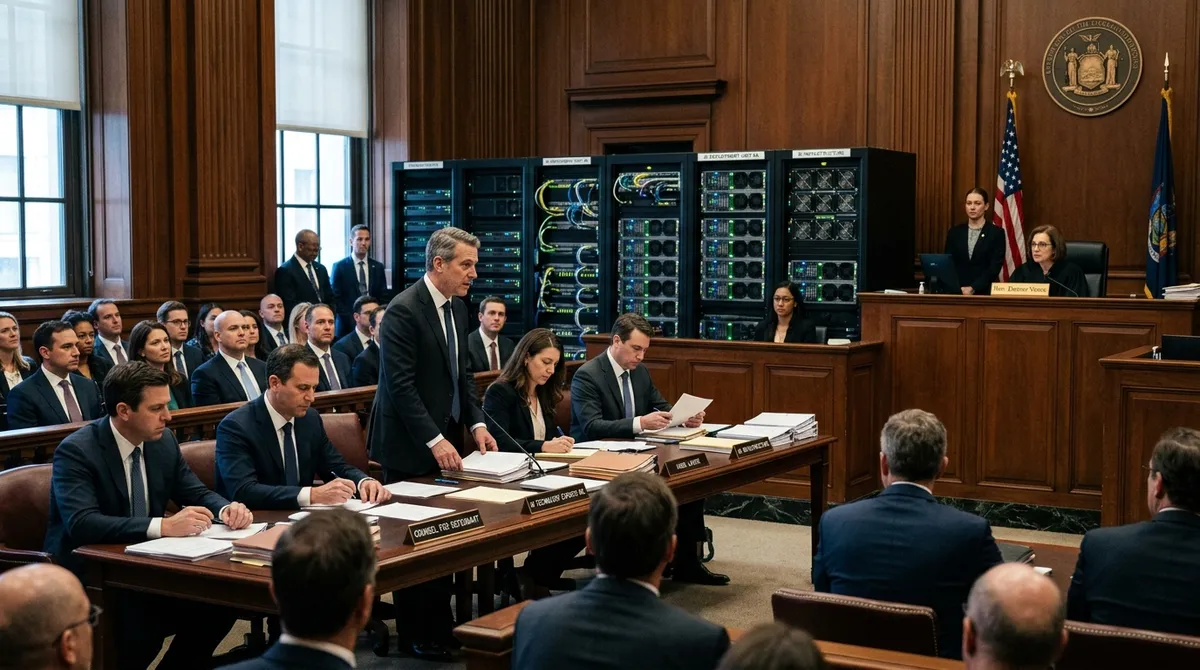
Super Micro co-founder Yih-Shyan "Wally" Liaw pleaded not guilty in a Manhattan court to charges of illegally diverting Nvidia-based servers worth billions of dollars to China. For the market, this is not an ordinary corporate dispute but a criminal case touching one of the most sensitive links in the AI supply chain: the machines on which modern models are built and run.
What the charges say
The hearing was held in New York on Wednesday, April 1, 2026. There Liaw formally rejected the charges against him. According to investigators, he helped illegally divert Super Micro servers equipped with Nvidia technology to China. The case materials cite shipments worth billions of dollars, and the wording of the charge alone makes the story prominent well beyond a single company.
Why the case matters for the AI industry
The amount is not the only thing that matters here. The subject of the case matters far more: high-performance servers with Nvidia accelerators are now considered core infrastructure for training, deploying and scaling artificial intelligence systems. Any question about their supply route automatically becomes a question about control over critical computing resources.
Super Micro has long held an important place in the server ecosystem. The company is known as a supplier of hardware platforms for data centers, enterprise computing and AI workloads, while Nvidia remains the main supplier of accelerators for the AI market. That is why the pairing of the two names in a criminal case immediately raises its profile.
If prosecutors prove that the shipments did in fact bypass established rules, it will be not just a problem for one defendant but a signal to the whole industry. Manufacturers, integrators, distributors and corporate buyers will have to scrutinize even more closely how deals are structured, who is the end recipient of the equipment, and which internal procedures actually work and which exist only on paper.
What this means for buyers and data centers
For buyers of AI hardware and data center operators, this is also a reminder that the key risk now lies not only in accelerator availability and delivery times. Documents, the chain of intermediaries, transparency about where goods come from, and a supplier's ability to prove that an entire deal is lawful, from the first invoice to the final installation in the rack, matter just as much. The more expensive and powerful a computing system is, the more likely it is to be treated as an object of heightened scrutiny.
A separate risk in such cases is that the line between ordinary commercial logistics and a violation of rules on sensitive technologies is often invisible to an outside observer, but it is fundamental for a court. That is why the case against the co-founder of a major server maker will be viewed not only as a personal matter but also as a test of how reliable control mechanisms are in the AI hardware industry. Even the mere fact of the charges can increase pressure on compliance teams, lawyers and executives responsible for international sales.
For investors and partners it is also a worrying marker: such proceedings almost always mean additional checks, reputational costs and a more cautious attitude toward cross-border deals, especially when high-performance computing systems are involved.
What happens next
For now the main point is simple: there has been no guilty plea, which means the legal fight is only beginning. The court still has to assess the evidence, the defense's arguments and how well founded the theory of illegal diversion of servers to China was. But it is already clear that the case goes beyond the biography of one executive.
It shows how politically, economically and technologically charged the AI infrastructure market has become. Where people once discussed mainly delivery speed and hardware performance, the origin of components, the route of goods and compliance with the rules now come first. For the whole industry this is a reminder: the era of a neutral attitude toward powerful computing systems is over, and any lapse in controlling their movement can quickly turn into a criminal case with international resonance.
In brief:
- Super Micro co-founder Wally Liaw pleaded not guilty in a case over diverting Nvidia-based servers worth billions of dollars to China.
- The hearing took place in New York on April 1, 2026; the case concerns core infrastructure for AI models.
- There was no guilty plea, so the legal fight is only beginning; the court has yet to assess the evidence.
- Nov 2, 2026Anthropic needs to grow revenue 32% a year to cover $850 billion in contracts
- Nov 2, 2026TensorFold 1.2.0 boosts Qwen3.8-27B throughput on M3 Ultra by 44.2% at 16 streams
- Nov 1, 2026Local models lose to Opus and Codex: 0.21 on a MacBook versus 1.00 for Codex
- Nov 1, 2026Habr author fine-tunes YOLOv8l on dental X-rays and pushes mAP50 to 0.642
Key Questions Answered
What the charges say?
The hearing was held in New York on Wednesday, April 1, 2026. There Liaw formally rejected the charges against him. According to investigators, he helped illegally divert Super Micro servers equipped with Nvidia technology to China. The case materials cite shipments worth billions of dollars, and the wording of the charge alone makes the story prominent well beyond a single company.
Why the case matters for the AI industry?
The amount is not the only thing that matters here. The subject of the case matters far more: high-performance servers with Nvidia accelerators are now considered core infrastructure for training, deploying and scaling artificial intelligence systems. Any question about their supply route automatically becomes a question about control over critical computing resources. Super Micro has long held an important place in the server ecosystem. The company is known as a supplier of hardware platforms for data centers, enterprise computing and AI workloads, while Nvidia remains the
What this means for buyers and data centers?
For buyers of AI hardware and data center operators, this is also a reminder that the key risk now lies not only in accelerator availability and delivery times. Documents, the chain of intermediaries, transparency about where goods come from, and a supplier's ability to prove that an entire deal is lawful, from the first invoice to the final installation in the rack, matter just as much. The more expensive and powerful a computing system is, the more likely it is to be treated as an object of heightened scrutiny. A separate risk in such cases is that the line between ordina
Test Frontier LLMs & Autonomous Agents in One Workspace
Run Claude Opus 5.5, GPT-6, Gemini 3.1, and DeepSeek side-by-side in Nomad AI (nomadnet.ai) — unified model routing, deep research, and multimodal workflows under one subscription.
The AI world, distilled — once a week
Seven stories that actually mattered, hand-picked. No noise, no reposts, no press releases.
Done! Check your inbox for a confirmation.